
Getting Results

Doesn't That Just Happen on Its Own? NOPE!!!
Anyone who gets on stage and captures, controls, and directs attention (i.e., entertains) will tell you that there's no such thing as an attention span.
Last year, a grinning event planner pointed at me and said, "I figured you out!"
That's a phrase that makes a magician nervous.
Then she said, "The biggest illusion in your act is a lack of preparation..."
I smiled. "What do you mean?" I asked.
"Well, you walk up to these people, and you don't know anything about them, and then suddenly they're laughing and shouting, pulling their friends across the room to see what you're doing... they're talking to us about how much fun they're having, and six months later they're looking forward to seeing you again... and you make it look like that all 'just happens' but you've got a lot of system and processes that make it happen."
And, of course, she's entirely correct.
In business, people often say things "just happen." That's not true. Everything happens for a reason.
We say that referrals just come rolling in, but the truth is that I have seven or eight referral systems working in my business all the time.
That's how I can safely assume that happy clients will introduce me to at least two people like them within six months of an event. (check out Jay Abraham's 93 Referral Systems).
I have four or five other systems that ensure our existing clients bring me back year after year and keep expanding their business with me (check out Jay Abraham's Getting Everything You Can Out of All You've Got).
In fact, anytime I think, "I guess that just happens on its own," alarm bells go off in my head. That means I need to learn more about how that part of my business works and figure out the systems and processes that are getting that result.
Once I understand the systems and processes, I can make adjustments and tweaks to get the result I want. If I know how and why it's happening, I can change the result's frequency, quality, and quantity.
In events, that's where creativity and craftsmanship meet. To me, that's where the real magic happens.
The alternative is "hope" and "chaos." I don't like living that way - particularly given that I'm held accountable for the results.
The good news is that if you're not happy with the result you're getting, you can always make a change!
If you're open to discussing what you've done in the past, what you think works, what could be better, and what you expect to accomplish at your next event, I'd be happy to explain what other people have done in your specific situation.
If you're open to that conversation, call me at (561) 596 3877 or set an appointment at MagicMeansBusiness.com/contact.

The Harsh Truth about Shrinking Attention Spans
Anyone who gets on stage and captures, controls, and directs attention (i.e., entertains) will tell you that there's no such thing as an attention span.
One of the esteemed "LinkedIn Luminaries" recently shared a startling observation. He noted that within the initial 10 minutes of a keynote speaker's address, a staggering 90 percent of the audience was already engrossed in their phones.
He interpreted this to mean we should cut all keynote addresses to 10 minutes to accommodate the audience's "reduced attention span."
Here's the thing: Anyone who gets on stage and captures, controls, and directs attention (i.e., entertains) will tell you that there's no such thing as an attention span.
No less than Jerry Seinfeld himself said, "There's only things people pay attention to and things that are not as interesting."
My favorite mentalist, Max Maven, did extensive research into attention spans. He discovered that the average person willpolitely sit through just about anything for 7 minutes. After that, they no longer feel obligated to be polite (hence the cell phones).
So it's not that the keynote audience got bored after 10 minutes; they were bored for the entire 10 minutes, and they just started to show their boredom by getting out of their phones.
I appreciate that this is "Professor of Harsh Reality" stuff. Nobody wants to hear someone tell them they (or the speaker they hired) are boring.
I know. I've been there. When I started as a bar magician, my mentor told me, "You don't even know what good is." That's brutal feedback.
But that's also when he started teaching me the rules of entertainment and what it takes to capture, control, and direct attention. That's when I started learning how to engage and entertain an audience.
As soon as I started applying those rules, the audiences got bigger and louder. They started talking about me after the show, and they came back to see me night after night.
It was like flipping a switch. The change happened that fast.
These are universal rules. Whether you're an engineer selling the new XL2000 product line or a research scientist with a spreadsheet of Nobel-worthy data, you either apply these rules and control attention, or you don't, and you lose the audience.
Our clients see this in their results as well. All of them already host fantastic events and get great results, but after we work together, they say things like, "I've never seen our audience so engaged," "I've never seen them react like that," or "They're still talking about our event months later."
Why? Most people have never been exposed to the systems and processes that create these results. They don't know the entertainment rules, and those who do certainly aren't willing to share them with the general public.
If you're planning an event and you have a sneaking suspicion it could be better—whatever that means to you—maybe now is a good time for a conversation.
I'll ask a bunch of questions about what you've done in the past, what worked, what you'd like to improve, what you expect to accomplish, and how you'll know you've succeeded.
Based on what you tell me, I'll tell you exactly what other people like you have done in similar situations and what kind of results they got.
If you're open to that conversation, call me at (561) 596 3877 or set an appointment at MagicMeansBusiness.com/contact.
Does Your Event Have a “Wow Factor?”
Hosting a smooth golf tournament, awards ceremonies, presentations, excellent hotels, and delicious food and beverage are table-stakes. What you plan beyond that, however, is what builds the identity, starts the conversations, creates the stories, and positions your company as truly different.
Over the last three months, I've asked my clients, "What did you want to accomplish when you hired entertainment for this event?"
And 92.7% responded with the phrase "wow factor."
When I asked them what was important about the wow factor, they all started talking about how important it was that they start conversations before, during, and after the event.
Before the event, they need to create anticipation and curiosity. "Fear of Missing Out" is a real motivator, and if people think something significant, fun, or interesting will happen at an event, they'll prioritize attending.
They also wanted the "wow factor" to give people something to talk about during the event. They needed to get people talking with each other, pulling each other across the room, and saying, "You've got to see this!" They all agreed that if you let people "talk to each other naturally," you quickly discover they naturally won't talk to each other much.
Afterward, my clients said they needed their guests to have a great story about their event. For my club clients, the great story from this year's event would guarantee they'd attend next year. For my ProAm clients, getting people to tell their friends about this year's event was a great way to attract new people.
Business customers agreed that the stories their guests told had two important benefits. First, hearing excited feedback from their guests made the follow-up calls easier, more open, and honest. Second, the stories the guests told their friends created lots of referral opportunities and helped to reopen closed accounts.
I said, "But wait. You've got great food, great wine and drinks, and a great venue and music. Isn't that enough?"
Universally, they all said "no."
The entertainment gave each guest a unique experience and a story about the event. While the F&B and venue were important, they didn't have the drama and conflict the entertainment brought, and they didn't create a compelling story.
That's why entertainment was critical to helping them accomplish their goals.
I don't know if that's how you look at your events, but if you're open to a conversation about what you've done in the past, what works well, what you'd like to accomplish, and how you know it's working, I'd be happy to share what other clients have done in your particular situation.
You're always welcome to give me a call at (561) 596 3877 or schedule a conversation at MagicMeansBusiness.com/contact
Can We Book You Again Next Year? Will It Be Different Enough?
Hosting a smooth golf tournament, awards ceremonies, presentations, excellent hotels, and delicious food and beverage are table-stakes. What you plan beyond that, however, is what builds the identity, starts the conversations, creates the stories, and positions your company as truly different.
Lots of my clients ask me, “What would you do differently if we brought you back next year?”
The simple answer is yes. For my clients that have a repeatable event, I have a 90% rebook rate.
Here’s why…
First, I probably won’t repeat many of the tricks. If you’ve watched my videos in the last, you’ve seen the wall of books behind me, and I have a library of thousand of books, videos, manuscripts, and equipment that helped me create one of the largest working repertoires in magic.
Second, it’s actually easier to make a larger impact at the repeat events. The first time I perform, I have to introduce myself, break down the audiences initial assumptions about what a magician is and will do, and demonstrate that I’m not the local guy who does balloon animals at TGI Fridays on Monday night. That takes a lot of fast, punchy material.
The good news is that I’m building trust and rapport during that event. They’re learning about me, and I’m learning about them.
When I show up at the second event, they’re calling me over and asking me to perform as I walk through the door. Last night in Arkansas, the members were literally asking me to read their minds before I put on my sport coat and put down my bag. They were calling me to entertain their group all night.
Plus, there are new people at these events. Rather than introducing myself to everyone, the guests our now introducing me to their friends. I’m now “their magician” and you have to see “our guy.”
Plus, they might not know how or why or when, but the guys who saw me last time know that those oranges are going to pop out. Now, they’re watching their buddy’s reaction, almost lying in wait for this big shocking surprise.
It creates a whole new kind of engagement and experience.
Since I’m not proving myself anymore, I can do less fast, punchy stuff, and do longer, more developed effects that have even stronger impact. The performance gets texture, and I can use a wider range of emotions.
I can tailor material to the audience based on the previous show, too. I know these guys were investors and money guys last night, so I did a lot of cool math stuff. Next week is wildcatter oil investors - there’s similar stuff because they’re both very wealthy, but the oil guys love gambling and proposition bets and the respond in a completely different way.
What I’m doing - through experience and notes - is stacking meaning and relevance with each show. That creates more engagement, stronger memories, and more unique stories.
That’s why they’re looking forward to it year after year.
I have golf club clients that have hired me for 20+ consecutive years, and the members have come to expect the magic as a tradition. The magic is an powerful attraction once they’ve seen it, and it starts a lot of referrals because “you’ve got to go to the CompanyX event/booth/meeting/retreat because they’ve got this magician who can…”
That might be worth a conversation.
I don’t know if any of this is relevant to your particular event, but if you’re open to a conversation about what you e done in the past, what worked, what could be better, and what you hope to accomplish, I’d be happy to tell you what other clients like you have done and what results they achieved.
Give a call (561) 596 3877, or set an appointment at MagicMeansBusiness.com/contact.
The Event is Never About the Event
Hosting a smooth golf tournament, awards ceremonies, presentations, excellent hotels, and delicious food and beverage are table-stakes. What you plan beyond that, however, is what builds the identity, starts the conversations, creates the stories, and positions your company as truly different.
One thing I've learned in 30 years of performing at golf events is: "the event is never about the event."
We say it's a customer golf retreat and everyone knows we're going to play golf, give some presentations, eat some good meals, have some drinks, and enjoy a great "hang" with our friends.
But that's not our real purpose in hosting event.
We want to:
Create a sense of camaraderie and connection between customers and executives
Build being a customer into our client's identity by creating the "people like us do stuff like this, and we're glad you're one of us" feeling.
Help executives conversations about problems our existing clients.
Show clients and prospects how other people like them are successfully solving their problems with our products.
Start conversations between existing users and prospective users about how our products "really work in their particular case."
Restart lost deals and customers.
Create referral opportunities
Hosting a smooth golf tournament, awards ceremonies, presentations, excellent hotels, and delicious food and beverage are table-stakes. Everyone's going to have that.
What you plan beyond that, however, is what builds the identity, starts the conversations, creates the stories, and positions your company as truly different.
What shared experiences will people develop trust and rapport around?
What will starts conversations between strangers?
What reduces the "fun thing / work thing" formality, so people can open up and be honest with each other?
What experiences will we have during this event that will start conversations with our people after the event?
What referral opportunities are we creating during this event? What will they tell their friends? Colleagues?
What mechanisms have you build into your event to make sure you get the results you want (rather than the results you've come to expect)?
How does your entertainment support your wider goals and objectives for the event?
How much time did you spend talking with them about what you expect to achieve at this event?
How did they plan to adjust or adapt their performance to help accomplish your objective?
THAT might be worth a conversation.
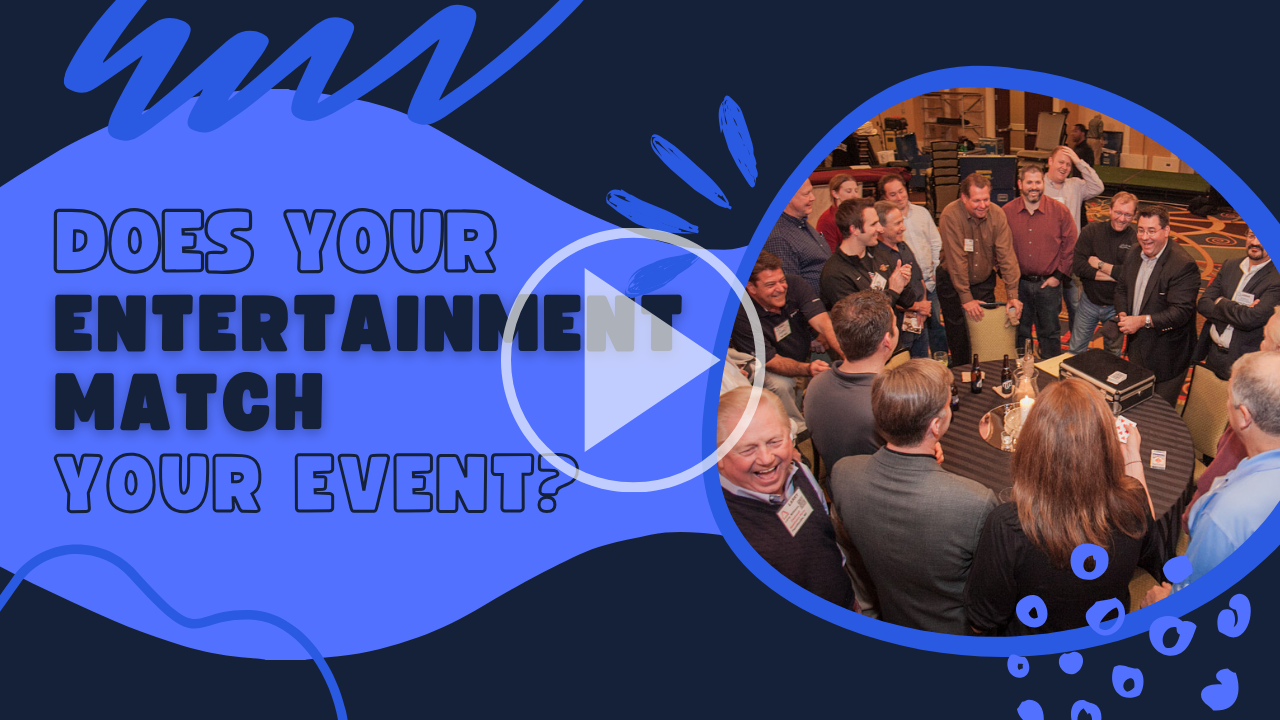
Real Customization Means Aligning Entertainment with Your Goals, Audience, and Venue
“But our event is different…”
Of course it is. Every event has its own unique venue, audience, and objectives.
“Can I tell you what we typically do for clients who are trying to achieve (that objective") under those circumstances?”
I hear this all the time, so you might find it helpful.
"I think you'd be great for our event, but I don't know how... [insert logistical problem]."
Every business suffers from this challenge. People only know what they see, so they believe that the one use-case they see is the only use-case you address.
I was entertaining at The Masters last week, and one of the guests said, "I'd love to have you entertain our guests at [PGA Tour event], but there's no time for you to do a show."
I asked, "Why do you think it would be good to have me there?"
He said, "Well, it's a nice event, but they basically have drinks and dinner and hit their hole-in-one contest ball. There isn't much of a 'story' they can tell about the event later. Having you do magic would make it a better experience and get us better word of mouth."
"Can I tell you what other people typically do in that situation?" I asked.
"Sure"
"Well, typically, they have me work group-to-group through the event tent. I start with maybe four or five guys, and as I do magic, that builds into a crowd of ten or fifteen. I get them laughing, slapping each other on the back, having fun, and then I go do that somewhere else. They stay longer at the event because there's always something new happening, and as you can see, the magic is pretty story-worthy afterward."
As we discussed this, another guest said, "Yes, but our event has 150 people in a hotel ballroom. They could never see your show on that stage."
"Well, can I tell you what our clients typically do in that situation?" I asked.
"Sure."
"Well, usually there's a smaller stage, and I do a 45- or 60-minute version of my Magic with YOUR Mind show—similar performing style to what you saw tonight because I am who I am, but I use somewhat bigger props and a lot more audience participation. It's very interactive, so everyone's engaged and involved in the show, and they're having fun watching their friends and colleagues react and participate as much as they are watching the magic."
As I finished that story, another guest said, "But what if we've got 2000 people?"
"In a ballroom, or more like a theater?"
"Well, ours is a big, old 1920s theater..."
“Can I tell you what we do in that case?
“Sure.”
"A few years ago, I asked to entertain about 2000 people in a similar theater—big frescoed ceiling, giant chandelier—real classic theater. We took the Magic with YOUR Mind show, and with good lighting and access points so people could get on stage, it was a huge hit—standing ovation, in fact."
Here's what I've learned.
When someone tells us they don't think our solution will work, asking them why they think that's true and what they really want to accomplish is worthwhile.
Nobody hires entertainment because they only want to be entertained. Usually, they're trying to accomplish something else: differentiate their event from a competitor's event, engage their business guests, start conversations, attract people to their event, etc.
The goal matters. Everything else is just a method for achieving that goal.
Also, magic is far less visual entertainment than people think. It looks great when the torn-up newspaper comes together in a flash, but the woman's reaction when the orange appears under the cup is far more entertaining.
It's not the magic—it's the people in the audience participating in the show who really create the stories and memories.
So, if you've got an event or objective you want to accomplish and you're open to a conversation, I'm always here to help.
Tell me what you're trying to do, what you've done in the past, how you'll know it's working, and why it's important that you get this result. I'll tell you what other people like you have done in your situation and what kind of result they got.
Give me a call at 561 596 3877, or visit our website at MagicMeansBusiness.com/contact
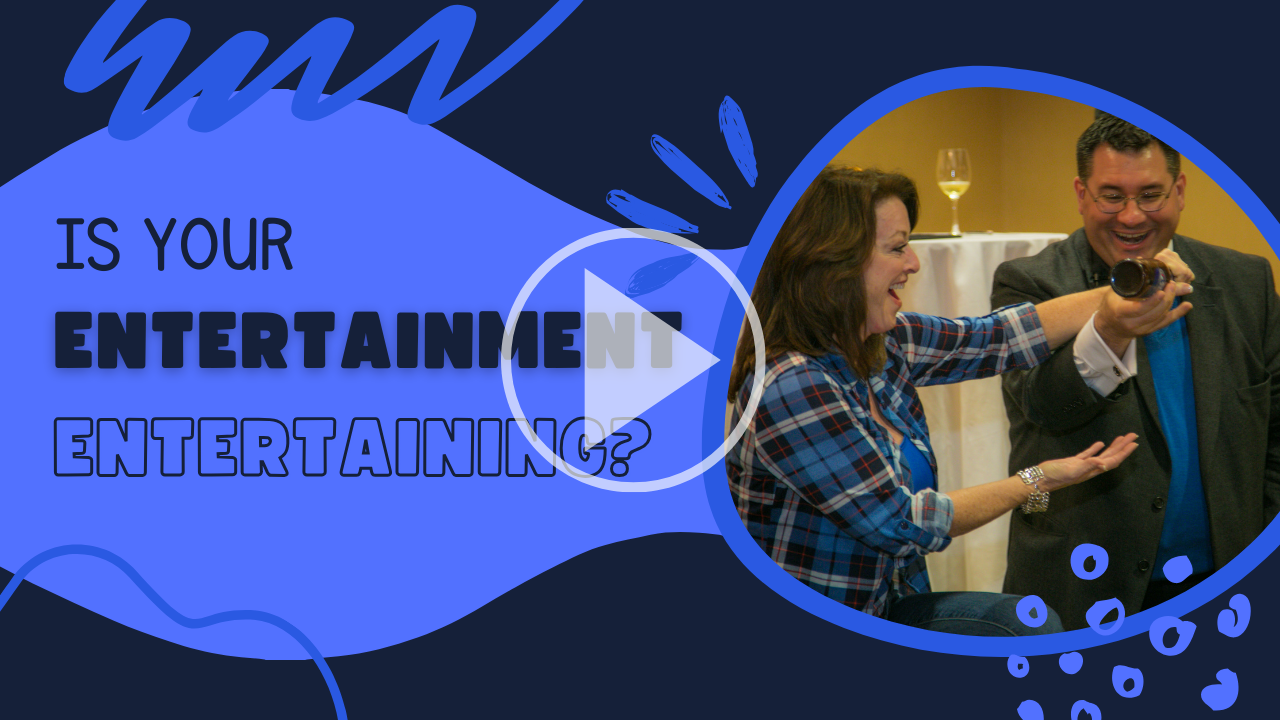
Is Your Entertainment Entertaining?
Is your entertainment really entertaining?
After twenty years, I’ve discovered that anyone can “do” their act, but only great performers know how to make their act “entertaining.”
Here are the three criteria that guarantee success at your next corporate event.
A lot of people tell me they’re afraid they’re going to hire a “bad” act, so they’re constantly watching videos, reading reviews, getting referrals… trying to make sure they get “good” entertainment.
Can I tell you a secret?
It’s not what the act does, it’s whether or not they can entertain with their performance. I know magicians who can make the simplest trick into a show-stopping miracle, and I know performers who can literally make a minute feel like an hour.
I spent about twenty years of talking with entertainers and event professionals, and I have come up with my own definition for entertainment.
This is the definition that still guides my own performances whether I’m close-up or on stage, and it’s how I evaluate other performers as well.
I”m looking for three things:
First, the performer has to have the ability to capture attention.
I’ve seen people blow whistles, bang a stick on a table, jump up and down, play music, and even yell… but every performer has to have the ability to let people know he’s going to perform, and he must compel people to invest their attention in his performance.
This is more craft than art - there are certain tricks of the trade that help performers break into a group of people at a cocktail party or build a crowd on a trade show floor, and stage performers have a variety of ways they capture attention as they walk from the wings to the microphone.
Second, the performer must be able to focus attention.
Really great entertainers know how to make the rest of the world disappear while they’re performing. They can make an hour feel like 15 minutes, and people are so engrossed in what they’re doing they simply can’t look away.
At bare minimum, an entertainer makes the audience focus their attention on what he’s doing. The audience isn’t playing with their phones, eating their dinner, or talking to their friends while they sort of watch the performance out of the corner of their eye.
Third, the performer must have the ability to direct attention.
On a very basic level, an entertainer must be able to change topics during the performance and have the audience come with him.
Jerry Seinfeld, for instance, might start talking about losing socks in his dryer, and then switch to talking about a marble rye bread, and finally finish talking about a lost rental car reservation. As an entertainer, he can direct the audience’s attention through the topic shifts, so each joke feels meaningful and relevant.
Not only can he change topics, a great entertainer can affect how the audience feels and what they do. He can direct their attention to a new product or a new company executive, or he can make the audience think about a problem they might be having at their business back home. He can suggest they start conversations with salespeople and executives at an event, and he can even encourage guests to tell their friends about the event and start referral conversations.
At Magic Means Business, we believe that once you can capture, focus, and control audience’s attention, there are lots of ways you leverage that attention to achieve your business event’s objectives.
Curious about whether or not your entertainment is really entertaining your audience?
Wondering how you can leverage entertainment to achieve your business objectives at your event?
Might be worth a conversation.
Give me a call at 561 596 3877, or visit our website at MagicMeansBusiness.com/contact
The Event Parthenon
Just as the Parthenon in Greece has many strong stone pillars supporting its roof, great businesses have multiple methods for generating conversations with new, repeat, expansion, reactivation, and referral clients.
Great events utilize the same principle…
If you want to grow the return on investment of any event, this could be the most potent concept you’ll ever learn.
In his book, The Sticking Point Solution, Jay Abraham described two schools of business thought.

The first was the Diving Board School of Business. Much like a diving board is only supported by one pillar on one end of the board, many businesses only have one or two ways of generating business. Typically, their events work the same way. They invite people to come, have a drink and food, and listen to music.
The result is predictable - people who want to have a complimentary drink and a bite to eat while they listen to some music. They show up, eat, drink, listen to music, and go home. Their sales team might try to start conversations with the people there, but not much business is being done.
There has to be a way to structure a stronger event that produces a higher return on investment. Influenced by ancient Greece, Abraham suggests that the Parthenon might be a better metaphor for building your event.
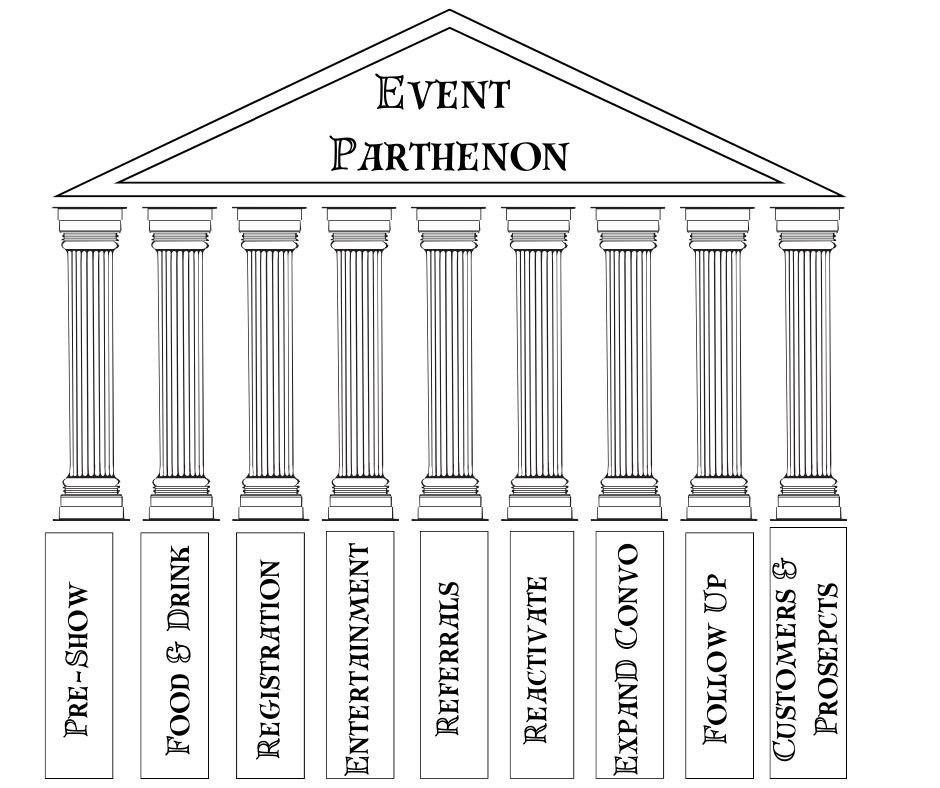
The Parthenon has a heavy stone-framed roof, but the weight is distributed over dozens of strong marble pillars. Each pillar does its work, and the event isn’t dependent on one pillar to do all the work. That’s why the Parthenon still stands on the Acropolis, even though it’s nearly 3000 years old.
Abraham suggests modeling your business and your event on the Parthenon. We already have many pillars that support our events:
registration,
follow-up process
invitation process
sales process
referral process
entertainment
food and beverage
gifts and prizes
transportation.
Each of these processes is dedicated to supporting your event and accomplishing your event’s goals.

Abraham points out, however, that many of these pillars support your event’s objectives in several ways. For instance, entertainment can support your event in at least 13 different ways:
attract people to the event
start referral conversations before, during, and after the event
keep guests at the event rather than going to competitor’s event
differentiate the company’s event from a competitor’s event
help reps and executives start conversations at the event
help guests start conversations with other guests and make the event an “industry hub.”
drive traffic to trade show boot the next day
help guests start conversations about the company the next day, week, month
mention or introduce new products or technology
introduce or highlight key executives
attract guests to future events
help start follow-up conversations after the event
help set appointments during the event
The more systems you combine at the event, the easier it is to achieve the desired result. While the diving board was trying to accomplish all of its goals with just music and refreshments, the Event Parthenon has systems for attracting people to the event, entertainment that creates referrals, setting follow-up appointments, and showcasing new products.
How you choose your entertainment, registration process, sales process, event staff, etc, will determine how effective and resilient your Event Parthenon is.
Each of those systems can have multiple pillars supporting it.
For instance, the entertainment provides 5 different ways for guests to talk about your event, plus five things that can start referral conversations. Your entertainer is driving traffic to your trade show booth while introducing your salespeople and executives to the customers at the event, and you’ve got a stack of existing systems for collecting contact information and setting follow-up appointments - it’s a safe bet you’ll have more conversations with potential customers before, during, and after the event.
Obviously, not every entertainer has a system to achieve these goals; in fact, most only have a system for doing their “thing.” A band plays music, setting your event’s tone and mood. Still, it doesn’t really do anything to support your other business objectives.
This can have a compounding effect over time. Rather than generating conversations through one method, the event might have dozens of methods. Once the conversations are started, the event might have several different systems for what happens after the conversation, ranging from “sending literature” and “making a follow-up call” to “scheduling a meeting at the trade show booth” or “scheduling a full discovery call.”
More and better appointments lead to more sales, and each new sale leads to conversations that keep the existing business, expand the existing business, increase purchase frequency, and generate referrals.
Rather than growing linearly, where one sale begets another sale, an Event Parthenon event can generate dozens of new sale opportunities that generate five or more additional sales.
Jay Abraham calls this geometric growth. As you compound events on top of each other and host the events year after year, the geometric growth looks more like exponential growth.
It’s exciting when you think about it.
Nonetheless, it brings back the same questions every time:
What vendors are in your Power Parthenon, and how are they helping you achieve your event’s goals and objectives?
How many ways can your current vendors help you achieve your goals?
If they haven’t adjusted and adapted their services to help you achieve your goals, do you think it’s because they don’t know how to help you or simply don’t want to help you?
If you’re open to a conversation, call Mike at (561) 596 3877 or visit MagicMeansBusiness.com/contact to set an appointment.
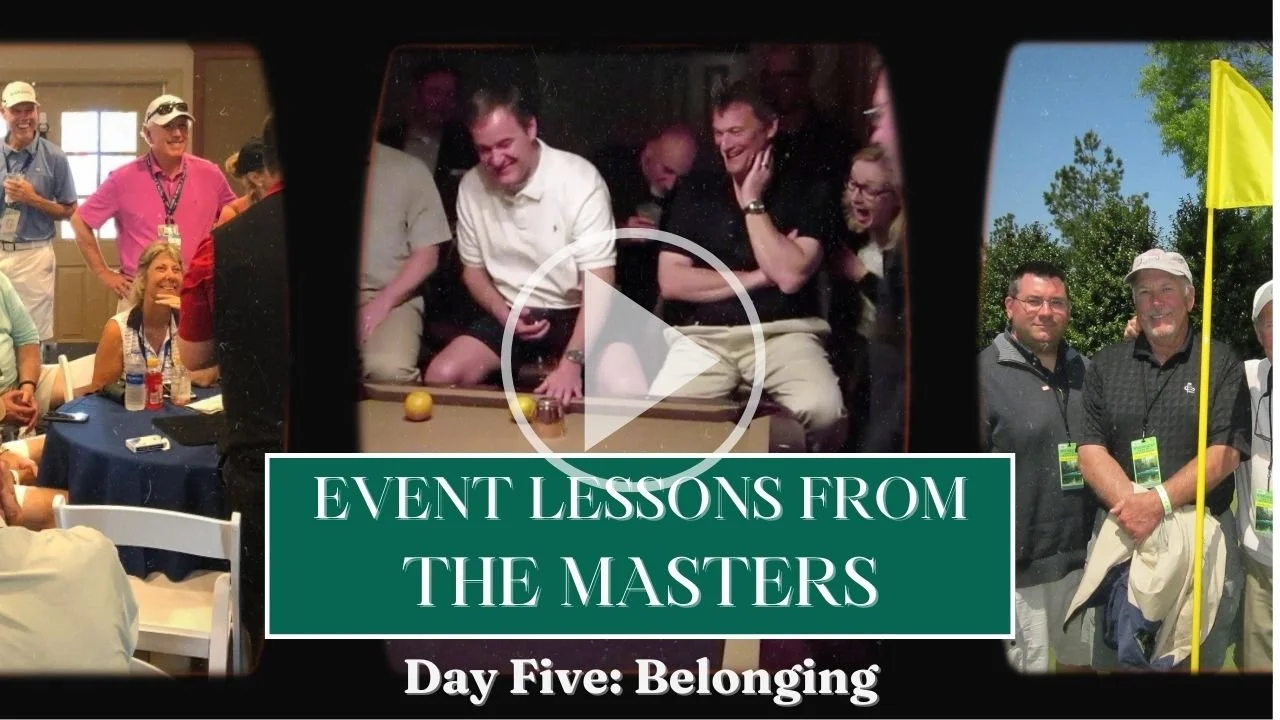
Lessons from The Masters: Belonging
It is a unique feeling to be "together" and among friends in a special place where you feel like you "belong".
That's what makes private club membership so special. That's the feeling we want at "team building" meetings and conferences. It's what makes clients hope and pray they'll be invited to our hospitality events.
For a lot of my clients and their customers, The Masters is an annual pilgrimage back to a special place we call home for a week.
Every April, I'm looking forward to seeing lots of old friends and clients (and their clients). In a lot of cases, these are people I only see once a year, so getting together in Augusta is a big deal.
It is a unique feeling to be "together" and among friends in a special place where you feel like you "belong".
That's what makes private club membership so special.
That's the feeling we want at "team building" meetings and conferences.
It's what makes clients hope and pray they'll be invited to our hospitality events.
I like to phrase it this way:
"People like us do stuff like this, and we're glad you're one of us. Aren't you glad you're one of us?"
If you can create that feeling, everything else is easy: team building, client loyalty, long-term business relationships, expansion sales, referrals...
This might be worth a conversation...
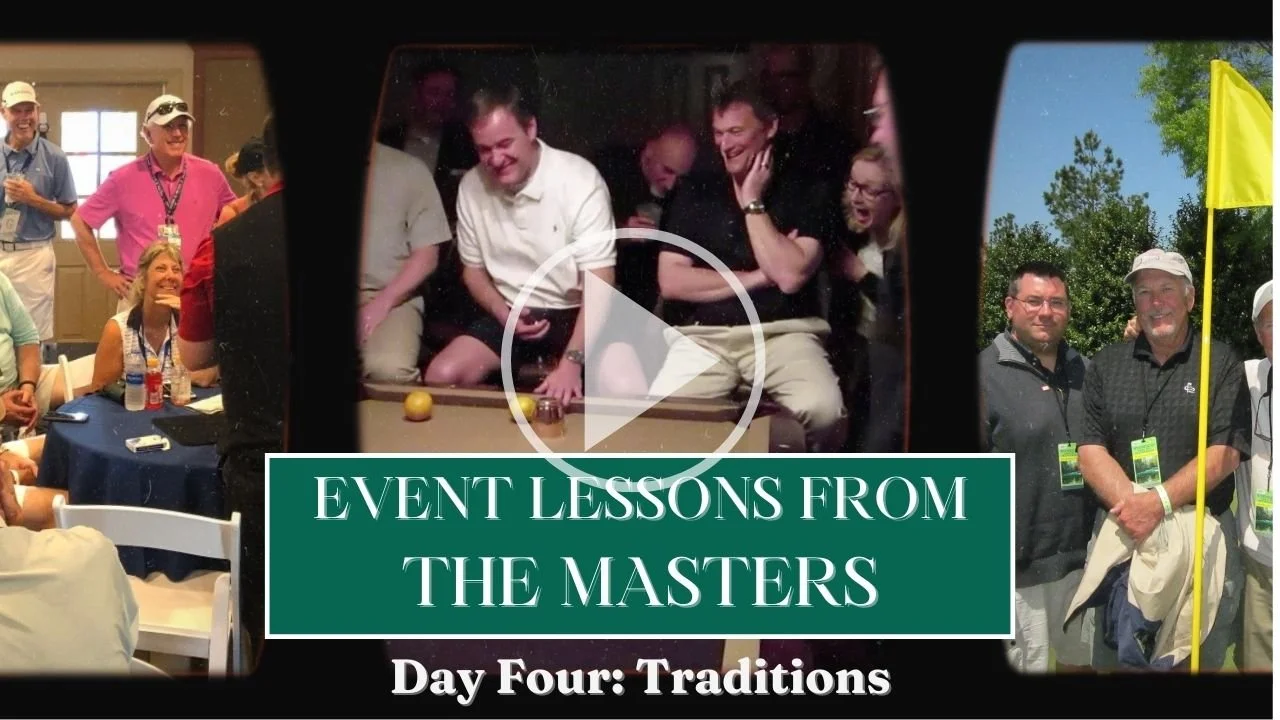
Lessons from The Masters: Traditions
What is the secret behind “the tradition unlike any other”?
The best thing about The Masters is all the little traditions.
The amateurs stay in the Crows Nest.
The players drive down Magnolia Lane.
The pimento cheese sandwich costs a $1.
The roars "echo up from Amen Corner."
I love how it all builds to create a feeling and culture "unlike any other."
Because the traditions start questions and stories...
Do they really pack the azaleas in ice so they don't bloom early?
Do they dye Rae's Creek blue?
I've heard they have underground fans that can dry out the greens and make them faster...
When your event has so many "things" and traditions and quirks that people are telling stories (and even making a few up!?!) you know you've struck gold. That's creating anticipation and curiosity, and that makes your event as "must do" experience.
This might be worth a conversation...
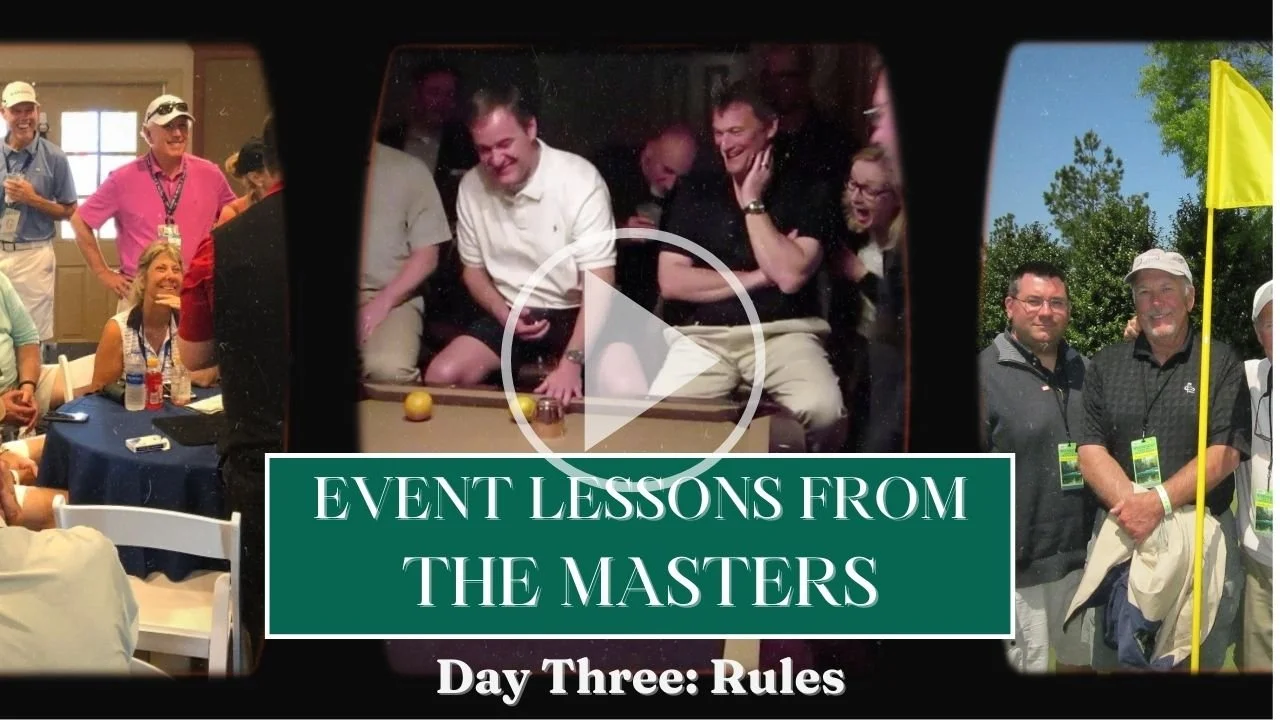
Lessons from The Masters: Rules
What do you think about "rules" at your events?
I'm learning to love them.
What do you think about "rules" at your event?
I'm learning to love them.
I'm a member of a fraternity with a strict dark-suit-and-tie dress code, even in 100 degree Florida weather.
I've attended events that bar all electronics - phones, watches, computers, cameras, etc.
I've attended events that have strict rules against discussing any business under almost any circumstance.
People think they're strict and overbearing.
But an older member told me "the strict rules preserve harmony."
"Harmony."
When was the last time an events person focused on THAT?
If only...
Because when we all agree what the rules are, and we all know that we have to leave if we break the rules...
We can all relax and focus on our other common goals - like having fun together, working together, and being among our fellow humans.
If you haven't experienced it, it's really magic.
This might be worth a conversation...
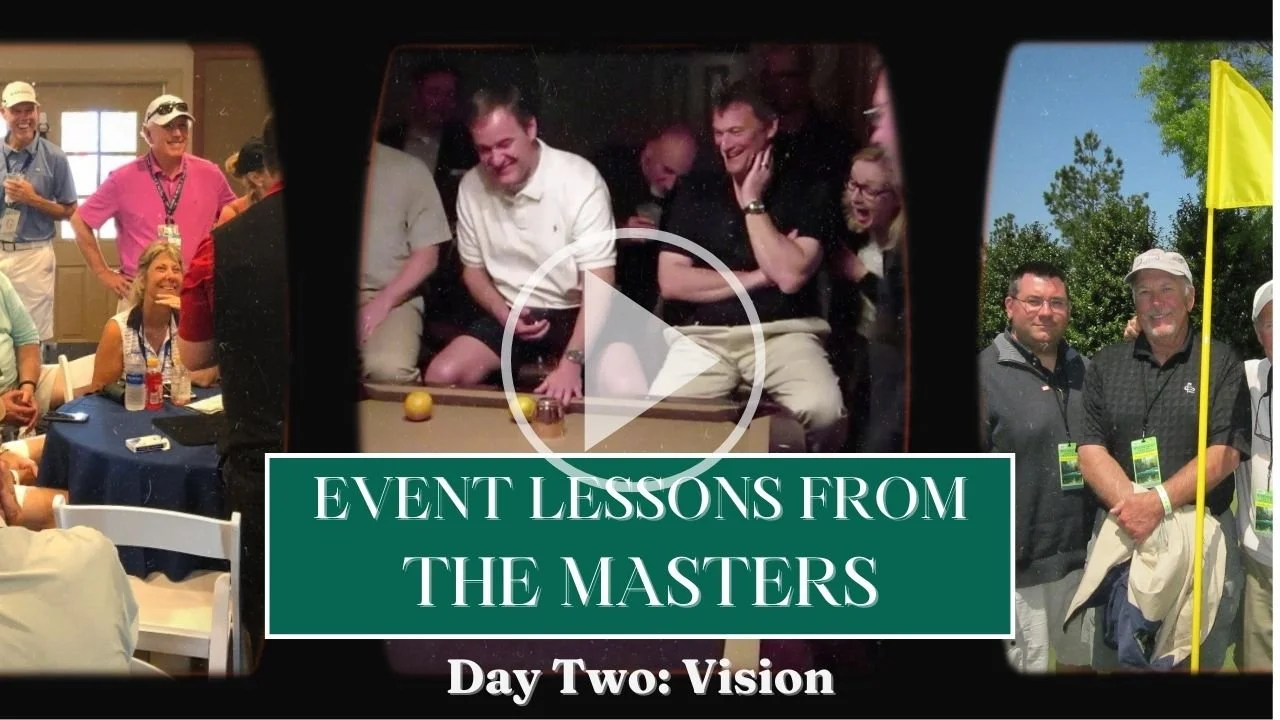
Lessons from The Masters: Vision
To some, Roberts and Jones had a reputation for being persnickety micro-managers with a "my way or the highway" attitude, but I think they're relentlessly pursuing their vision of what the club and the tournament can be.
How true are you to your event's vision?
How willing are you to let someone else affect it?
One of my favorite things about Augusta National Golf Club, Bobby Jones, and Clifford Roberts is their incredible clarity. They know exactly what they wanted the club to be, how The Masters should look (both on TV and in-person), and what kind of reputation the club should have...
To some, they've had a reputation for being persnickety micro-managers with a "my way or the highway" attitude, but I think they're relentlessly pursuing their vision of what the club and the tournament can be.
As an event vendor, I would love to hear every detail of my client's vision for the event: what they want, don't want, wish they could have, and hope to achieve.
That's the only way I can adapt and adjust my show to suit their specific vision and make sure they get the result they want.
If that's how you see your events, it might be worth a conversation.
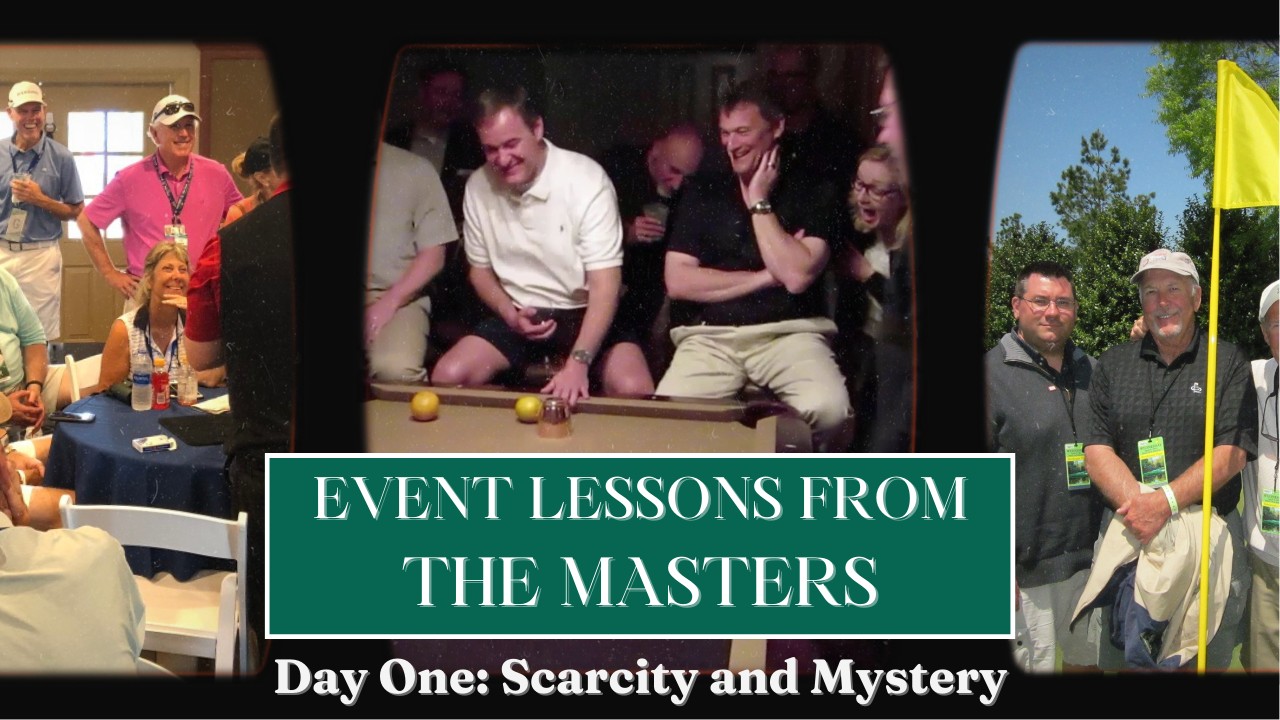
Lessons from The Masters: Scarcity & Mystery
The Masters has definitely "mastered" scarcity. Everyone wants to get in, but almost nobody can actually see the place for themselves. Anyone who has been inside has the attention of everyone who wants to get inside.
You know my favorite part of The Masters?
All the mysterious stories that people tell about what goes on inside, the quirky history, and the "fake news" hoaxes...
The Masters has definitely "mastered" scarcity. Everyone wants to get in, but almost nobody can actually see the place for themselves. Anyone who has been inside has the attention of everyone who wants to get inside.
That's why they get a lot of crazy second-hand stories (but that only raises the desire to get inside and see it for yourself!).
If you haven't leveraged scarcity at your event, it's definitely something to have a conversation about.
I Learned A Huge Business Lesson I Learned From My Son...
I learned a huge business lesson from my son last week. Maybe you can use it, too..
All my mentors and heroes say the same thing: “nothing happens until you do something.”
Last week, I learned that you don't have to do precisely the right thing as long as you do something.
I had to spend the night in the hospital with bad stomach pains.
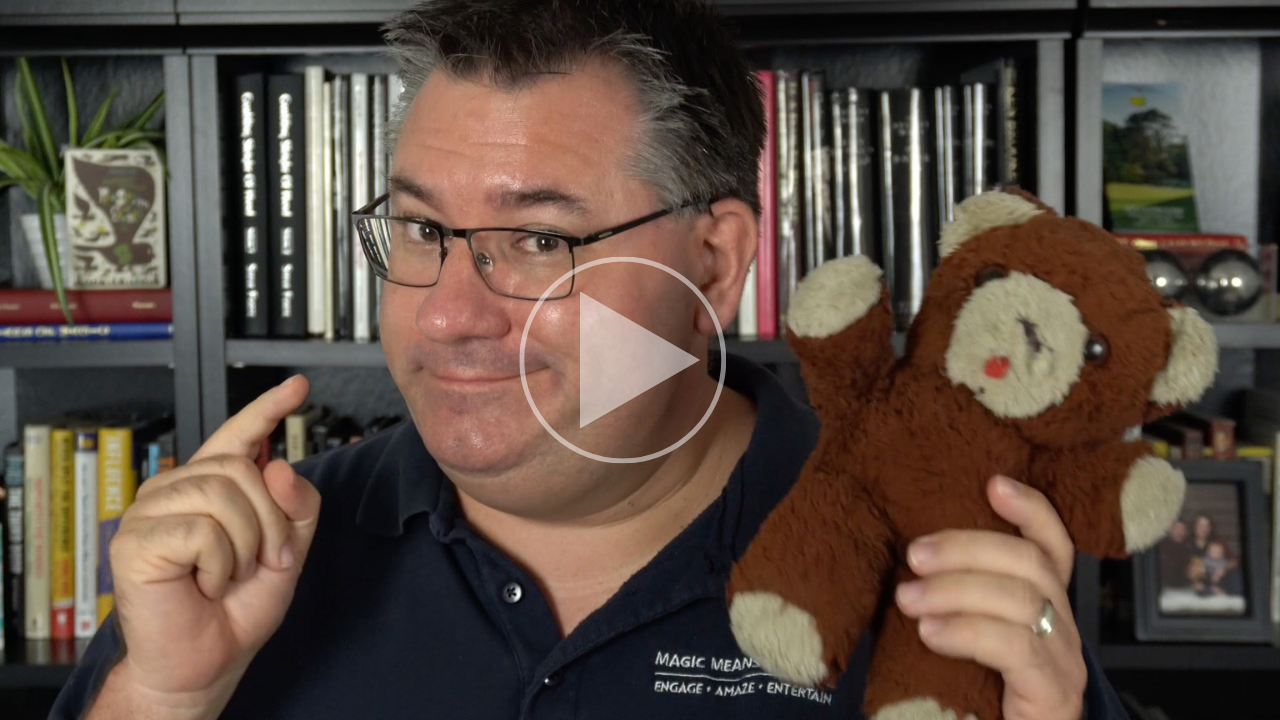
When Amanda told Ben I'd be away for the night, he first said, "Daddy needs a stuffy." He grabbed my 40-something-year-old teddy bear from his bedroom and brought it with him when they visited that night.
He's a good kid.
It made me feel loved, cared for, and proud that my son thought of me like that (obviously, we're doing something right in the parenting department!).
I thought about all the opportunities I have to call, send a note, send a gift, or send something that says, "I'm thinking of you..."
Not just the rough moments in life but also promotions, successful projects, and those odd moments when "I thought of you when I saw this."
I realized I've often wimped out and done nothing this year.
I used to think, "Better to play it safe and do nothing than overreach and embarrass yourself."
But Ben showed me that it's a good idea to do something rather than not.
After all, "nothing happens until you do something."
Til next week
Mike
PS: If you think I’m crazy, I started a consistent keep-in-touch campaign of just phone calls this year. I can trace at least $20,000 in added revenue to that one campaign.
PPS: From the "I don't like to sound pitchy, but I am impressed by good cross-promotion" department...
Amanda likes to send friends and family the Mint Bliss foot lotion and socks combination from Mary Kay. These are an inexpensive but meaningful way to do a little more than just sending a note or a gift card. They're also good stocking stuffers. You can learn more here or contact Amanda through her website.
PPPS: There are less than 70 business days left in 2023. Holiday party dates are booking up fast, and clients are already booking corporate meetings, conference hospitality, and trade shows well into 2024.
If you think I might be able to help you book more business, thank your customers or employees, or create an over the top experience at your next event, now might be a good time to talk.
Three Event Planning Secrets from "The Three Great American Parties"
What makes these three events experiences “an invitation you simply don’t turn down?”
These easy-to-steal secrets WILL surprise you.
What makes these three events experiences “an invitation you simply don’t turn down?”
These easy-to-steal secrets WILL surprise you.
Last summer, over drinks after a show in Colorado, three of my clients explained, “there are three great parties that someone can be invited to every year.” The general public doesn’t necessarily covet these invitations, but the people who get invited to these events always attend.
I asked, “What makes these events a must-do?”
I was amazed by their responses, but they made a lot of sense when I thought about them.
Curious how you can implement these strategies at your events?
Maybe we should talk.
Make an appointment below, and I’ll be happy to explain what people like you have done at events like yours.

Nine Ways Salespeople Can Build Trust and Rapport with Their Clients and Prospects at Corporate Events
Recently one of my clients asked me to explain exactly how his salespeople and executives can get the most out of their upcoming hospitality event.
I assembled all the tips and ideas I’ve picked up from clients, salespeople, and executives, added some psychology from Robert Cialdini, and went to work.
Recently one of my clients asked me to explain exactly how his salespeople and executives can get the most out of their upcoming hospitality event.
I assembled all the tips and ideas I’ve picked up from clients, salespeople, and executives, added some psychology from Robert Cialdini, and went to work.
This mini-masterclass on building trust and rapport at events explains the best practices for getting people to your event, engaging clients and prospects during the event, and having effective follow up conversations afterward.
Enjoy the video.
If I can be any service - answering questions or helping you design your own client engagement event - don’t hesitate to reach out at (561) 596 3877.

MindShift: Understanding Events From The Guests Perspective Improves Event Metrics
Any sales and negotiation trainer will tell you it's essential to know your counterpart. Engaging and influencing another person is much easier when you understand their perspective.
That's a key component to successful events, too.
Any sales and negotiation trainer will tell you it's essential to know your counterpart. Engaging and influencing another person is much easier when you understand their perspective.
That's a key component to successful events, too. When I'm getting ready to perform at an event, I want to understand what it's like to be a guest or participant.
I know that walking into the clubhouse at Augusta National Golf Club was intimidating.
Attending "business social events" can be uncomfortable. Will we talk "business" or "social" during cocktails? Will someone be offended if I discuss business?
Even though I'm in a sea of people at a customer appreciation event during a trade show or conference, I feel a little "lonely in a crowd."
I rarely raise my hand to comment during a break-out session because people might disapprove of my ideas.
I know I'm normal, too.
That's why I usually start by entertaining on the edges of a party.
I get those people laughing, forming them into a little crowd.
The fun helps them get to know each other.
Now, they're engaged in the event.
I do that in all four corners of the room.
Then I start working to the middle of the event where the extroverted people are.
They naturally laugh louder. They attract people from the edges of the room.
Now, we're all having fun together.
Rinse. Wash. Repeat all night.
That's what turns a typical cocktail party into an event people look forward to attending next year.
Want to see what this looks like in action?
Here are some photos from a 2018 event, where I used the Always Something More strategy to engage the audience, get them laughing and having fun together, and eventually turned the group into one, big laughing crowd.

The first “set” was for a few people who were just arriving…
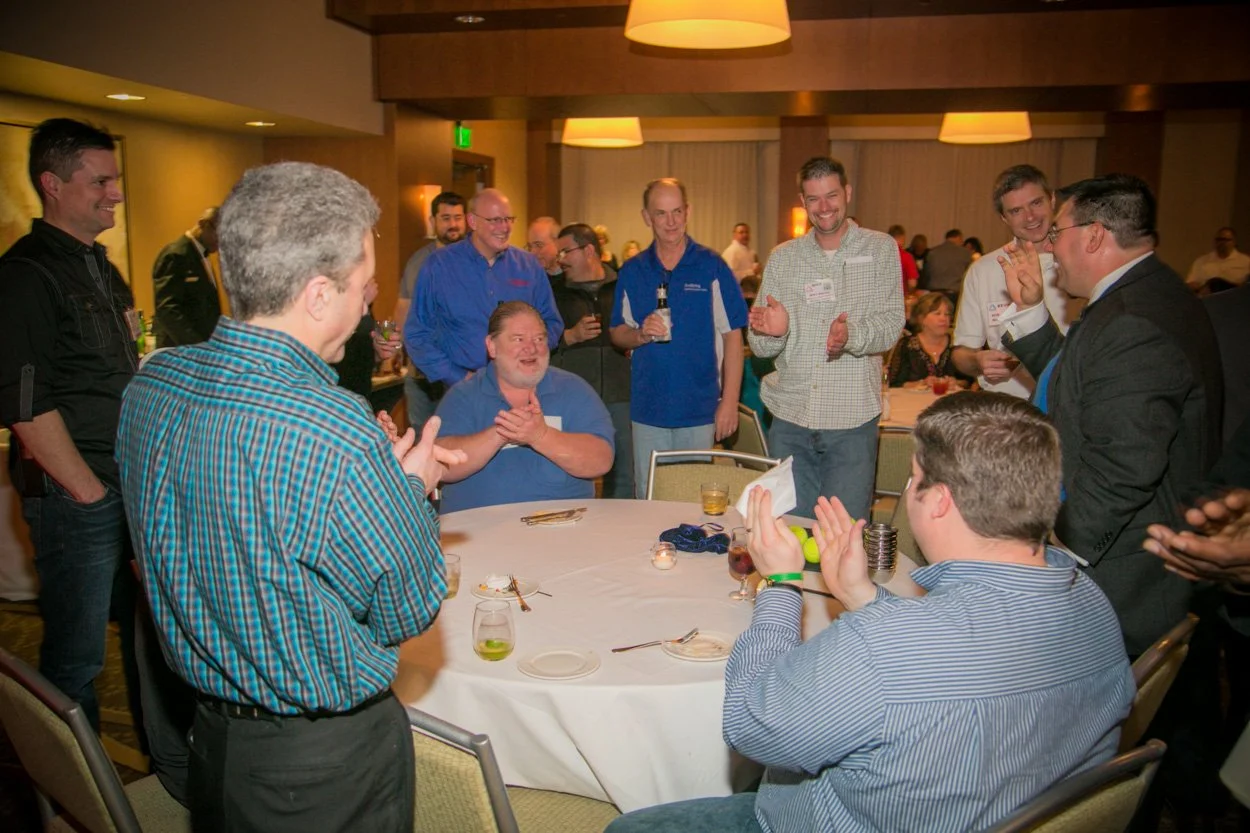
Then I entertained a group on the other side of the room…

Still another group in another corner…

Then people started to walk over to where I was performing…

Until we collected almost the entire room.
That’s how it works…
Of course, magic doesn’t solve every event challenge or work in every situation.
The best way to figure out if it can help you get the results you want from your event is to have a conversation.
I’ll ask you a lot of questions about the event you’re planning, what you’ve done in the past, and what you hope to accomplish this time.
Based on what you tell me, I can tell you exactly what other people like you have done in your particular situation.
To set an appointment, call (561) 596 3877, or click here to schedule an appointment through Calendly.

What are The Pictures Saying About Your Event?
Great images tell a story about the event - who was there, what happened, and what did people think about it.
Great images tell a story about the event - who was there, what happened, and how people felt.

More importantly, they have an impact on your next event by:
Strengthening the memory of the event for those who did attend
Developing curiosity among people who did not attend
Creating anticipation for the future event
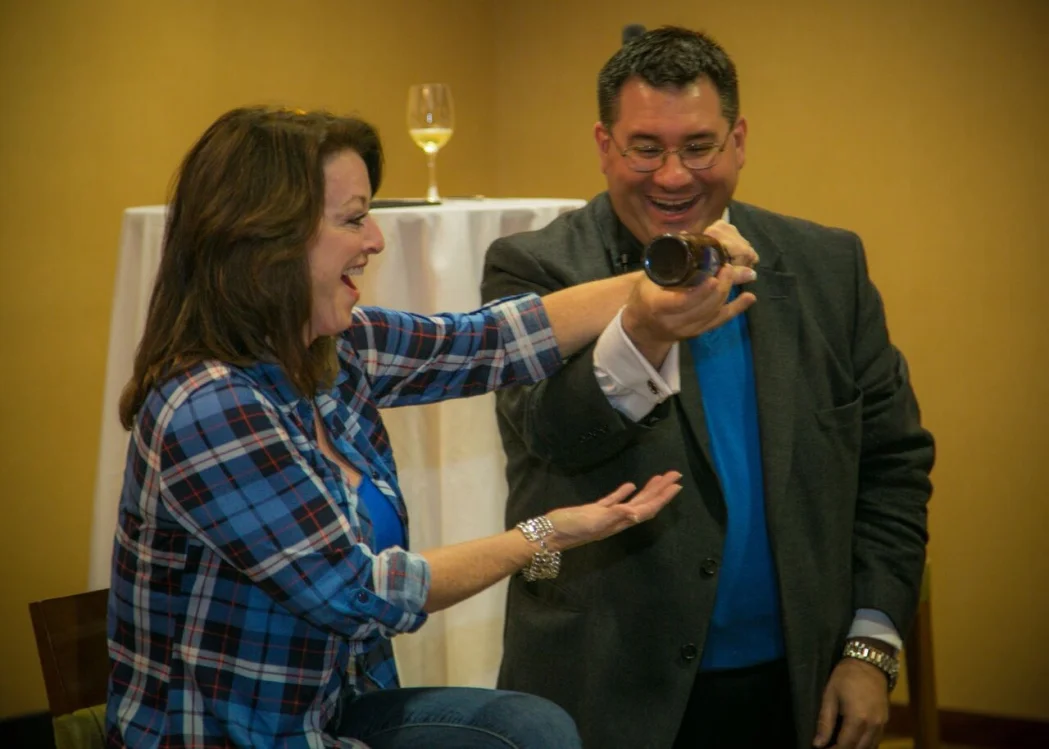
But the images I saw after New Year’s Eve 2022 missed the mark.
I saw surprisingly few pictures of performers interacting with the people at the event. Worse, the audience had their back to the entertainment in several images.
Typically, we want to see people laughing, smiling, and slapping each other on the back. Some of the people in the pictures looked a little bored.
These were probably fantastic events, but the images did not tell that story.
Here are three ideas that might help you get better images from your next event:
Work with the photographer. A great photographer knows how to capture “the moment.”
Talk to Your Entertainers. Experienced performers know how to work with the photographer to create those images “on the fly.”
Record a video on your phone. A video is like thousands of still images, so you can select the image you want using the screenshot function.
Of course, events are more than laughs and smiles. Pictures should capture and convey conflict and drama, feelings of frustration and anguish, insightful breakthroughs, and moments of ultimate triumph.
Having all those moments requires experiences that bring people together in an emotionally compelling way. Something has to trigger the laughs, facilitate the connection, and create an experience your guests are talking about for months to come.
Maybe I can help.
If you are open to a conversation about an upcoming event, what you have done in the past, how you evaluate the success of your event, and what you hope to achieve this year, call (561) 596-3877 or click here to schedule an appointment.
The 2023 Rules
10 Lessons Learned in 2022 and Carried Forward in 2023
10 Lessons Learned in 2022 and Carried Forward:
Whether it’s reading from LinkedIn, other people’s blogs, or just plain life experience, I picked up a lot of great stuff in 2022. Here’s a short list of ten things I’m adding to my mindset in 2023.
1) The Matt Nettleton Rule: The current situation is neither permanent nor pervasive.
Everything is changing, and every situation can be changed - even if that just means looking in a different place or talking to different people.
2) The Elon Musk Rule: Life is so much simpler when you stop explaining yourself to people and just do what works for you.
3) Dad's Rule #1: Someone's always making money somewhere.
Go find that person and sell him something.
4) Dad's Rule #2: It's Always Something.
There's always a problem, frustration, irritation, or disaster happening. Stop expecting a perfect day and have fun.
5) Scott Adams' Rule: Follow the Money
Works almost 100% of the time if you want to know "why is that happening" and "what happens next."
6) Raffi Rule: All I really need is a song in my heart, food in my belly, and love in my family.
7) The Mary Sue Rule: Don't start at the top. People prefer to hear about the Hero's Journey - start at the bottom, identify the challenge, adapt to meet it, and overcome it.
8) The Marine Corps Rule: Improvise. Adapt. Overcome.
9) Benjamin's Rule: Don't yell at people; they have to discover they want to change.
10) Nema Semnani's Rule: Fear is a liar - it's means well, but hides opportunity.
Last year was a fantastic growth year in events, too.
I’ve got a lot of new “rules” that are key to successful hospitality events, trade shows, client appreciation events, employee appreciation events, team building, holiday parties, and all the things I do to help my clients.
Looking forward to sharing those with you in 2023!
If you’re open to a conversation about the events you’re planning in 2023 - what you’ve done in the past, how you measure success, and what you hope to accomplish in 2023 - I’m happy to share what people like you have done in your particular situation.
Give a call at (561) 596 3877 or click here to schedule an appointment.
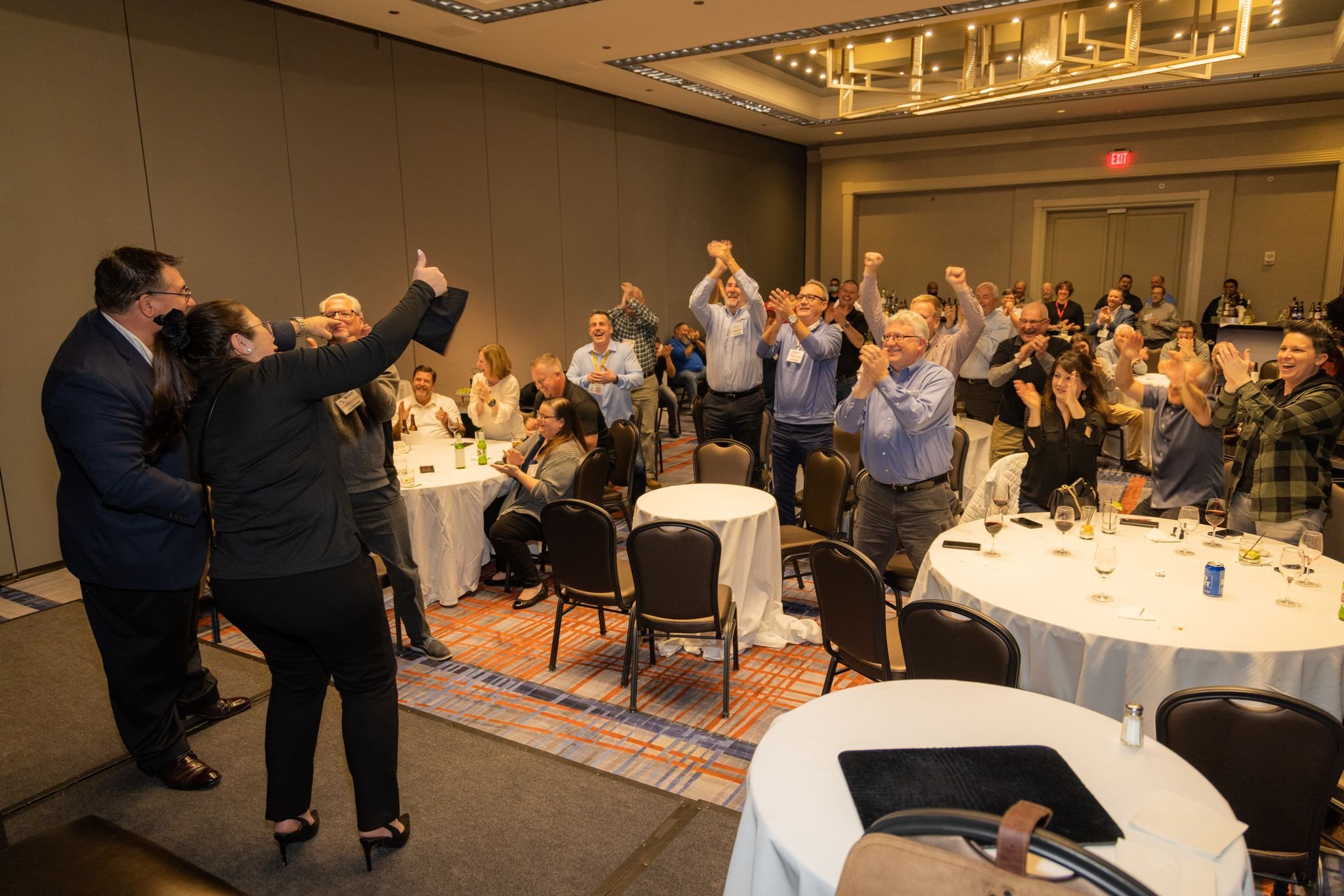
From the WD Armstrong / LongItem meeting in Atlanta last year - great audience enjoying the all-new version of Magic with YOUR Mind. We enjoyed three separate standing ovations during that show!
What Your Marketing and Events Team Needs to Know About Entertaining Executives and Engineers
For over 20 years, I’ve wondered why my magic and mentalism always seemed to land so well with engineers, heavy industry executives, doctors, lawyers, and business people. They called me to their events year after year.
Their marketing departments and event planners seemed to think they were crazy, too. “Why would magic be a good fit for this event?”
Now I know.
I finally figured it out. I feel like I have to share this with you.
For over 20 years, I’ve wondered why my magic and mentalism always seemed to land so well with engineers, heavy industry executives, doctors, lawyers, and business people.
These people bring me to events like The Masters, and they want me entertaining their clients and customers at hospitality events, executive summits, and sales meetings.
Their marketing departments and event planners seemed to think they were crazy, too. “Why would magic be a good fit for this event?”
Now I know.
It’s all about DISC.
If you’re unfamiliar with DISC, it’s a four-way classification system psychologists use to categorize communication styles.
Your communication style has a tremendous impact on how you perceive others and how they perceive you. I don’t have time to go into it here, but you can learn more here.
The DISC profiles split two ways:
“task oriented people” (Type C and D) vs. “people oriented people” (Type S and I)

Typically, event planners are very detail-oriented people who really like to talk with other people and have fun conversations.
Most of them are in the Type S and I groups: they like everyone to agree, they love to talk, and they want everyone to like them. They get energy from talking to others.
Focusing on “things” and “problems” takes energy for an I or S (not that they can’t do it, but it takes energy).
Engineers and executives, however, are typically Type C and D. They are task-oriented people, they get energy from solving problems and doing things, they like to move fast, they like to compete and face challenges. Doing stuff gives them energy.
“Chit chat” and “small talk” drains energy for a C or D (not that they can’t do it or don’t like it, but it takes energy).
The problem is that everyone thinks everyone else is just like them.
So when an event planner says,
“Our people don’t need anything to get them laughing and having fun together, they all know each other. They just go to bed at 9pm”
She is 100% correct. Her people do know each other, and they can talk and have fun together. She doesn’t think they need anything to make the cocktail party work, because networking talk and mingling gives her energy.
At the same time, the Type C and D engineers and executives at the event will spend a lot of energy doing the small talk, and they’ll get tired, disconnect, start answering emails on their phone, or even leave the event early.
When I discovered DISC, I realized why my engineering and executive clients kept requesting me back for their events year after year:
Having a problem or a challenge to deal with gives Types C and D a tremendous amount of energy. Working on a problem together actually helps them bond and build rapport with other Cs and Ds.
So having their mind-blown by a magic trick, watching other people get their minds blown, trying to figure out the secrets, and then talking about the magic afterward played right into their communication styles.
The magic and mind-reading gave them tremendous energy in a situation they would normally find draining.
That’s why they stayed later at the events, why they built stronger relationships around the magic, and why they were talking about the events months later.
What does this mean for your events?
I don’t know.
Magic and mind-reading seem to play well for executives, engineers, spreadsheet-enthusiasts, and people who work on “things” and details, but they’re probably not the only things that appeal to the Type C and D.
But you’re open to a conversation about an upcoming event, give me call.
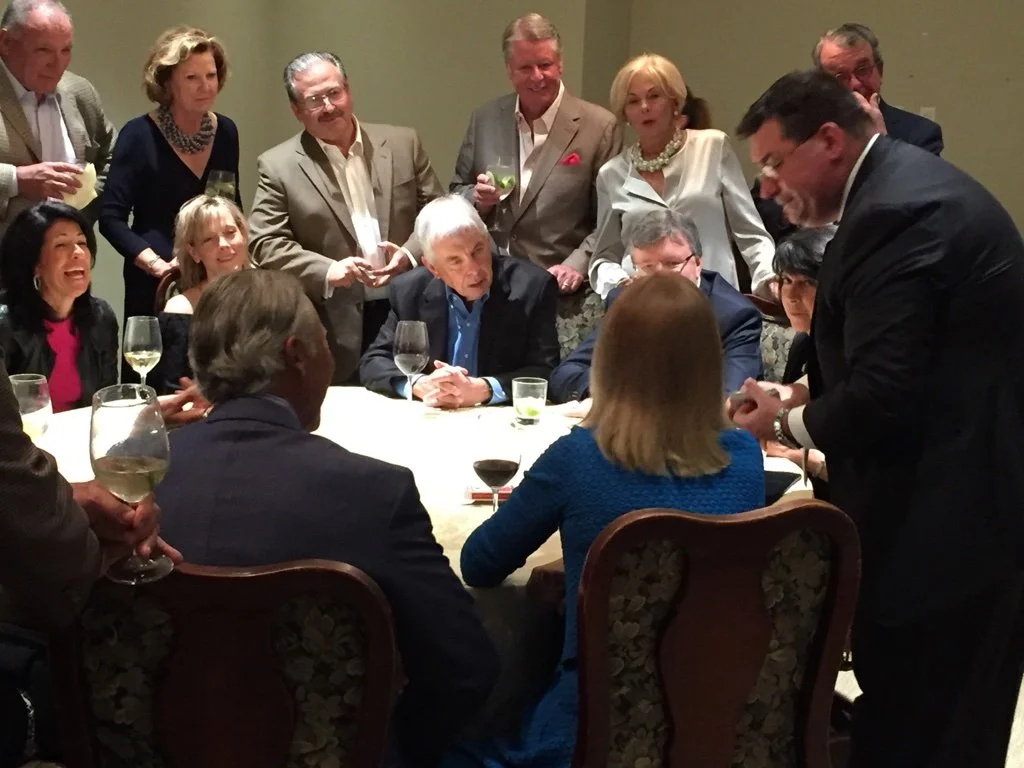
I never noticed this until I wrote this post, but in this image there’s at least one CEO, an electrical engineer, two business consultants, and a guy who manages casinos. All Type C and D personalities, and given that like-attracts-like, you can expect that their spouses are the same…