Getting Results

Mike Duseberg Mike Duseberg

A Simple Formula to 10x Your 2026 Networking Events and Welcome Receptions

Here is a simple formula - leveraging basic influence principles and psychology - that will ensure your guests meet new people and have interesting, memorable conversations throughout your event.

Everyone wants to meet new people at events, but not everyone does…

Everyone wants to meet new people at events, but not everyone does

I’m surprised how often event attendees consistently complain that they didn’t make “meaningful connections” at their most recent event.

Some say they’ve been mobbed by networking sharks; others say they don't feel welcome or included at the event.

Event planners are constantly looking for new ways to help their guests create “meaningful connections” and build “worthwhile relationships.”

Here is a simple formula - leveraging basic influence principles and psychology - that will ensure your guests meet new people and have interesting, memorable conversations throughout your event.

1) Understand that people operate according to fixed and rigid patterns.

We do the same thing at every event. We talk about the same things. We even talk to the same people. We do this because humans gravitate toward the similar and the familiar. This is why networking events are dull and frustrating.

2) Create a Pattern Interrupt

We must do something that interrupts the pattern and creates a new one. If you do this with forced networking and organized meet-and-greet, about 50% of humans will fight because they don't like being forced. If you attract and engage them with something fun, they feel like they're choosing to engage, so the experience feels natural.

3) Install a new pattern.

You must do something during the event that makes it “okay” for people to engage with people they don't know.

3) Create Equal Business Stature

People love to compare status and rank themselves among each other; unfortunately people of unequal business status often have difficulty talking openly and honestly. You create some kind of experience where everyone is equal.

This is how we leverage the magic and mind-reading to do this at cocktail receptions and networking events:

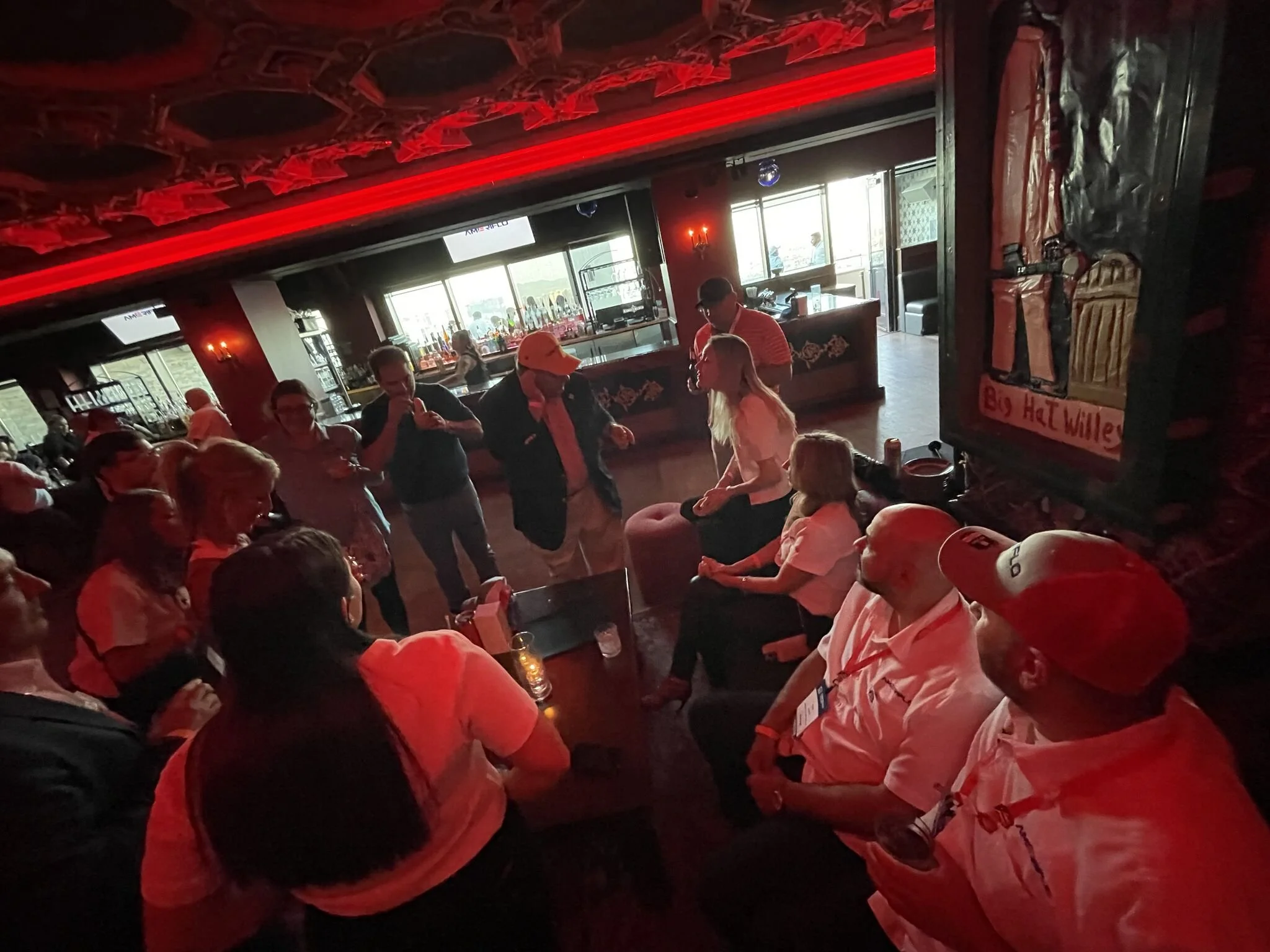
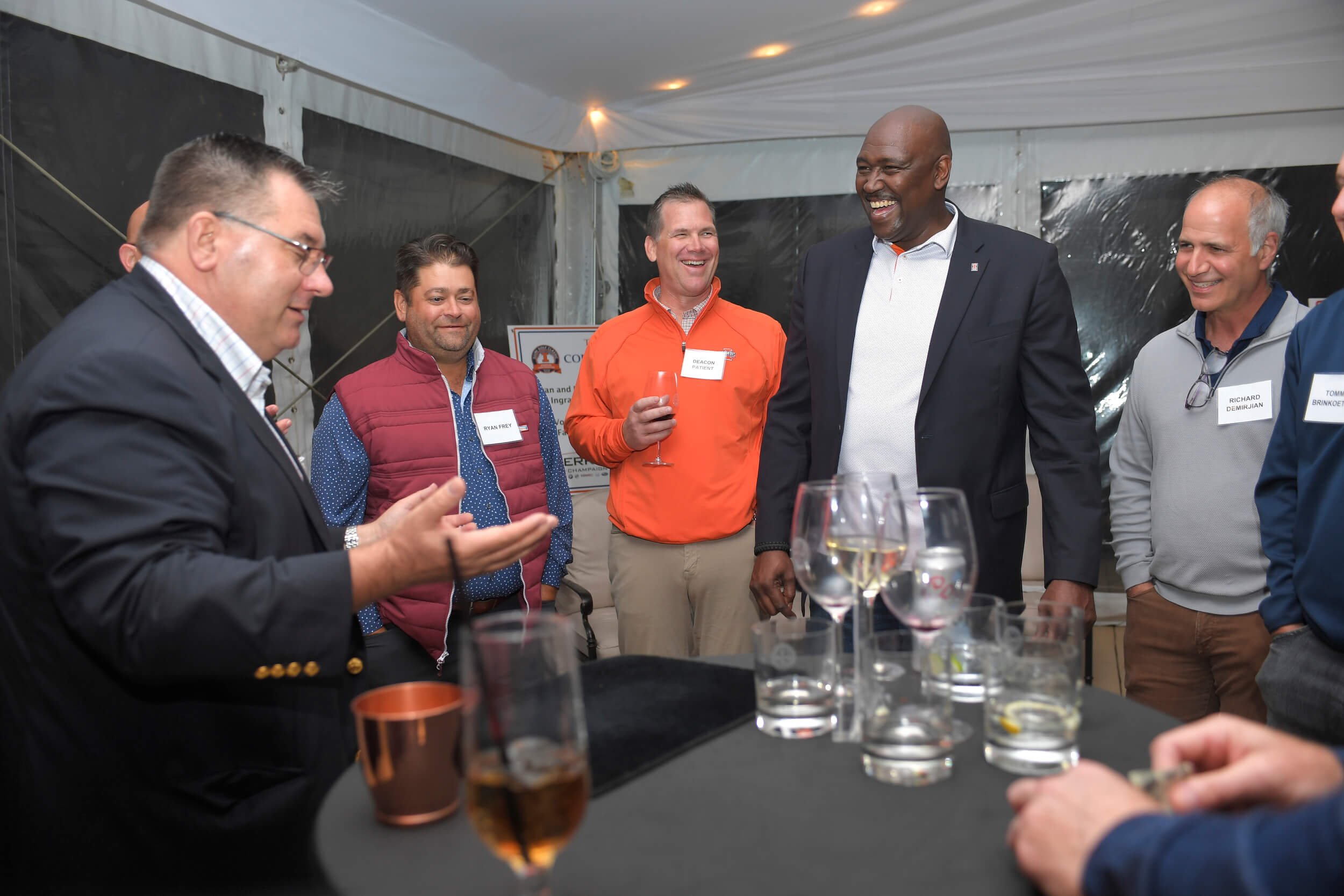
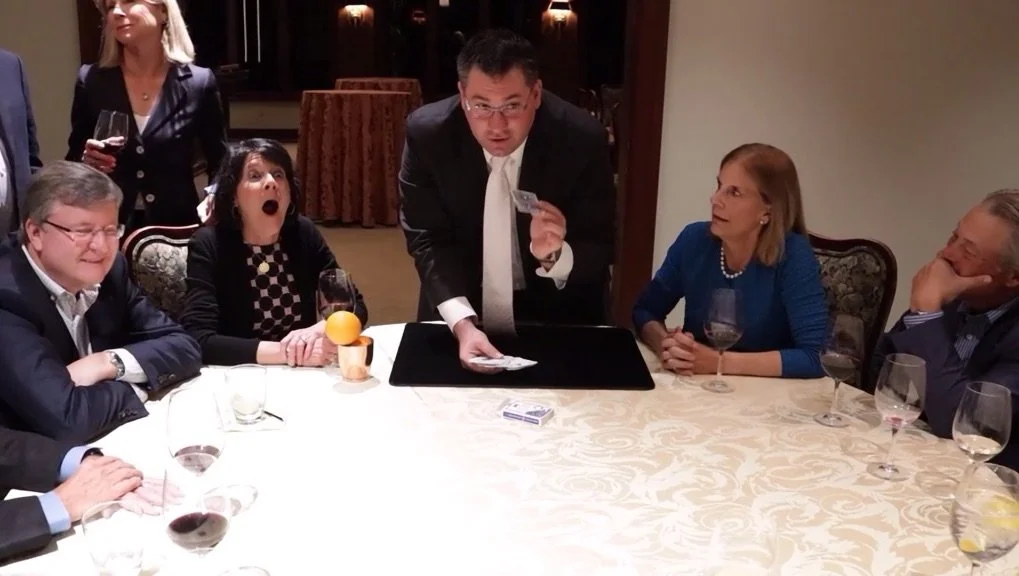
When I approach the group, by saying, “Hi, I’m Mike, Bob from Company X asked me to entertain you for a few minutes…”.

This enters their existing pattern - it’s Company X’s event, so they decide what happens - and moves them from their “Small Talk” pattern to a new “Watching A Show” pattern.

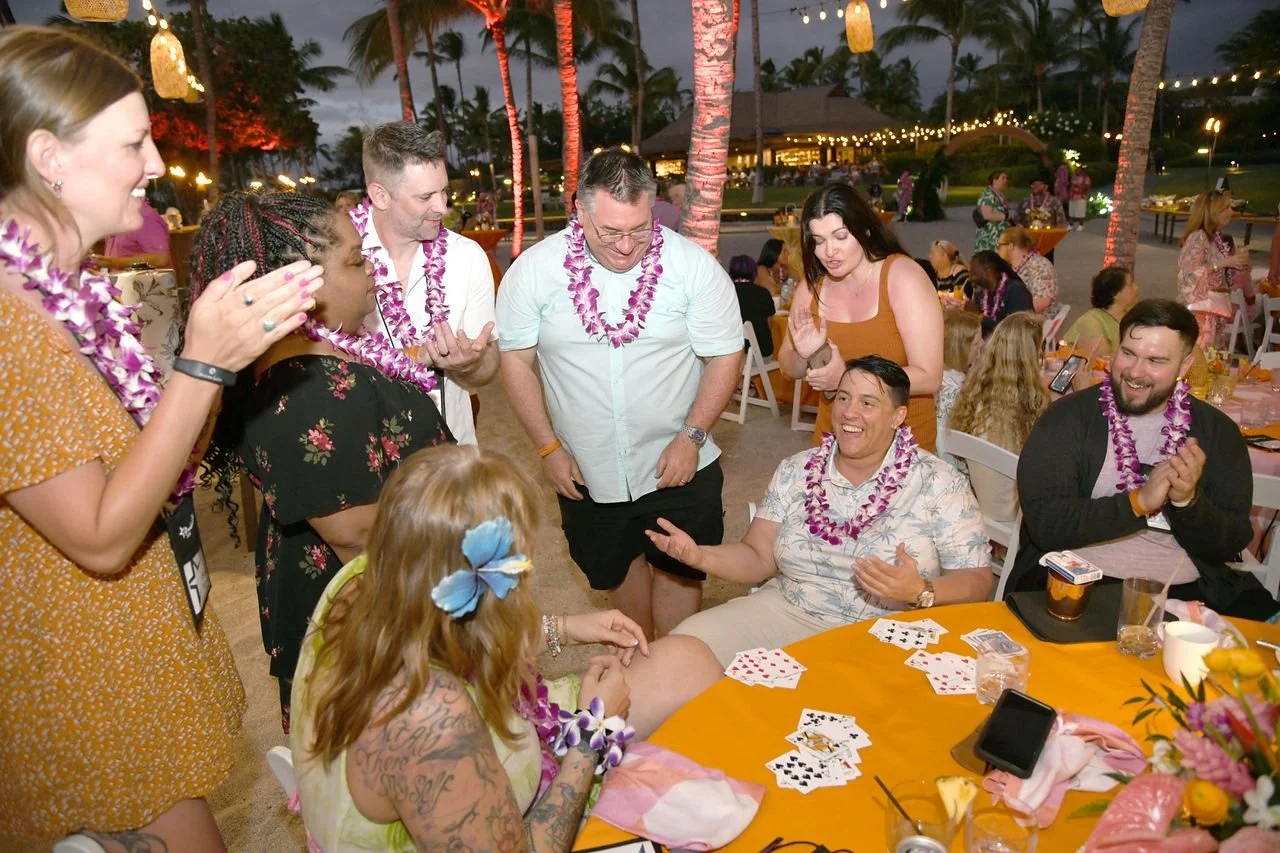
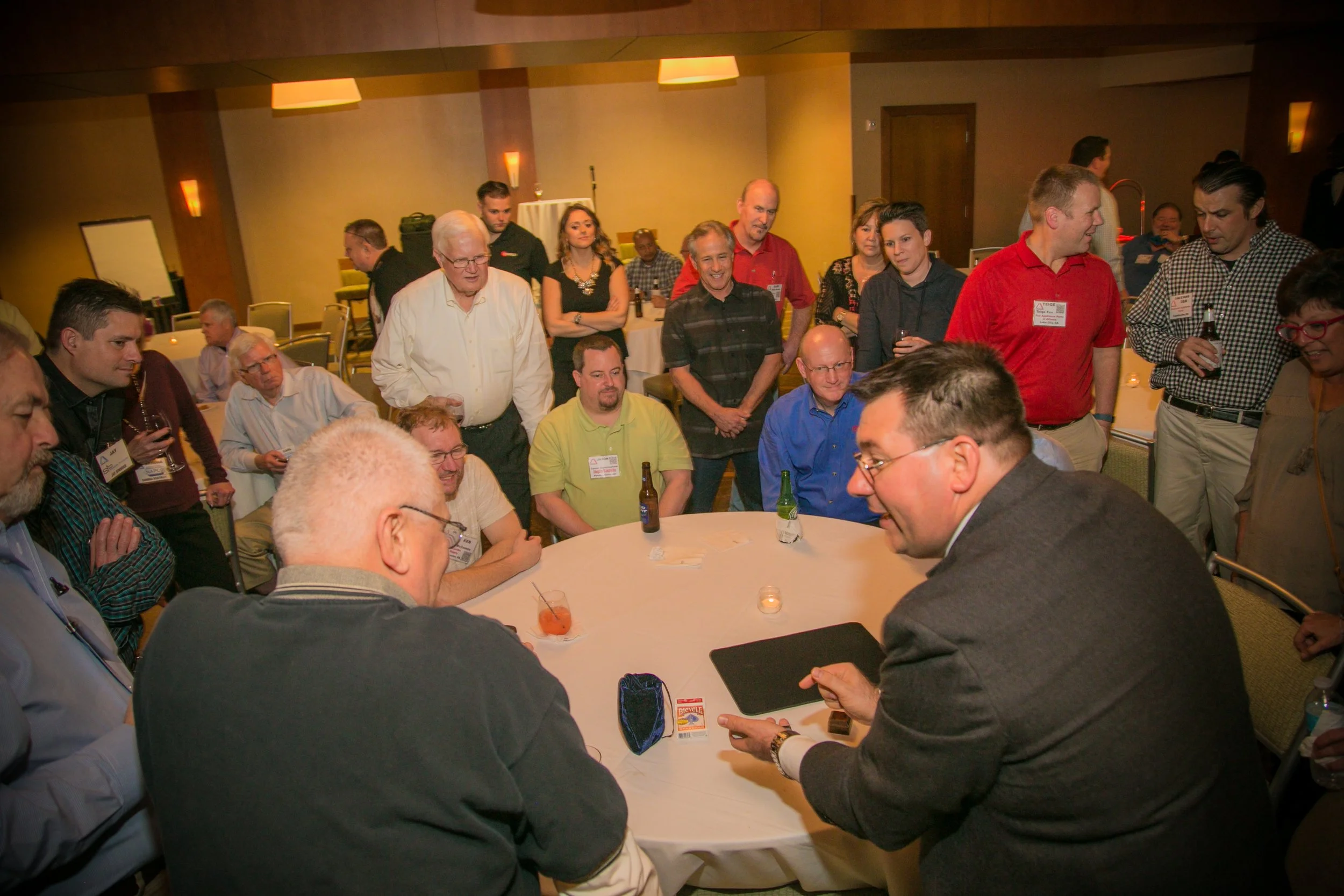
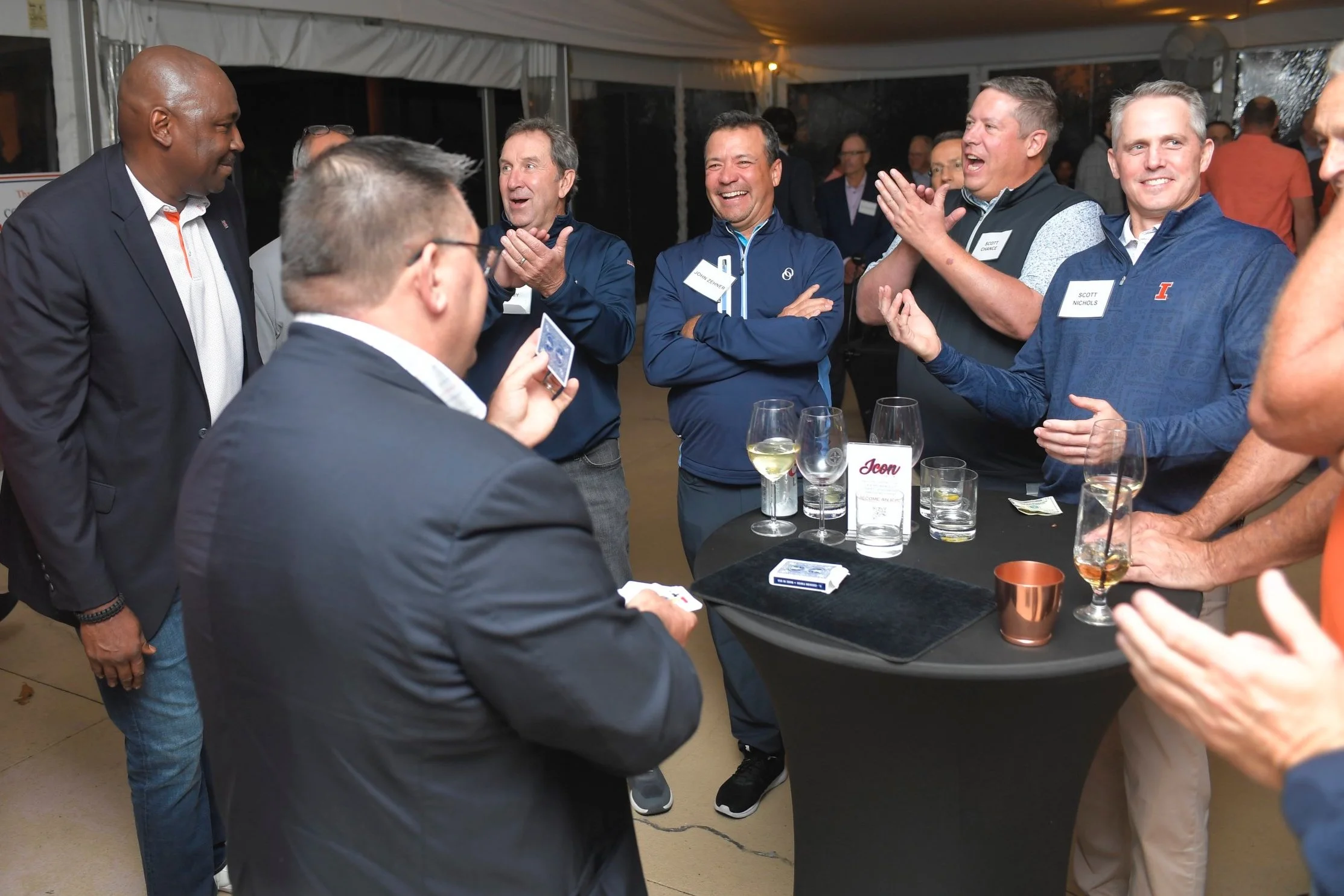
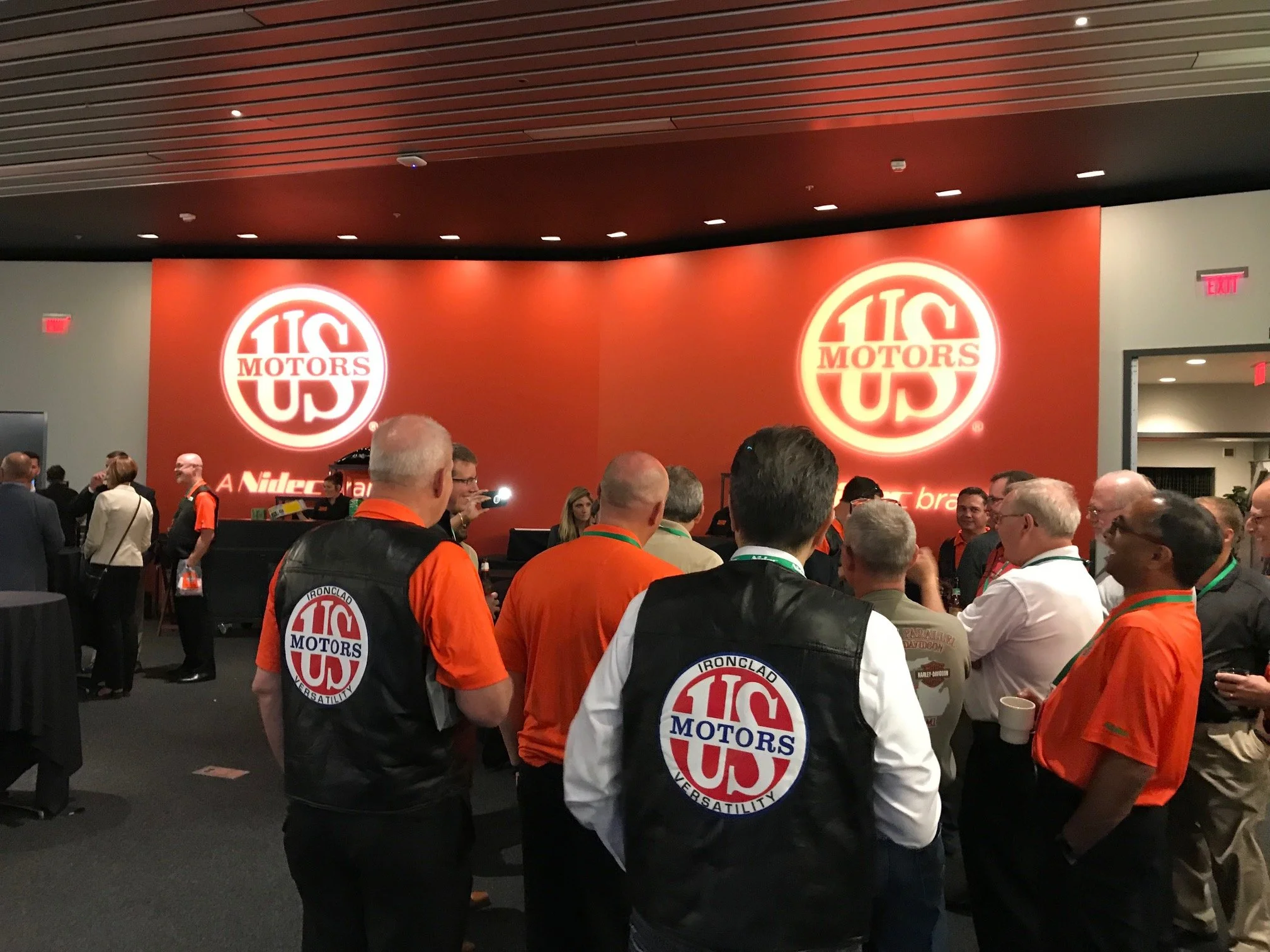
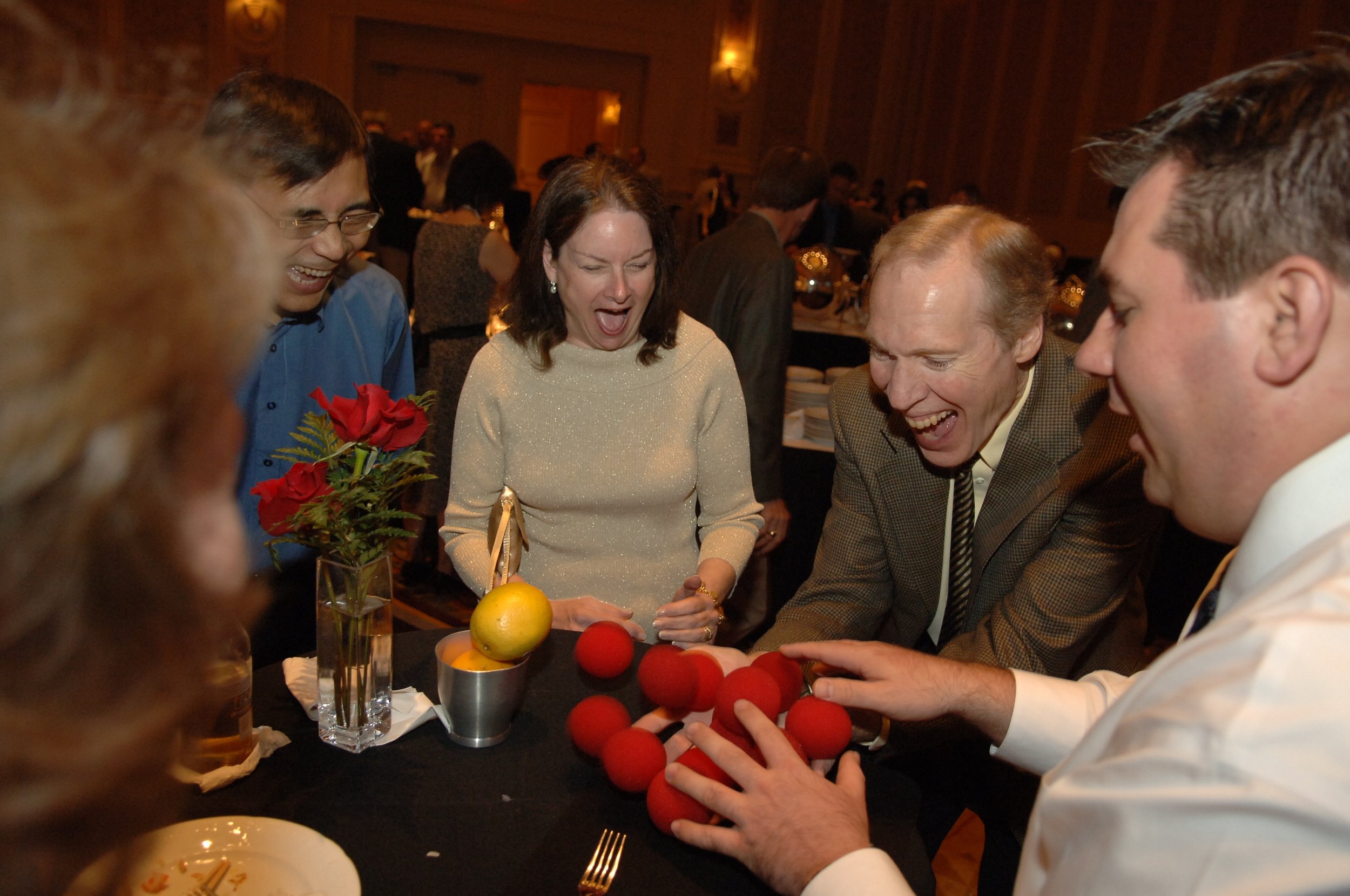
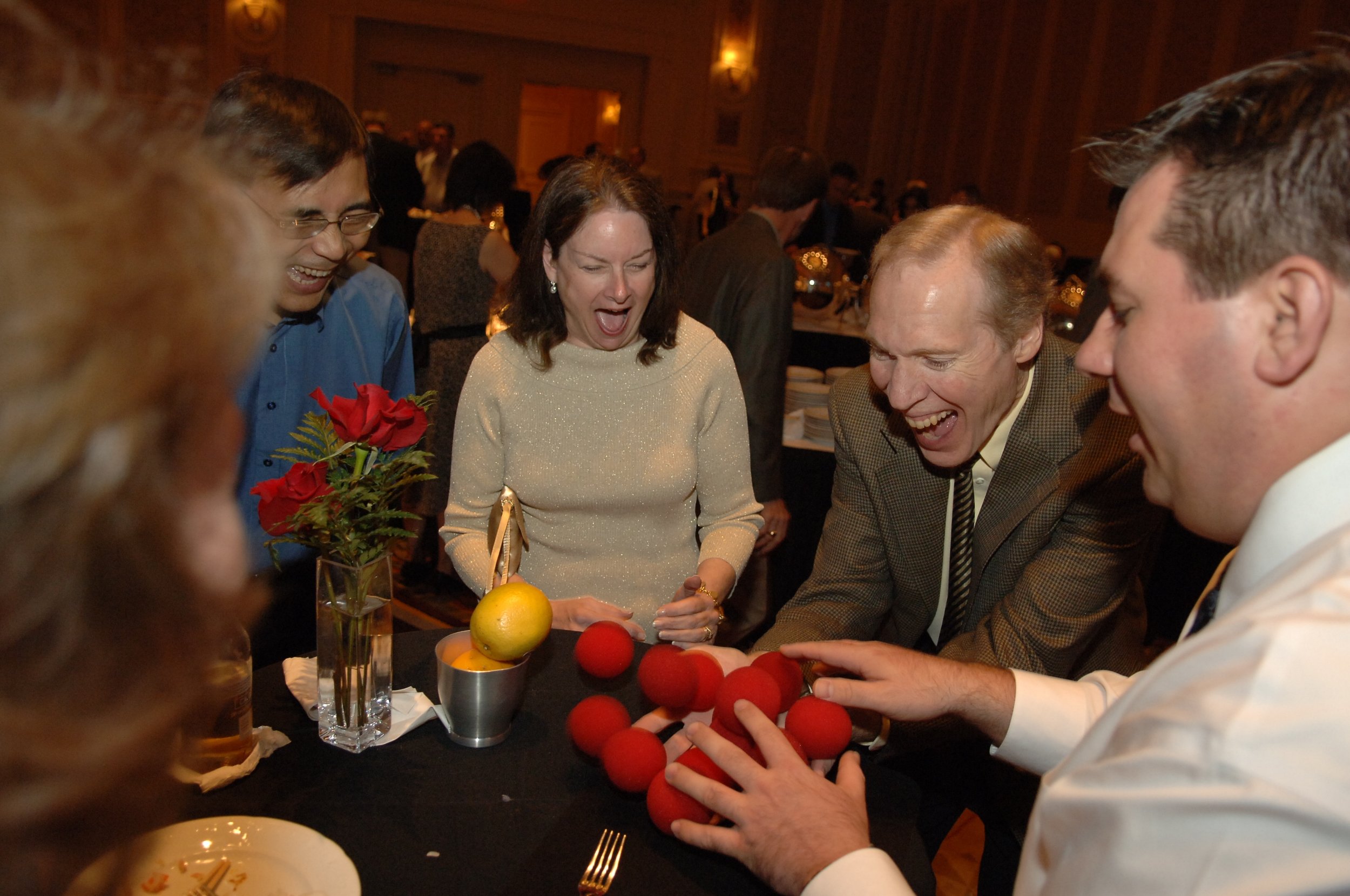
The “Watching a Show” pattern has different rules. Because of the laughs, applause, and reactions, people outside the group feel comfortable joining, so they can watch as well. I encourage this by waving these people in.

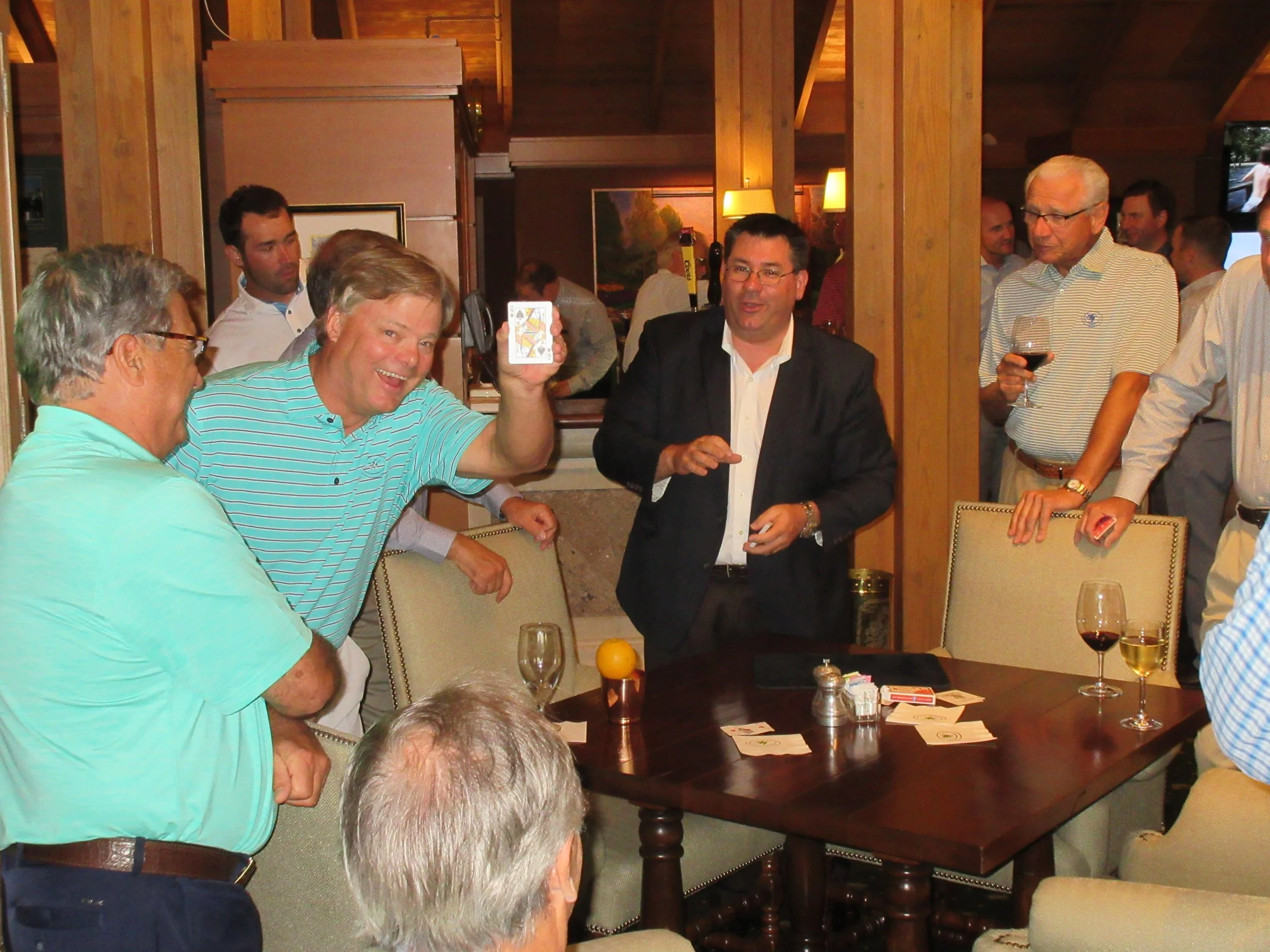
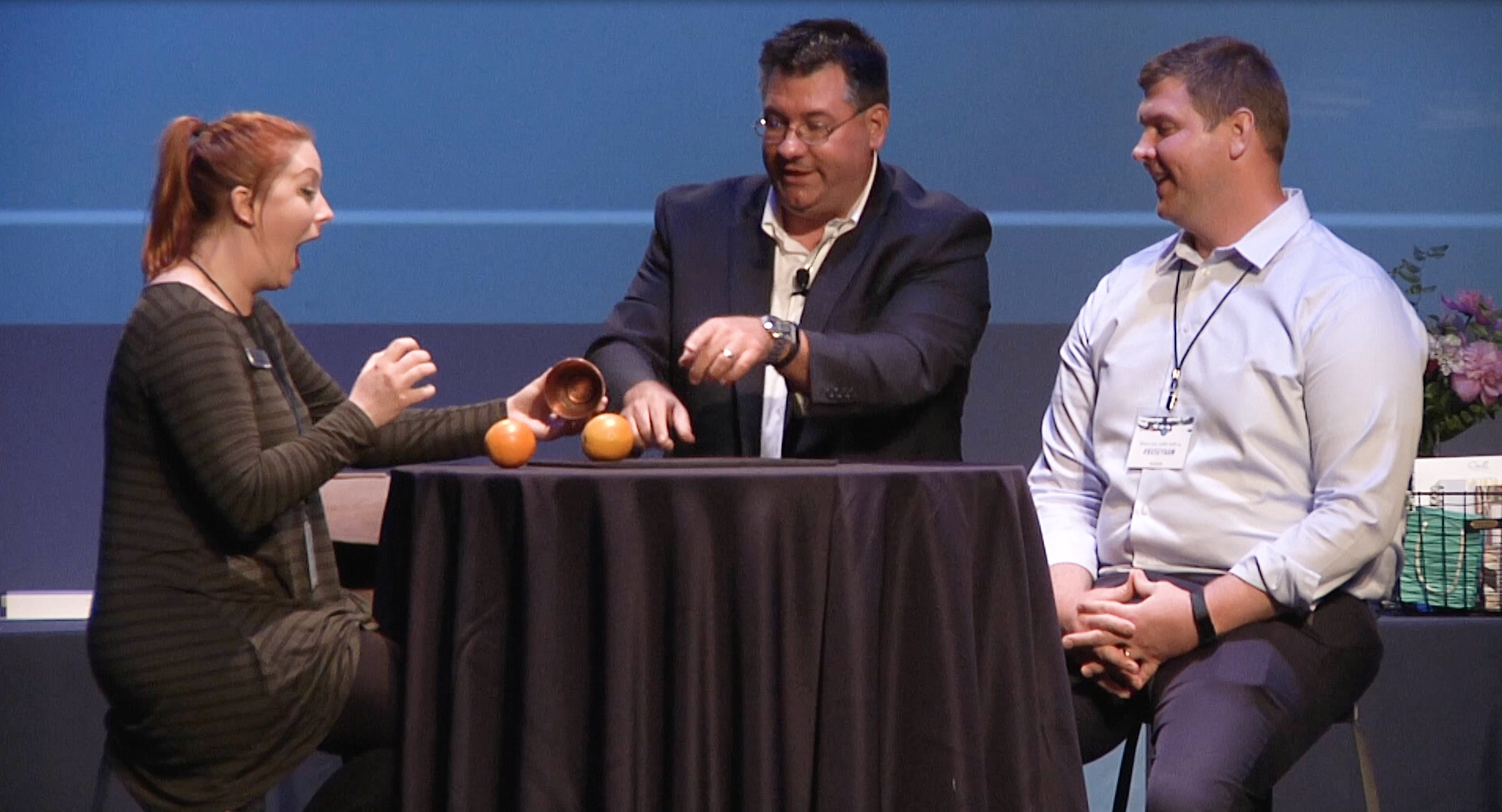
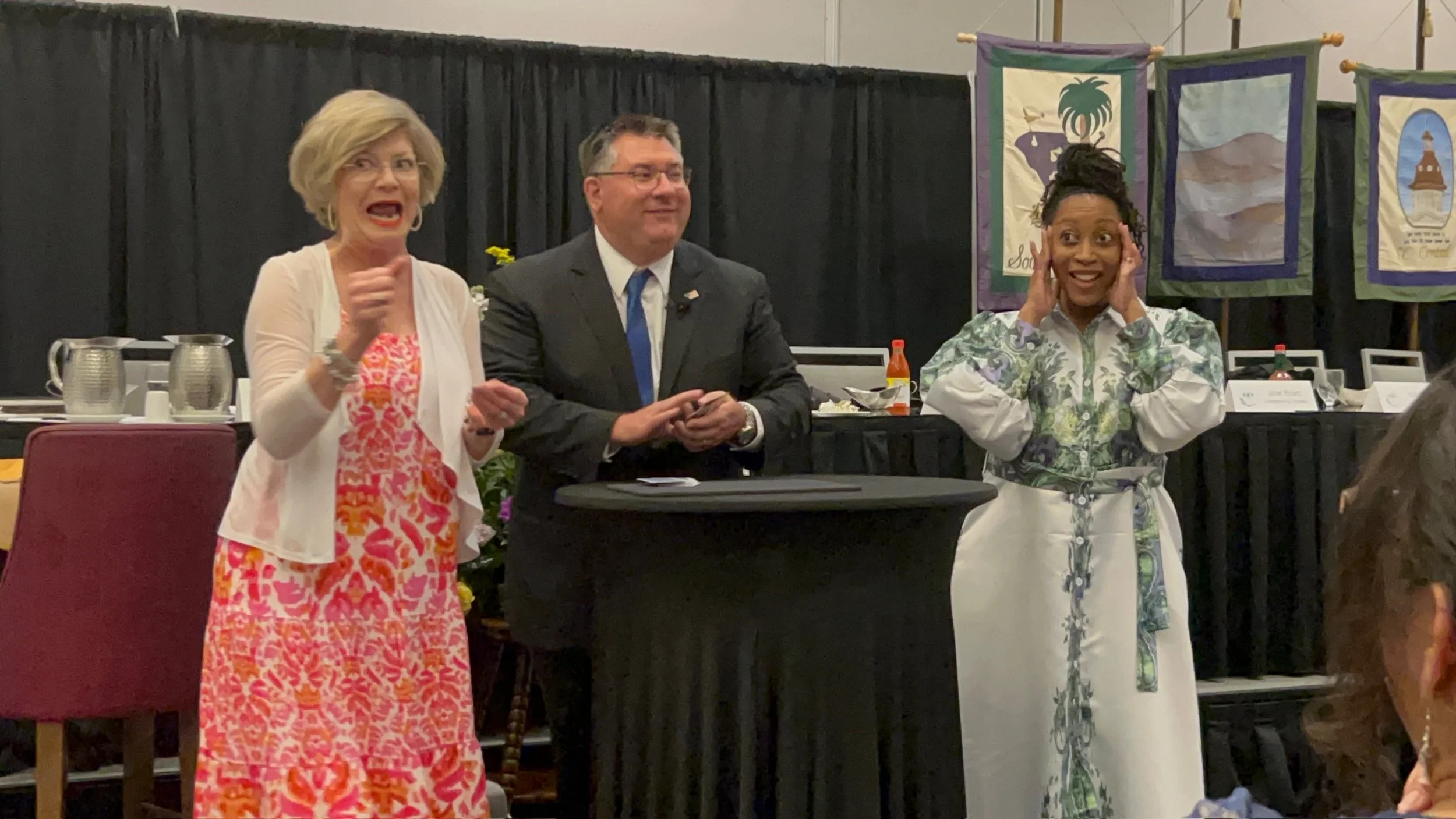
The magic amazes everyone equally. Everyone has their own perspective on what they saw me do, but nobody knows how it works. This creates equal business stature among the group, so everyone feels comfortable and welcome talking.

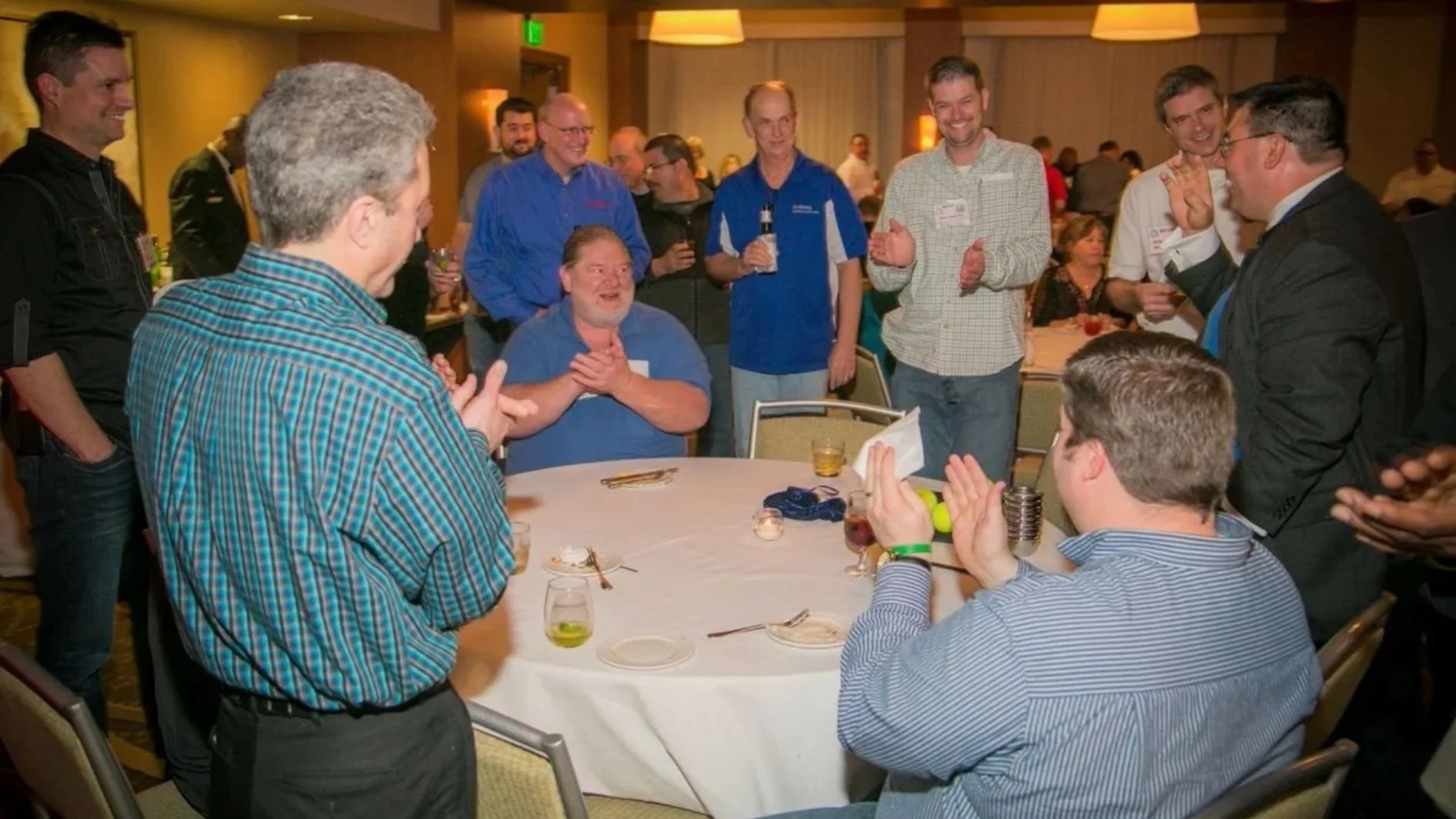
The magic is now a shared experience among everyone in that group. Later, they will recognize each other, remember the magic, and feel comfortable speaking with each other because they “know” the other person.

It’s a very simple, very direct process, but it creates a completely different level of connection among the people in the group.

In business, conversations are how we get everything done: prospecting, selling, revenue generation, referral generation...

This process gives your guests more conversations (and better quality conversations), so they can comfortably accomplish their business goals at your event.

Click Here to Schedule a Conversation with Mike

If you’re not ready to talk yet, but you like what you’re reading, why not join the Entertain the Brain Newsletter?
Mike sends out a useful idea, tip, case study, or concept every Thursday at 10:30am.


Join the Entertain the Brain Newsletter

 
Read More
Mike Duseberg Mike Duseberg

Why welcome receptions and networking events fail (And HOw to Make yours A Success!)

The current crop of popular networking ideas are often counterproductive because they only force people outside of their comfort zones.

Like a rubber band, people immediately go back to their previous beliefs and behavior when we take the force away.

This is the most important idea I've shared in a newsletter yet.

This is big BIGGEST REASON welcome receptions and networking events fail.

Each of us has a set of subconscious rules about how we behave in a given situation. These rules cover everything from how we should act to who we should talk to. Everyone has a unique set of rules, and everyone believes that their set of rules is correct.

That set of rules is called a “frame.” When we do things that fit into our frame, we are comfortable. When we do things outside of our frame, we become uncomfortable and immediately want to return to the behaviors that fit within the frame.

So when you see that irritating guy walking around a networking reception giving everyone his business card and pitching his services, he’s operating within his frame. No matter how irritated you are, he thinks he’s doing the right thing.

On the other hand, there are nervous wallflowers who spend the whole night talking to the same three people. They might not meet anyone new, but they believe they are doing exactly what they should be doing at a networking event, too.

This is why most networking events and welcome receptions fail.

Everyone has a different frame and a different understanding of how they should act at an event.

The current crop of popular networking ideas are often counterproductive because they only force people outside of their comfort zones.

Like a rubber band, people immediately go back to their previous beliefs and behavior when we take the force away.

The "new connections" die because 1) people's existing beliefs prevent them from reaching out afterward or 2) their counterparts' existing beliefs program them to reject the outreach.

That makes everyone uncomfortable, frustrated, and even angry. They thought they were there to meet new people, but… apparently nobody else was!

To effectively create networking, we need to transform our attendees into different people who have different beliefs about what's acceptable and effective.

There are four steps to making this happen:

1) We have to interrupt the existing pattern or “break the frame.”

As a magician, I do this by approaching the group,, and shocking and surprising everyone with some fun and engaging magic. I shift the frame from “small talk / cocktail party” to “let’s hang out with this fun magic guy for a minute.”

2) We must create a shared experience among a crowd of people.

While I’m entertaining one group of people, I start inviting nearby people into the show. I break the “just talk to people you know” frame and introduce a “let’s all have some fun together” frame.

As I continue to entertain, I involve more and more people in the magic. Everyone can see the magic, and everyone can participate, so the barriers between the original group of people and new group of people vanish.

3) We must create Equal Business Stature

As I entertain, no one knows how hte magic works. No one knows what’s going other than happen next. Nobody can explain what’s going on.

None of the people in the group has more authority or power than anyone else. They’re all equal members of the audience.

4) We must install a new frame.

As I leave, I remind everyone that I’ll come back to do more magic later, and I invite them “talk amongst themselves” as go entertain someone else. This is a small joke, but it’s also a carefully worded instruction - they now have equal business stature, they have a common/shared experience they can talk about, and they have all been introduced to each other.

It’s now very easy for them to have open and honest conversations with the other people in the group.

Even better, the new frame carries forward long after the magic and the event have ended.

People feel like they’ve been introduced and they have some sense of connection, so it’s easier to start hallway conversations during a conference, start business conversations at a trade show booth, or even do follow-up sales calls after a customer event.

This post has been high-level overview of how frames work at events and how they can make networking events and welcome receptions much more effective. If you’d like to know how something like this might work at your specific event, set an appointment using the button below or call (561) 596 3877.

Schedule Your Conversation Here
Read More
Mike Duseberg Mike Duseberg

How to "Turn People On" At Corporate and Golf Events

Bad news: most people are shut down, disengaged, and going through the motions.

Good news: That's our natural state as humans.

Best news: We have the power to ignite engagement when we choose to.

Bad news: most people are shut down, disengaged, and going through the motions.

Good news: That's our natural state as humans.

Best news: We have the power to ignite engagement when we choose to.

Recently, a client told me he's concerned that his people won't get the most of an incentive trip he planned for them.  

It's a first-class trip for top performers - a luxurious tropical island, a five-star hotel, all the amenities you could dream of, celebrity speakers, and it's all on the company dime.

The CEO told me, however, that it didn't go as well as he'd hoped last year.

His people showed up fifteen minutes early for the cocktail party, grabbed a drink when the bar opened, sat at their tables by department, and quietly drank their drinks. When the chimes rang for dinner, they went to dinner.  

That's fine.  

But it didn't feel like a celebration of a successful year. It didn't feel like the top performers fully embraced the luxurious tropical trip he gave them to thank them for their hard work.  

He said it felt like they were just going through the motions.

We all have a standard pattern we follow at events:

1) Who is wearing the same clothes as me? Who do I know here?

2) Where's the bar?

3) Which table is mine?  

4) Where is the host? Thank them for the invitation.

5) Eat.

6) Leave.

The only way to break that pattern is to interrupt it and replace it with something else.  

My client will use my magic at this year's incentive event to get his guests laughing and having fun together during the welcome receptions.  

Rather than letting the guests sit quietly at their tables, I'll get them laughing and having fun during the cocktail hour.   

As I perform, I'll gather them together in groups and crowds, breaking the "sit with your department" pattern.

We'll give them shared experiences to compare and contrast so they have interesting things to discuss (rather than boring shop talk).

We'll reinforce that pattern during the cocktail party with more magic each night. Nightly repetition will replace the "corporate meeting" pattern with a fun, engaging, "celebrate our success" and "enjoy the rewards" pattern.

Changing the music, the food, the gift, or the keynote speaker wouldn't do that. Those are just variations on the old pattern.

An effective pattern interrupt requires people to think and do things in ways that don't fit the old pattern.   

Naturally, this applies to all sorts of events - holiday parties, golf tournaments, sales kick-offs, annual meetings, conferences. These all have patterns that can be interrupted and replaced with new behaviors that help you accomplish your business goals.

Til next week

Mike

PS: If you’re open to a conversation about your specific event, we can set up a 30-minute call. We’ll discuss what you've done in the past, what's worked, and what you want to accomplish. Then, based on what you tell me, I tell you what other people like you have done in similar situations. Give a call (561) 596 3877 or visit magicmeansbusiness.com/contact to schedule a conversation.

Read More
Mike Duseberg Mike Duseberg

Extrovert? Introvert? IT DOESN'T MATTER!

Online experts spend a lot of time talking about generating engagement at events. They're very concerned about introverts, extroverts, infrahumanization, and why people don't engage with people outside their immediate network. These planners create all sorts of systems, rules, and creative games to get people to connect.

The truth is that none of that matters.

Click Here to Schedule a conversation with Mike

Online experts spend a lot of time talking about generating engagement at events. They're very concerned about introverts, extroverts, infrahumanization, and why people don't engage with people outside their immediate network.

These planners create all sorts of systems, rules, and creative games to get people to connect. Sometimes, it works, but they often create more problems than they solve.

The truth is that none of that matters.

Deciding to engage others, start a conversation with a stranger, or participate in an event is not a rational process. It's a snap decision your brain makes without really thinking about it.  

In his book Thinking Fast and Slow, Daniel Kahneman describes the mind as having two "systems" for thinking.  

System 1 is sometimes called "the croc brain" or "the reptile brain." It's the part of your prehistoric mind that filters all the data coming in through your five senses and determines what you'll pay attention to and what you'll ignore.

"What is this? Do I eat it? Do I defend myself against it? Do I kill it? Do I reproduce with it?"

Influence by Robert Cialdini is primarily working with System 1. Scarcity, reciprocity, social proof, authority, unity, consistency, and liking are things that we feel, but we only actively think about them well after we've made a decision. We only actively think about them when we're rationalizing a decision we've already made.  

System 2 is the rational mind and active thinking. We use System 2 when we apply our life experiences, emotions, labels, identity, goals, and desires and decide what we want.  

Of course, everyone has their own identity, worldview, goals, and desires, so it's impossible to predict how someone will behave once System 2 turns on. If someone identifies as an introvert, they will do introverted things - and it's almost impossible to change that identity once they've claimed it (remember Cialdini's "commitment and consistency" principle).  

Unfortunately, when event planners create rules and games to facilitate networking, they're turning on System 2.

"Am I the kind of person who does something like this? Do I want to talk to other people? Would I prefer some time to myself?"

If the person decides, "No, I don't do that" - you're stuck.

The good news is that we can short-circuit System 2 with System 1.

We can leverage the Cialdini principles to engage people, get them to participate in the event, and help them identify themselves as someone who does things like this (without thinking about it).  

As the event develops and people start having deeper conversations that require System 2 thinking, they've already identified themselves as someone who participates, someone who belongs at an event like this, and someone welcome among the other people here.  

How could they not be? They even have evidence to convince themselves - they've been engaged and participating in this event for the last 30 minutes!

And, because they're committed to being consistent with their identity, they will remain engaged and continue to participate in the event until someone or something makes them believe something else.

Every event has its own specific set of goals, and every audience is a little different... but if we can identify your particular goals and objectives for your event, we can create a strategy that leverages System 1 to help you deliver the experience you want for your guests.

Looking forward to next week,

Mike

PS: That's what our discovery calls are all about - we talk about what you've done in the past, what's worked, and what you want to accomplish. Then, based on what you tell me, I tell you what other people like you have done in similar situations. Give a call (561) 596 3877 or visit magicmeansbusiness.com/contact to schedule a conversation.

PPS: If all this seems too much to think about, remember that YOU don't have to think about it. That's the strategy part of the entertainer's job. Everything else is automatic (System 1, right?).

PPPS: Have you thought about your holiday party this year?

Click Here to Schedule a Conversation with Mike


Read More
Mike Duseberg Mike Duseberg

The Grandaddy of All Audience Engagement Secrets

Are you looking for ways to keep people engaged at your event? Would you be happy to keep them "at" your event?

In previous emails, I've mentioned that meaning and relevance are the two critical pillars of "audience engagement." But those are nothing compared to the grandaddy of all audience engagement pillars...

Click Here to Schedule a conversation with Mike

Are you looking for ways to keep people engaged at your event? Would you be happy to keep them "at" your event?

In previous posts, I've mentioned that meaning and relevance are the two critical pillars of "audience engagement." (I'm happy to share those if you haven't seen them - just ask).

The absolute powerhouse, however, is momentum. Momentum is the granddaddy of all event principles.

Tommy Wonder compared an event's momentum to a train. At first, it's stopped or moving very slowly, so it's easy for people to get on and off. It starts moving faster and faster, so eventually, it's almost impossible to get off.

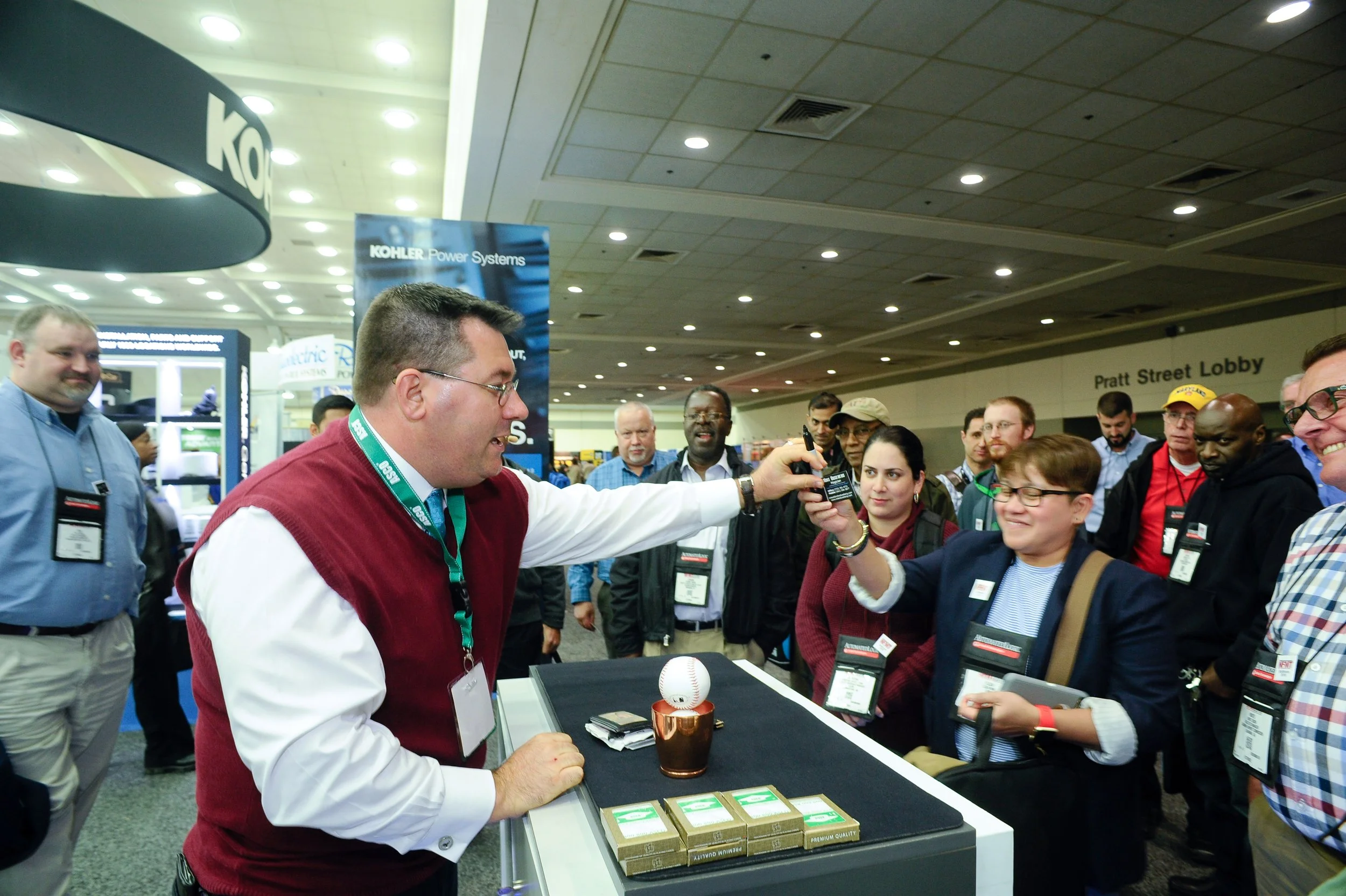
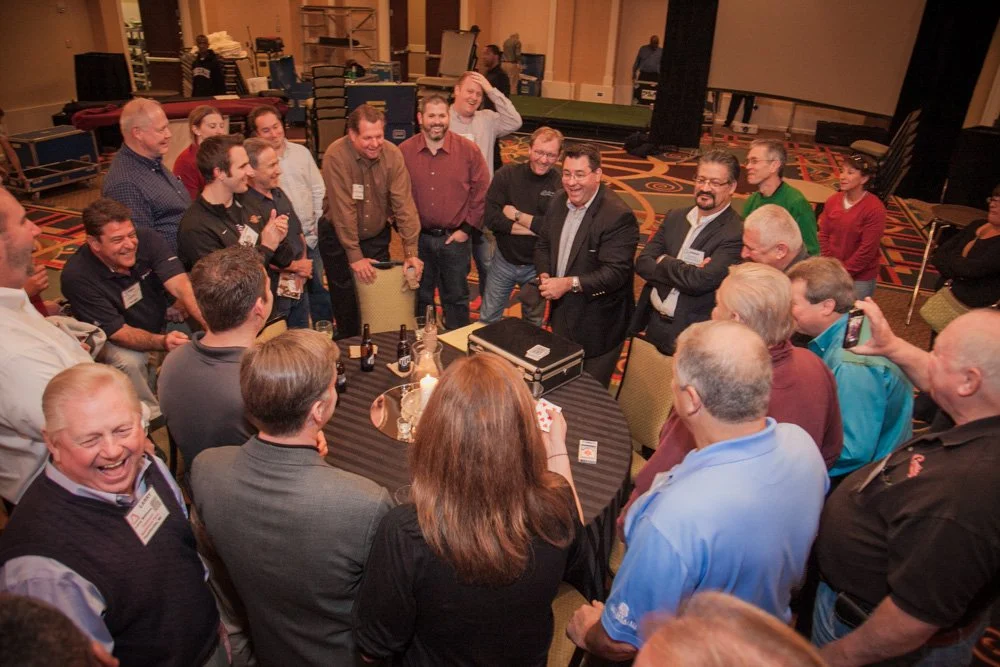
I use this principle at every event. Initially, I perform on the edges of the event, engaging small groups of people with magic that gets them laughing and screaming. That attracts other people and a crowd forms. The action gets faster and more intense until I come to the final effect for that group. Each group progressively gets a little bigger and a little more intense throughout the event.

As a large cocktail event, I might have crowds of 20 to 60 people watching me perform. One client said, "They're so engaged in the experience they don't want to leave."

Of course, the opposite can happen as well.

If we interrupt the event or stop the momentum, it’s easy to get off the train.

A few months ago, a client did a prize drawing every 20 minutes.

Each time we stopped for the drawing, at least 5 to 7 people left the party. The drawing provided a convenient "stopping point" for people to get off, so they took it.

The people who stay have trouble getting their conversations back into flow. Time management experts say people need about 20 minutes to fully engage in their work after an interruption.

It's hard to develop trust and rapport or lay the foundation for a future conversation that way. It's impossible when the people you were talking to have left (or worse, they've gone to a competitor's event and started a conversation there).

All of this may be worth a conversation as you plan your next event. There’s lots of ways we can leverage momentum, meaning, and relevance ot help you accomplish your goals and objectives.

You're welcome to call (561) 596 3877 or visit magicmeansbusiness.com/contact to schedule an appointment.

Click Here to Schedule a Conversation with Mike


Read More
Mike Duseberg Mike Duseberg

Rejection-Proof: Get Your Event Idea Approved

Have you ever had a great idea shot down by your club manager or a committee chairman?

 It's a terrible feeling.  You're disappointed, irritated, frustrated, and you don't get what you wanted.

Let's make that not happen anymore.

Click Here to Schedule a conversation with Mike

Have you ever had a great idea shot down by your boss?

It's a terrible feeling.  You're disappointed, irritated, frustrated, and - maybe this is the worst part - you don't get what you wanted.

Every week, I get three or four calls where an enthusiastic prospect says, "Mike, we saw you at the XYZ event.  Our meeting is coming up on December 8th, and we'd love to have you there.  Can you please give me a proposal I can take to my boss so we can get this approved?"

And I have to tell them, "No.  I can't do that."

Here's what I know.  

When they think about events, every corporate executive has a list of things they want to accomplish and things they want to avoid.  

Unfortunately, executives tend to keep that list to themselves rather than share it with their team (or even the event planners!).  

So when people call, I'm happy to talk to them about why they think I'd be a good fit for their event, how they feel magic would support their boss' objectives, how their boss makes those decisions, and what he thinks accomplishing those objectives is worth.  

But I remind them that everything we talk about is just a guess about what they think their boss is thinking.

Experience shows that those guesses are wrong 99% of the time.  (I'm only a mind-reader when I'm performing).  

If I gave them a proposal at that point, they would present it to their boss and probably suffer a painful rejection.  The boss might even wonder, "Why did that bozo think that was a good idea?"

There's a faster and less rejection-prone way.   

First, call your boss and tell him that you know a great magician who has done fantastic work for you (or another company) at another event.  Tell him a little about what you like and how the guests at the other event responded.

Next, tell your boss you think the three of us should discuss the event.  We'll talk about what you've done in the past, what's worked, what could be better, what you and your boss want to accomplish, and what a successful event would look like.

That's how we get your boss to share those goals and objectives that are uniquely important to them.  

Based on what you tell me, I'll tell you what other companies have done in the past.  

The conversation can end one of three ways.  I might tell you that I can't help you, you or your boss might decide you don't want my help, or we might agree this is a good idea, and we can reserve the date with an agreement and a deposit.

When our prospects can make that meeting happen, we very quickly get to a decision that's right for the event and the company.  

The best part is that we all enjoy equal business stature, we don't waste time, and nobody's feelings get hurt. 

Maybe I’m crazy about all this, or maybe you’d like to learn more about how this would work in your particular situation. Feel free to give a call at (561) 596 3877 or schedule an appointment with me by clicking the button below.

Click Here to Schedule a Conversation with Mike


Read More
Mike Duseberg Mike Duseberg

Are you stepping on your own toes?

If crowds are the key to engaging your guests and starting conversations, how do you build crowds?

Click Here to Schedule a conversation with Mike

If crowds are the key to engaging your guests and starting conversations, how do you build crowds?

In last week's email, I mentioned five event "trends" that are actually preventing crowds from forming at your events.  

Here are three of the five things you need to create crowds:

1) Performing Surfaces and Gathering Points.

If we don't have a central point that guests can gather around, it's difficult for a crowd to form. That's why I always have one of those large black pads in front of me when performing. It tells people, "This is where the show is happening."

Tables help a lot, too. Anything from a 36" high top to a full-sized 10-top dining table works, but the audience needs a piece of furniture they can gather around. Bigger tables naturally allow bigger crowds to form.

If people don't have a piece of furniture or a specific spot that functions as a "stage" or central point, it's very difficult to get them to organize into a crowd.  There are solutions from street performing that will overcome the lack of tables, but they are inelegant and mostly inappropriate for nice events. 

2) Appropriate Sound Levels.

The DJ, the band, and the echoes in the room can prevent your success for two important reasons.

First, people must hear what's happening to remain engaged in the crowd. The jokes and interaction are what make the show interesting and engaging. Naturally, I have some voice training and can project my voice into a crowded room.

If people can't hear each other talk from 10 or 15 feet away, crowds won't form. Don't let your band or DJ dominate the room.  

Second, people will leave their tables and crowd around me if I ask them to, but I can't ask them if they can't hear me. Often, I'll entertain one table, and the nearby table will start craning their necks to see what I'm doing. I can instantly start a crowd by inviting those nearby to join us. Other people will see that it's okay leave their tables and join us, too, which builds larger and larger crowds.

3) Anticipation

In strolling situations where the performer is traveling group-to-group at a cocktail party, it really helps if people at the event know that there will be entertainment. When they hear the applause and cheers, they recognize that a performance is happening and they can choose to join in.

I started creating "anticipation" videos for my clients a few years ago. These short, 90-second clips explain who I am and give guests a glimpse of the magic. They're a huge help.

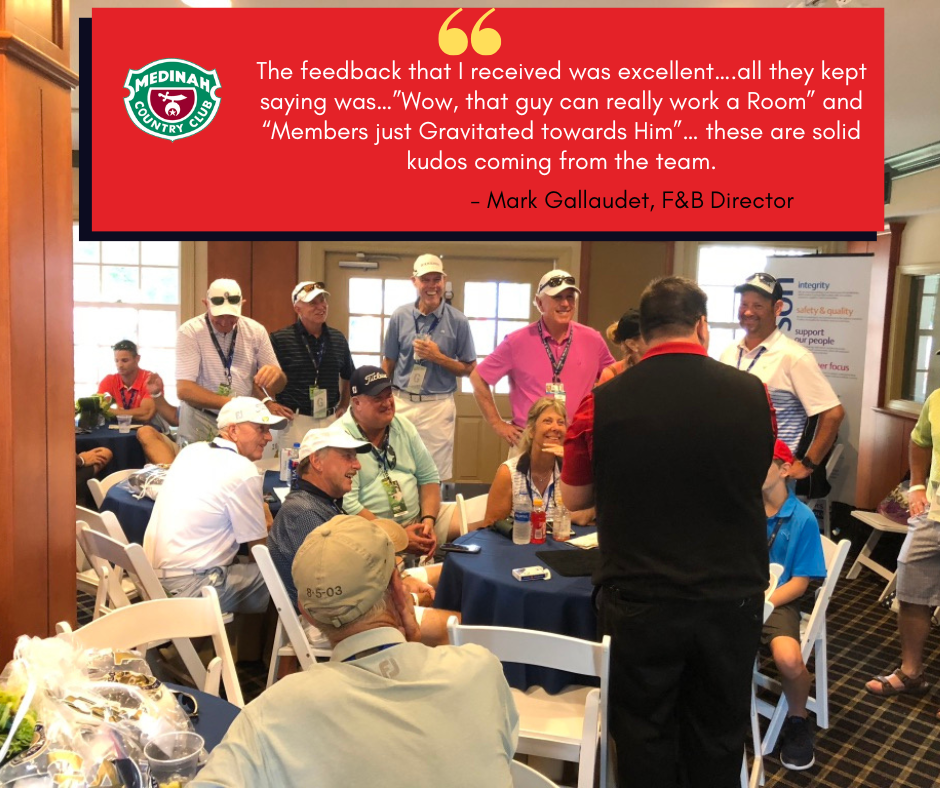
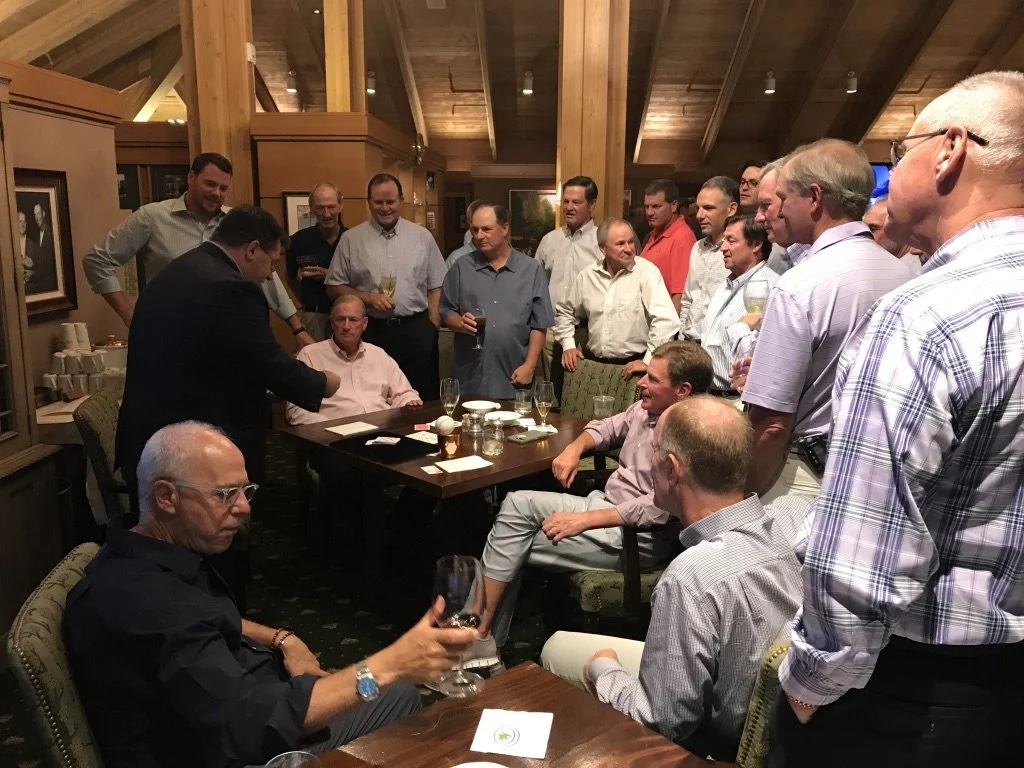
I was entertaining at the Medinah Country Club a few years ago, and 75 players got up from their tables, walked onto the front porch, and surrounded me for a full hour. They all said they'd heard about the magic from the video and came outside to see it for themselves. 

AND… The “Secret Sauce of Crowd Building.”  

There are two more "secret sauce" components to building crowds, but I don't have time or space to put them here.    

I DID, however, include them in this month's Reading Mike's Mind newsletter, which we sent to our VIP client list (for free).  

If you'd like to learn the inner secrets our clients use to get more engagement and participation during their events (and therefore better accomplish their larger event goals), reply to this email with your mailing address or visit MagicMeansBusiness.com/contact and sed us your contact information.

Until next week,

Mike Duseberg

Mike

PS: Did you take our holiday party survey yet?

PPS: If you see the value of crowds at your event, and you’re open to a conversation give a call at (561) 596 3877 or set an appointment at the button below. I’ll ask a bunch of questions about what you’ve done in the past, what worked, what could be better, how you measure success, and what you hope to accomplish next year. Based on what you tell me, I’ll tell you what other people have done in your situation.

Click Here to Schedule a Conversation with Mike


Read More
Mike Duseberg Mike Duseberg

All Successful Cocktail Events Have This Key Component - Does Yours?

Almost all of my clients list one thing as the main identifier of success at their events, and they all ask me to make sure one thing happens during their events.

Why? Because if this one thing doesn't happen, the networking, rapport building, relationship building, and camaraderie they want to create simply doesn't happen.

Click Here to Schedule a conversation with Mike

Here's one of the most important things I've discovered in 30 years of entertaining at business and golf events:

All of my clients would call me up and say, "Mike, we saw you at another event, and it was fantastic: people were crowded around you six or seven deep, slapping each other on the back. You've got 40 or 50 people laughing together. That's the experience we want to create for our event. How can you do that for us?"

I say, "Well, why would you want to do that? Why not hire a local guy?"

They say,  "No, no, no. We've seen other magicians. We've seen the guy that walks around with the same three tricks he does for everybody. He works for three people at a time. He doesn't get to everbody, doesn't make any impact on our event, he might as well have not been there at all. We don't want that. We want those crowds."

"But what's so important about having the crowds?"  

Here's what my best clients know:

People do not start conversations with strangers. In fact, they generally do not start conversations with anyone outside their immediate inner circle of friends and colleagues.  

That means people naturally isolate themselves with people they already know. They feel most comfortable talking with the other people in their department or business area and the people they see on a regular basis. They also gravitate toward people with the same business status.

My clients know that if they don't overcome this natural tendency, their guests will not fully engage in their event, share their ideas, and accomplish the event's objectives.  

My clients figured out—consciously or otherwise—that the crowds are the "activating component" of the event, breaking down the natural barriers between people and helping them engage.

So, how do you engage the wallflowers and create these critically important crowds?

As a magician, I discovered that if I walk up to the people on the edge of the party and get a couple of them laughing and shouting, then other wall flowers near them will think, "Well, I want to be part of the fun thing too." Their curiosity will overcome their fear of strangers, and they'll gradually join in.

Once I got them laughing, my group of four people turned into maybe eight. More laughing and applause attracted the more extroverted people who were naturally more willing to engage, and now I had a friendly crowd of people laughing and having a good time.

Remember Robert Cialidini's "Liking" pillar? In Influence, Cialdini said that people like people who are like them. Everyone in my group watched a few magic tricks together and had a common experience of magic and fun. They naturally tend to "like" one another, so it's easy for them to start conversations with the other people in the group.

That connection is powerful stuff. Not only is it easy for the people in the group to start that conversation when the magic stops, but it's also easy for them to start conversations with the other people in the group throughout the event, the next day at breakfast, and even throughout a two- or three-day conference. When they see someone they recognize, they say, "Hey, weren't you holding the bottle when he knocked that coin through the glass?" and the conversation goes from there.

That's why my clients wanted crowds at their events. They knew the crowds lowered the formality and helped people break down the natural interpersonal barriers so their guests could feel comfortable fully engaging and participating in the event.

Unfortunately, there's some bad news.

First, only some entertainers understand this. The magicians who entertain two or three people at a time obviously don't know this. The contortionists and jugglers who stand in the corner and do their thing aren't thinking about it. The band playing so loud your guests can't talk is actively preventing crowds from gathering and working against your success.  

Second, many popular trends in the event planning industry make it difficult for crowds to form during your event. Event planners mean well and want to help you, but they don’t necessarily notice the damage they’re doing.

How can you ensure you're not creating a "crowd prevention department" at your events?

Well, join us for future issues of The World's Most Interesting Email, where I'll describe the five key elements required for successful crowd formation and five popular event trends that are ruining your crowd potential.  

Until next week,

Mike Duseberg

Mike

PS: By the way, we’re describing the five key elements required for successful crowd formation in this month’s issue of our print newsletter for clients, Reading Mike’s Mind. If you’re interesting in receiving the newsletter, give us a call at (561) 596 3877 and give us your mailing address.

PPS: If you see the value of crowds at your event, and you’re open to a conversation give a call at (561) 596 3877 or set an appointment at the button below. I’ll ask a bunch of questions about what you’ve done in the past, what worked, what could be better, how you measure success, and what you hope to accomplish next year. Based on what you tell me, I’ll tell you what other people have done in your situation.

Click Here to Schedule a Conversation with Mike


Read More
Mike Duseberg Mike Duseberg

I Hate This Trick So Much I Spent Two Hours Rehearsing It So I Could Show It To You

Everyone has a huge fear in the back of their mind when they're hiring entertainment for their event: what if this person says something that offends my customer, executive, company or audience?

When you think about it, once the damage is done, it's done. No money-back-guarantee will make the embarrassment and anger go away.

Click Here to Schedule a conversation with Mike

I hate this trick so much that I spent two hours rehearsing so I could do it for you.

Why would I do that?

This trick will be all the rage in the magic world for the next six months.

Steve Martin performed it on his Netflix show, so all the magicians will say, "It must be good."

It's not.

But they'll all be inflicting it on your audiences anyway.

You deserve to know why it's not a good trick.

So, in this week's video, I'm going to perform this terrible trick for you AND—as entertainingly as possible—explain all the reasons it's not very good.

That way, you can easily spot them and avoid hiring the kind of hack entertainers that do this *cough*.

Maybe you can save your audience from a fate worse than karaoke.

I hope you have as much fun watching this as I did making it.

Talk to you next week

Mike

PS: By the way, you can fix some of the problems I've identified in this video, but there's one glaring gap that still needs to be solved. Send me a note if you think you know what it is.

PPS: Of course, you could easily avoid hiring a hack entertainer by calling (561) 596 3877, and discussing your event with me. I’ll ask a bunch of questions about what you’ve done in the past, what worked, what could be better, how you measure success, and what you hope to accomplish next year. Based on what you tell me, I’ll tell you what other people have done in your situation.

Click Here to Schedule a Conversation with Mike


Read More
Mike Duseberg Mike Duseberg

“He said WHAT?!?!” How to avoid being embarrassed by offensive corporate entertainers.

Everyone has a huge fear in the back of their mind when they're hiring entertainment for their event: what if this person says something that offends my customer, executive, company or audience?

When you think about it, once the damage is done, it's done. No money-back-guarantee will make the embarrassment and anger go away.

Click Here to Schedule a conversation with Mike

Why Do Entertainers Say Stupid Stuff on Stage?  How Can You Be Sure Your Entertainment Won’t Embarrass You, Your Company, Your Executives, or Your Guests?

Last month, Mick Jagger made a huge mistake during a show in Canada.  He took a moment to address the crowd, shouting “Hello Canada… we love your Justin Trudeau!”

The audience, unfortunately, did NOT love Justin Trudeau.

Watching the video, I was shocked to see the terror in Jagger’s face as he looked into the tens of the thousands of angry Canadian faces.  Like the stadium-filling pro he is, he immediately shifting to hockey and soccer, which brought the cheer he wanted and regathered the crowd.

Tenacious D’s Kyle Gass made the same mistake around the Trump assassination attempt, saying “I wish he hadn’t missed."  He lost half the crowd during the show, and the whole tour the next day.

The question we should be asking is, “Why would performers say these ridiculous things in front of your audience?”

It’s simple: they want to get a reaction from the audience.  Both Jagger and Gass thought they were going to get a huge cheer, and the crowd would love them for saying those things.

You can’t blame them.  As humans, we naturally assume everyone else thinks like we do, and our “media bubbles” reinforce this false belief.

How do you keep it from happening?

Ironically, Donald Trump has the answer. 

Before he ran for President, Trump did lots of public motivational speeches. Companies would bring him in to speak at sales meetings and company events, and he did lots of public events promoting his books and raising the visibility of the Trump brand.

Many of my friends and colleagues in the corporate events world have worked with him, and they all respect him for the questions he asked.***

Before he went on stage as a business speaker, Trump always asked three questions of the event organizer:

  1. How is the money made in your business?

  2. What can I say that will totally lose this crowd?

  3. What can I say that will make them my friend for life?

With that information, he’d never have to worry about offending an audience, and he knew exactly what to say to make them love him.

This connects to a famous story from Zig Ziglar.  He suggested another speaker who used a lot of foul language in his presentation, but the client wanted a “clean” act.  The speaker said, “I can take that stuff out.”

The client replied, “Well, we’d really prefer a speaker that would’t put it in in the first place.”  Trump’s questions made sure he never put in the wrong thing in front of the wrong audience.

If your speaker and entertainers are asking you these questions (or something similar) you’re golden. 

If not, you have to ask - are they not asking because they don’t think about these things, or are they not asking because they don’t care about these things?

Finally, if they aren’t have the conversation at all - what does that tell you?

What kind of risk are you exposing your event, your company, and your executives (and maybe your career?) if you’re not having these conversations?

It just makes more sense to have a conversation about what you’ve done in the past, what works, what could be better, how you evaluate the success of the event, and what you hope to accomplish at the next one before you start making decisions about vendors, performers, venue, or anything else.

If you're open to that conversation, call me at (561) 596 3877 or set an appointment at MagicMeansBusiness.com/contact.  

***BONUS INSIGHT: Typically, when they were sitting in the greenroom or riding in a limo, my colleagues got some downtime with Trump. He always asked the same question of them, and it’s a really brilliant one: “What three books are you reading right now?”

Click Here to Schedule a Conversation with Mike


Read More
Mike Duseberg Mike Duseberg

Doesn't That Just Happen on Its Own? NOPE!!!

Anyone who gets on stage and captures, controls, and directs attention (i.e., entertains) will tell you that there's no such thing as an attention span.

Click Here to Schedule a conversation with Mike

Last year, a grinning event planner pointed at me and said, "I figured you out!"

That's a phrase that makes a magician nervous.

Then she said, "The biggest illusion in your act is a lack of preparation..."

I smiled. "What do you mean?" I asked.

"Well, you walk up to these people, and you don't know anything about them, and then suddenly they're laughing and shouting, pulling their friends across the room to see what you're doing... they're talking to us about how much fun they're having, and six months later they're looking forward to seeing you again... and you make it look like that all 'just happens' but you've got a lot of system and processes that make it happen."

And, of course, she's entirely correct.  

In business, people often say things "just happen." That's not true. Everything happens for a reason.

We say that referrals just come rolling in, but the truth is that I have seven or eight referral systems working in my business all the time. 

That's how I can safely assume that happy clients will introduce me to at least two people like them within six months of an event. (check out Jay Abraham's 93 Referral Systems).

I have four or five other systems that ensure our existing clients bring me back year after year and keep expanding their business with me (check out Jay Abraham's Getting Everything You Can Out of All You've Got).  

In fact, anytime I think, "I guess that just happens on its own," alarm bells go off in my head. That means I need to learn more about how that part of my business works and figure out the systems and processes that are getting that result.

Once I understand the systems and processes, I can make adjustments and tweaks to get the result I want. If I know how and why it's happening, I can change the result's frequency, quality, and quantity.  

In events, that's where creativity and craftsmanship meet. To me, that's where the real magic happens.

The alternative is "hope" and "chaos." I don't like living that way - particularly given that I'm held accountable for the results.

The good news is that if you're not happy with the result you're getting, you can always make a change!

If you're open to discussing what you've done in the past, what you think works, what could be better, and what you expect to accomplish at your next event, I'd be happy to explain what other people have done in your specific situation.

If you're open to that conversation, call me at (561) 596 3877 or set an appointment at MagicMeansBusiness.com/contact.  

Click Here to Schedule a Conversation with Mike


Read More