
Getting Results

Robert Sereci Shares Three Unexpected Secrets to Medinah's Member/Guest Success
Hosting over 300 players every year, The Medinah Classic is one of the largest club invitational tournaments in the US. Medinah’s General Manager Robert Sereci takes a few minutes to dig deeper into why entertainment is an essential part of the club’s member/guest success.

Medinah Country Club’s legendary clubhouse has been the background for a lot of golf history and some spectacular member events
Background: Since its inception in 1924, Medinah Country Club has hosted many major tournaments. Notably, three U.S. Opens, a U.S. Senior Open, the Ryder Cup, and the BMW Championship, all against a historic backdrop, including their iconic clubhouse, the legendary Course #3, and two additional 18-hole golf courses. Hosting approximately 300 players every year, the club’s premier event - the annual Medinah Classic - is among the three largest member/guest events in the U.S.
For the 2021 Medinah Classic, the club brought in Mike Duseberg to entertain the players after their practice rounds. Over cocktails and barbecue, players crowded around Mike to participate in the magic and have fun together.
Mark Gallaudet, the Medinah’s assistant general manager, reflected, “The staff kept saying ‘Wow! That guy can work a room.’ The members just gravitated toward him.”
General Manager and Chief Operating Officer Robert Sereci took a few minutes to dig deeper into why the entertainment was an essential part of Medinah’s member/guest event:
Insight #1: Magic creates a personalized experience for each member and his guest.
Mike’s unique performing style and his “Always Something More” system ensure members and their guests see magic several times throughout the night, and everyone gets to participate in the magic themselves.
Robert Sereci: “There are not many activities during a member/guest event where participants can sit and enjoy for even a brief time, someone entertaining them in a very intimate setting. Mike is up close, in a very intimate environment, and to me, that is a big deal; it enhances the experience. It gives participants one more thing to talk about.”
Insight #2: Variety keeps players engaged.
After a long day of golf playing 18 to 27 holes, the players attention can wander. It’s important they stay on-site and enjoy the club’s excellent amenities and food and beverage opportunities. Magic during the evening gave the participants another reason to stick around and have fun together.
Robert Sereci: “Trying to keep our members and guests engaged is not as easy as it sounds. When an event lasts multiple days for a long period, we’re trying to hold their attention on the event - that's why we have TVs and other entertainment. Getting them to relax and laugh after the day’s round of golf loosens them up. That is not always easy to do.”
Insight #3: Take the pressure off the members and their guests
There can be a lot of pressure during a member/guest event: The players all feel pressure to score well on the golf course during the day.
In the evening, a new pressure develops: the members feel tremendous pressure to “be interesting” and keep their guests entertained and engaged. Similarly, the guests feel pressure to “be on their best behavior” at their hosts’ club.
Robert Sereci: “Entertainment at our member/guest significant, because, across several days, members and guests are performing, and they get tired. They can get stressed out. Good entertainment takes their mind away from golf and allows attendees to sit back relax, while someone else entertains them, so that they can be participants and spectators for a while.”
This year, the tournament was a tremendous success for Medinah Country Club, and the members and guests had a great experience they look forward to repeating in 2022.
Robert Sereci: “The members said things like, ‘engaging,’ ‘entertaining,’ and ‘this guy is incredibly talented.’ It went very well, and the chairman was thrilled!”
If you’d like to create an engaging and entertaining experience for your players during your next Member/Guest, Mike Duseberg will be happy to describe what he’s done for other clubs like yours. Click here to schedule a conversation or call (561) 596-3877.
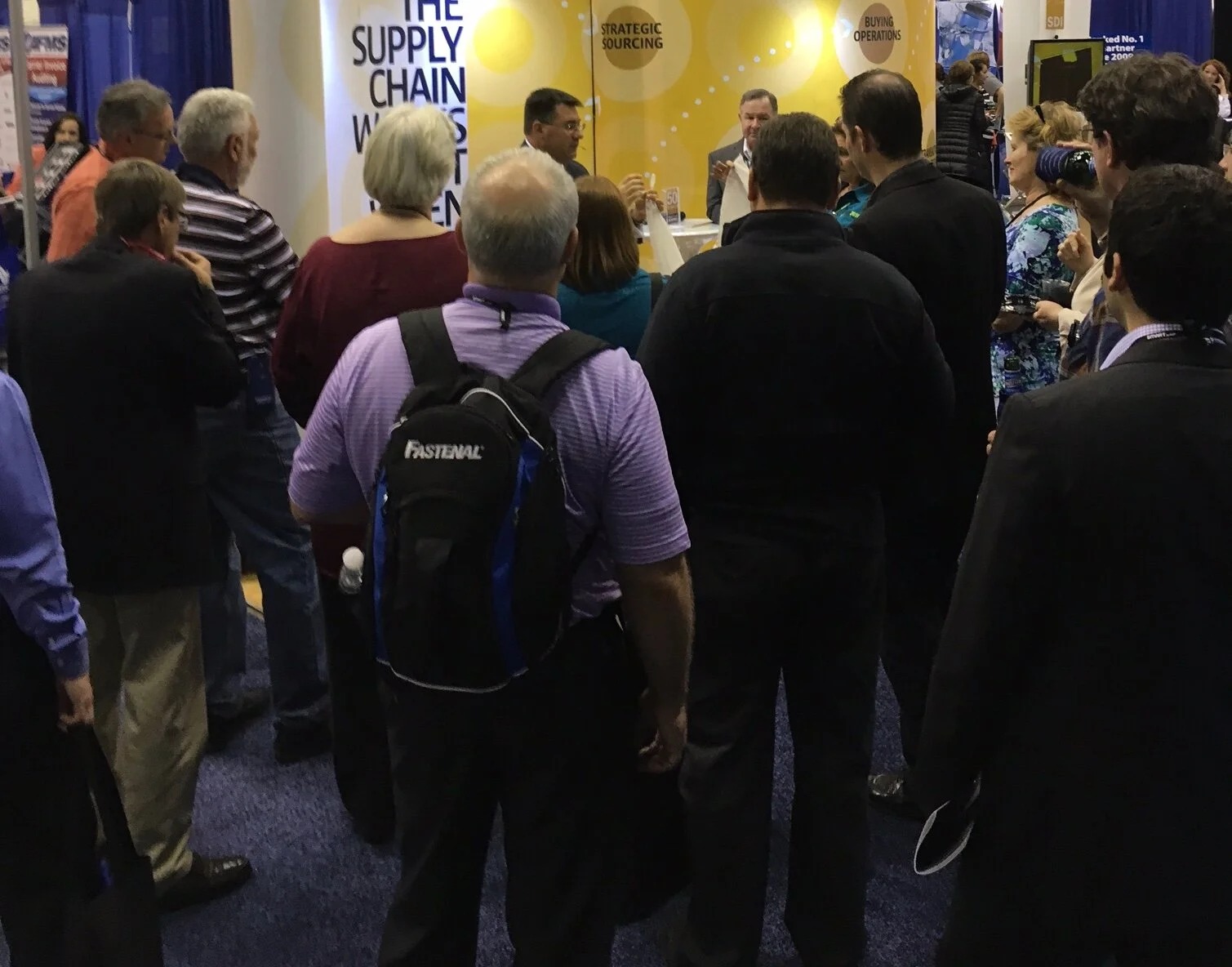
How To Take Advantage of a "Networking Reception in the Exhibit Hall” and Have More Conversations with People Who Will Buy From You
Exhibitors: What’s your strategy for “the networking reception in the exhibit hall?”
The organizer has given you a huge opportunity! The show attendees - including the ones you want to meet - will be on the show floor!
But how do you get them to your booth and “networking” with your sales people during the show?
Almost every medium-sized trade show now begins with a “welcome party in the exhibit hall” and ends each day with a “networking reception in the exhibit call.”
Are these really “networking receptions” or are they just more “exhibit hall time?"
If you’ve attended one of these events, you’ll notice that people are in a different mood. They aren’t wandering the trade show floor or marching to an appointment at a booth. They really are walking around, talking with each other, and “networking.”
That makes these events a much bigger opportunity to capture your idea prospect’s attention, focus it on your booth, and create further opportunities to connect with your prospect throughout the show (and afterward).
There are two ways you can approach this event.
The first, would be to simply staff the booth as you typically would. Put out some pens and literature, stand proudly, and hope that someone reads your signage and decides to talk to you.
Or, you could do what real master networkers do at real networking events - you could be really interesting, and get interesting people interested in what you do.
Great networkers always have a conversation starter - something that gets people’s attention, gets them focused on your conversation, and ideally gets the other person talking about themselves.
Great networkers also have an elevator pitch - and great networkers know that an elevator pitch doesn’t tell people about you, as much as it tells people about the problem that you solve for other people, and then asks them if they’ve ever had that problem. (Check out David Sandler’s You Can’t Teach a Kid to Ride a Bike at a Seminar for more).
And finally, great networkers know how to create a follow up conversation after the interaction. They don’t send emails or offer to send literature - they set an appointment to follow up, have a productive conversation, and agree to a solution if appropriate.
So how do you do that at scale during a “Networking Reception in the Exhibit Hall.”
First, take advantage of how the situation has been framed for the guests. This isn’t really “trade show time,” it’s actually “a party.” There’s drink stations, maybe some servers passing something to eat, and sometimes a little music playing louder than during the usual trade show time to keep things lively.
Join in.
Now is a fantastic time to do something unique and remarkable in your trade show booth. I’ve seen exhibitors install blackjack tables, caricature artists, magicians, mentalists, cooking demonstrations, and other performers in the booth to capture attention and focus it on the booth.
A cybersecurity show in Florida actually required all the exhibitors to present some kind of entertainment to make the “reception on the exhibit hall floor” more interesting for the guests.
This is a relatively easy time to build a crowd because most attendees are focused on talking with each other and having some fun before the show starts. They’re happy to walk over and enjoy something fun. In fact, people are happy to bring their friends over to participate in the fun - because it’s a party!
You’ll get the attention of people who never planned to visit your trade show booth during the show: the clients who already know what you do but don’t know about the new products and services you should be selling them, the clients who used to work with you but don’t know that there’s new products and service they should be buying from you now, and your competitors’ clients who don’t know what they’re missing out on by not working with you.
You’ll get their attention because you’re not trying to sell them anything, you’re just offering something fun.
“Did you see what he just did over there? You’ve got to go over and check that out…”
Next, you’ll want to get your booth staff engaged in the entertainment as well, so they’re having fun along with the attendees at the show. They’re all laughing together, creating a sense of connection, and building some rapport so they feel like they know each other a little bit.
Then, you make your move. Just when the show hits its most engaging point, your entertainer delivers your company’s elevator pitch. Just that tightly crafted, clear statement of the problem your company solves for people similar to the people at this show.
Finally, he delivers a very direct statement about what people should do if they have that problem and want to learn more about how to solve it.
What happens then?
Some people will leave. The entertainment is over, and they don’t need to talk to you.
Some people will follow the call to action immediately. Your booth staff will be able to talk to them and qualify them for an appointment right in the booth.
Some people will remember the call to action and follow up during the rest of the show. They’ll remember visiting your booth during the reception, and they’ll have a way to start a conversation with you during regular show hours.
Some people will come up to your reps during the conference and start talking with them outside of show hours, too. They’ve developed some connection during the entertainment, which means your salespeople can get more honest and complete answers to their qualifying questions.
Would you deploy a strategy like this? In the past, our clients have described this kind of technique as a “secret weapon” that differentiated their booth and their company from the others at the event. Their competitors occasionally described it as “an unfair advance,” but as a famous US Army Colonel said, “The last thing I want to do is be in a fair fight.”
Do you have a strategy for engaging your prospects and clients during receptions on the trade show floor? Does your company have an “elevator pitch” that makes your prospective clients want to engage with your team and learn how they can help them? Do you want to go home with a long roll of qualified prospects who are looking forward to your phone calls?
I don’t know if I can help you, but if you’re open to a conversation about your trade show strategy and objectives, I’d be happy to share what other companies have done in your particular situation. Give a call at (561) 596 3877 or schedule an appointment here.

How To Use The "Pepsi Challenge" to Capture Market Share At Your Next Trade Show Or Conference Event
Pepsi’s biggest problem was that everyone already knew what Coca Cola tasted like. Believe it or not, your best conference and trade show prospects are ignoring you for the same reason…
The new season of “The Food that Built America” is a fantastic show: there’s drama, conflict, emotion, and lots of fascinating stories about the brands we see almost every day. It’s both inspiring and entertaining.
And there’s some mind-blowing lessons on business strategy too - real stuff you can use right now.
We just finished the episode on the “cola wars.” We all know the story of the “Pepsi Challenge,” where Pepsi sent people into shopping malls and street corners, asking people if they could tell which cup had Pepsi and which had Coca Cola by taste alone.
At the time, Pepsi had about 7% market share compared to Coca Cola (which had 92 of the other 93%).
Why? Because Coke was the original cola drink, and it never occurred to people to change. They never tried Pepsi. They didn’t even know how it tasted, and they didn’t care because they knew they liked Coke.
And that's why the Pepsi Challenge was so powerful. It grabbed people's attention, and it said, "hey, try this." And when they did, about 52% decided they liked Pepsi better - which immediately cut into Coke's market share.
So how does this apply to your presence at trade shows and conferences?
From an earlier post, you’ll remember the three most valuable prospects you can meet at a trade show or conference:
People who currently work with you and are happy.
People who work with your competitor.
People who used to work with you.
These are the people who can buy stuff that will move the needle in your business.
But there’s a problem.
Just like the Coca Cola drinkers, those three groups of people have no reason to talk to you. Your current clients don't know that you can sell them other things they also need, so they think they're "happy." Your competitor's clients are "happy," too, so they don't need you. And your prior clients think they're "happier" without you.
They aren’t going to come to your trade show booth. They aren’t going to attend your customer hospitality event, and they definitely aren’t coming to your webinar or virtual conference.
It’s not that they don’t need what you sell or want the outcomes you offer - the problem is that they’ve already decided that they don’t need to talk to you about it.
And if you can’t have a conversation, you’ll never have a sale.
So you need a "Pepsi Challenge.”
You need something that grabs your prospects attention, focuses attention on your brand in a memorable way, delivers a simple message that opens your prospects' eyes to a specific problem they probably didn’t know that you solve, and offers a clear call to action that explains how your prospect can get the outcome they want.
Our clients do that with magic and mind-reading, but there are probably dozens of other ways you can capture attention, engage your prospect, and deliver a message that makes them want to start a conversation with you.
Is this a bold statement? Does this break the rules of sales or marketing?
Not at all, really. It’s what I’ve been doing with my clients for decades, and it’s what my mentors and coaches taught their clients to do for decades before that. It’s a simple, proven, repeatable formula.
You know who really hates this? You know who calls it “unsportsmanlike” and “rude” and other negative labels?
Companies like Coca Cola. The big, established players who are successfully dominating the market by keeping their valuable clients focused on them, so they never even think of changing.
Go get ‘em.
If you’re open to a conversation about what you’re doing at trade shows and the hospitality events you’re sponsoring, the results you’re getting, and how you know you’re successful, I can share what other companies in your particular position have done and the results they’ve achieved. You can schedule a short phone call here.

How to Watch a Virtual Event (Without Staring into Your Phone, Table, or Device!)
Probably the most irritating thing about virtual events is their limited viewing capability. Most people watch them alone because it’s hard to get two or more people gathered around a device.
We figured out a better way…
Probably the most irritating thing about virtual events is their limited viewing capability. Most people watch them alone because it’s hard to get two or more people gathered around a device.
Using your “screen cast” or “screen mirroring” capability on your device, you can broadcast the virtual event to your WiFi connected television, and enjoy the event with your family just like watching TV at night.
We recommend putting your tablet or laptop on an ottoman or coffee table in front of the family during the event, so we can see you while you enjoy the show. When you’re invited to participate in the event, just unmute yourself and you’re ready to go!
This is so successful our clients have actually begun hosting “viewing parties” at their homes - their friends bring the drinks and pizza, and they provide the incredible virtual entertainment!
Here’s a quick video that explains how it works…
If you’re open to a conversation, I’m happy to explain what other companies like yours have done with their virtual events and the results they’ve achieved. Just contact the office through the button below.

Six Things That Prevent Zoom Fatigue
Probably the most common complaint we hear around virtual event is “everyone has Zoom fatigue,” which is quickly followed up by “people have short attention spans.”
Neither of these ideas are true.
“It’s a poor craftsman who blames his tools.”
Probably the most common complaint we hear around virtual event is “everyone has Zoom fatigue,” which is quickly followed up by “people have short attention spans.”
Neither of these ideas are true.
The great Dan Kennedy, who invariably advocated the use of long copy sales letters, said that “people” have short attention spans because they don’t care much about what they’re looking at. On the other hand, people will watch long videos, real long sales letters, and sit through multi-day conferences if they’re interested in what’s happening.
Here’s Proof: If you were not interested in holding the attention of your audience through a Zoom call, you would have stopped reading by now.
Recently a client compared our “Virtually Impossible” show with a one-hour, content-filled event on the impact of the presidential election on financial markets produced by a famous name brokerage. While the financial event had tried valiantly to bore him to death, he survived long enough to explain six things that he believed our event did better. (Note that none of them involve card tricks, mind reading, or oranges).
Six Ideas that Will Dramatically Improve Your Virtual Event
1) An Impressive Invitation - don't just send a colorful email or a simply blue link. Make it personal, and make the invitation something that builds anticipation. Build intrigue. Make people wonder what will happen. Give it a "can't miss" feel.
2) Punctuality - Let people know when you are going to start, and start at that time. Also, end on time. Have a countdown timer on screen before the event starts, and have a large clock visible for the performers/speakers.
3) Process - The event is supposed to achieve a goal. Let the audience know your goal, and make sure everything you do during the event moves the audience toward that goal. Let everyone involved in your event know your process, and make sure they understand where they fit into the event.
4) Preparation - Rehearse, understand the technology, and have enough experience that you can stay calm when things go wrong (they will). We’ve been doing virtual events for seven months now, and we have a developed a comfortable, repeatable routine because we’ve had dozens of things go wrong along the way.
5) Energy and Flow - Lag time, dead spots, and presentations that drag are death to a virtual event. Keep the energy up. When you write, edit ruthlessly. When you present, do not go off script. Embrace Bob Hope’s “15 Second Rule” - every 15 seconds there must be a joke, an interesting fact, a change in emotion, or an activity that advances the event toward the goal.
6) Feedback - Don't just hope for a good response, and never ask for feedback. Engineer your event so the audience wants to give you feedback after the event. Get rave reviews.
Our ideas aren't a fit for everyone, and not everyone wants our help If you're open to a conversation, I can share some details and examples of these principles at work. DM, email, or call.

Integrating Sponsors into Your Virtual Event
Here’s a “quick and dirty” example of how to smoothly integrate sponsors into your event. We took the idea from the Jerry Lewis Labor Day Telethon, where Jerry used celebrities and corporate donors to support MDA. Jerry would do a quick segment with the the sponsor, tell a few jokes, and accept their donation.
Everybody wants sponsors in their event. Whether you want someone to help pay for the expenses during the event or if you want someone to help raise a lot of money for your cause, sponsorships bring the significant revenue your event needs.
We created a “quick and dirty” example of how to smoothly integrate sponsors into your event. We took the idea from the Jerry Lewis Labor Day Telethon, where Jerry used celebrities and corporate donors to support MDA. Jerry would do a quick segment with the the sponsor, tell a few jokes, and accept their donation.
Ultimately, sponsorships are advertising, so the sponsor should talk a little bit about their company while they make a donation to the cause. This format does a great job of integrating the sponsor and their message without making everything look like a slimy sales message.
If your event isn’t a charity or fundraiser event - such as a conference or meeting - we can do something similar with out the “big check” component. I would simply bring on the sponsor’s representative, have a brief exchange about something relevant to their business (maybe something at a virtual trade show booth or a new innovation they’re releasing), do some magic with them, and move on.
Here’s a video that shows how it works and explains three key components to making this work.

Three things are important here:
The person on screen is the "face" of the company or the person your clients will interact with next.
The person participates in a magic trick, enjoys the show, and supports the cause or event with the rest of the audience.
There is a simple call to action: "Talk to Amanda to learn more" or "Thank Amanda for supporting this event" or "See Amanda for their seasonal specials."
Follow these simple steps, and you'll sell the sponsorships you need AND your sponsors will get the results they expect from their investment.
Just released: Mike Duseberg reveals all the “how to” steps to creating events that create sales referrals, and repeat business in his third booklet The Event ROI Revolution: A Planners Guide to Hospitality Events that Create Connections, Build Rapport, and Schedule Sales Appointments. Download your complimentary copy here.

Entertainment in the Post-COVID19 World - Engage, Amaze, and Entertain - Safely!
In the re-opening, how will you entertain, amaze, and engage your clients without spreading the COVID19 virus?
Entertainment in the Post-COVID19 World
Engage, Amaze, and Entertain - Safely!
Our clients are already asking - “how can we keep our guests engaged in our event and create a memorable experience and still prevent the spread of COVID19?”
I’ve spent a large part of the last three months designing and rebuilding our very successful “Magic With Your Mind” show. I am not a doctor or an immunologist, but using publicly available information from the CDC, NIH, and WHO, I have created a show that blocks all the typical ways COVID19 spreads.
We can all have fun, build rapport with our key clients, and create an incredible experience our guests will be talking about for years to come - without anyone getting sick.
Check out the video-blog below:
Mike Duseberg creates “COVID19-Safe” magic and mind-reading experiences for your next conference, meeting, association event, or club event.
When you’re ready to start planning your next event, contact our office at (561) 596 3877 or email contact@magicmeansbusiness.com

Controlling Uncertainty in a Crisis
I don't know about you, but every day I'm presented with a huge stack of decisions that I have to make, many of which are based on incomplete information. The quarantine has added more decisions and less information. There's more "decision fatigue" than ever before.
Wanted to share this because I wondered if it might help you as much as it helped me.
I've been calling and emailing from The Magic Bunker and Library to see if anyone in my network needs anything and how I can help them. Good news: everyone's okay.
A friend told me that he'd decided to stay in Florida until things passed. He said it gave him some "certainty."
He's a retired CEO. That was one of those "think like a leader" moments.
I don't know about you, but every day I'm presented with a huge stack of decisions that I have to make, many of which are based on incomplete information. The quarantine has added more decisions and less information. There's more "decision fatigue" than ever before.
Decision fatigue leads to bad decisions: snap judgements, frustrated choices, and "easy outs" that aren't always the best. Decision fatigue is one reason you leave the apple on the counter and take the potato chips at 9pm.
My friend's decision to stay in Florida gave him one less decision to make each day. Similarly, Steve Jobs used to eat the same salad each day for lunch, and wear the same clothes to work each day, so he didn't have to decide what to eat or what to wear.
These are things they can control, so they made decisions that helped them stay in control.
A Navy SEAL once told me that their rock climbing trainer said that people get overwhelmed because they're thinking about the things they cannot control. He was 300' up a 600' climb, and the trainer said, "You're nervous because you're thinking about things that are 300' down from here and 300' up from here. You can only control what's about 3 feet from your face - like where your hands and feet go next."
Fewer decisions, less decision fatigue, better choices.
Amanda and I decided to embrace this:
We chose our dinners for the next five days, so we don't have to decide what to eat.
We decided how we will get our groceries for the next two months.
We decided how we will exercise for the next 90 days.
We set a budget for the next six months, so we know how we will allocate our resources.
We set a business plan for the next three months, so I know what I need to do.
We set my daily schedule, so I know when I got to the office and when I close for the day.
We decided to limit our consumption of social media and cable news, too - TV is for comedy.
These things are decided, so I'm free to "just do stuff." I'll let you know how it goes.
Got any new revelations or hot tips for thriving during quarantine? I'd love to hear them and share them with the rest of the network.
Be safe and healthy,
Mike
PS: We're safe. Ben is happy and as stir crazy as anyone. He's got a long list of things to do "when the germs are gone" - the zoo, the store, a haircut, a train ride, and of course Maha, Papa, Granny, and Bud (his grandparents).
PPS: This article from Inc digs into what the Navy SEAL was teaching us.
Was this useful? Would you like to get more? Fill in the boxes and we’ll send you The World’s Most Interesting Email…
The Bunker Videos
Entertainers have a responsibility to keep everyone’s spirits high and put smiles on our faces during times of crisis.
Here in The Secret Magic Library and Bunker, I’ve been posting some magic videos to keep the fun going.
Entertainers have a responsibility to keep everyone’s spirits high and put smiles on our faces during times of crisis.
Here in The Secret Magic Library and Bunker, I’ve been posting some magic videos to keep the fun going.
Enjoy the entertainment and please keep in touch. We’ll get through this together.
The Strength of Weak Ties
We’ve all lost contracts, events, and revenue. But our relationships will remain long after the virus is gone.
Enter the Bunker…
The first video from the bunker - a few “inside jokes” for our friends.
How to Shuffle Cards and Cut the Aces
Playing cards in your bunker? Here’s three ways to fair shuffle the cards, and my famous “Yoga Aces” trick.
The Legendary Orange Trick
Tell Me How You’re Doing, and I’ll Keep Sending You These Videos

Jeff Bezos Says This Is How We Should Think about The Next Ten Years
Bezos said that everyone asks him what will change in the future, and really dismissed the question as interesting but irrelevant.
I just read an interesting quote about Jeff Bezos. He said that everyone asks him what will change in the future, and really dismissed the question as interesting but irrelevant.
Yeah. Irrelevant.
He said what is important is what won’t change in the next decade. Bezos believes that ten years from now, people will still want a wide selection of quality products available at the lowest possible price. Hard to argue that Amazon isn’t positioned for the future.
So what won’t change in the events industry in the next 20 years? Here are five ideas that should never be dismissed.
Permanent Truth #1: People Want Experiences More Than Stuff
As always, stuff remains obtainable; in fact, Amazon is exactly why more and more stuff of higher and higher quality is available faster and faster and at a lower and lower price.
Great experiences, however, continue to increase in value. Leading Hotels of the World’s famous customer service slogan will always be true: “The last bastion of luxury is personalized service.”
Experiences that feel engaging, conversational, interactive, and participatory have inherent meaning, create lasting memories, and almost compel people to talk about them.
Don’t be fooled into thinking this is a “millennial” thing or a recent discovery. This is a fundamental part of human nature.
Permanent Truth #2: People Crave a Story They Can Tell
One of the most amusing articles I read in the Wall Street Journal this year was about how souvenir hats and shirts have become status symbols. It’s true. When I travel, I wear a windbreaker from Augusta National Golf Club and a hat from a club so private I can’t legally write its name in this article. People who recognize those logos instantly reach out to me and tell me about their experiences as these events.
They feel compelled to talk about their experience. They want to say things like:
I was there when…
Here’s what happened to me…
This is how I felt when…
This is what I saw…
And they want to ask questions like:
Did you see…
Were you there for…
Did get try the…
Who did you go with?
The Carnegie Rule is as true as ever: People want to feel important. Having an experience that they participated in - simply saying “I was there too” - makes people feel incredibly important, and they feel compelled to talk about their experience because that enhances their feeling of importance.
Permanent Truth #3: People Need a Reason to Talk to Each Other
The number of books and YouTube videos about how to network, how to meet people, and how to communicate more effectively grows every year. These topics have driven the sales and self-help industry for well over a century, and they will continue to sell forever.
People will always be a little nervous to approach strangers, and they’ll always be more willing to do it when they have a reason to reach out and say hello.
To reduce the fear of rejection - which is a big part of why people are reticent to approach strangers - we need to create more experiences where rejection isn’t possible. We need to do fun and engaging things that make people want to come together and do things with other people.
We will always need to create engaging, entertaining, and fun contexts for connecting at events. If we want to get people off their phones and out of their heads, we need to draw them into a shared experience and provide the opportunity for them to start talking to each other.
People crave experiences that give them something to talk about - during the event, after the event, and in anticipation of next year’s event.
They can use these experiences to start conversations with their friends, colleagues, and the people the want to meet - new friends, new prospective clients, and new network members.
Permanent Truth #4: Face to Face is More Persuasive Than Print, Phone, Digital, or Whatever Else…
My colleagues and I are convinced that the future of online is a conversation that starts offline. Permission marketing will be more important than ever before, and future marketers and salespeople will need to get that permission in an offline environment.
Face to Face has always been more productive - “putting a face with the voice on the phone” has been a common phrase since the at least the1950’s, and we’ve only adjusted it to saying things like “putting a face on the email address” and “nice to meet you ‘in real life.’”
Data proves this out. If I know who you are, I’m much more likely to answer your email, accept your phone call, read your social media request, or open your letter.
The past, present, and future of business has always been connection - who you know, who knows you, and who is interested in getting to know you.
Events are the fastest and most productive way to get to know people.
Permanent Truth #5: People Crave Good Cocktail Parties
Nobody wants to go to a networking event - really.
We say we do because we want leads and prospects.
But nobody wants to go to an event with 100 other people who want us to be their lead, prospect, or referral source.
From time immemorial, people know they’re supposed to be there to help other people, but their stubborn human nature makes them pitch, pitch, pitch.
We really want to go to an event where fun things happen and we get to know the other people at the conference, trade show, executive summit, dinner, awards event, or client retreat. The heart of successful networking is developing a catalog of people that we know, like, and trust and who know, like, and trust us.
“Know, like, and trust” are a progression - we “know” people first (ie: we become aware of them), and over a conversation or two we start to “like” them, and finally we “know them enough” to start to “trust” them.
And when we trust them, we can start to do business with them.
The best thing we can do is to have more events where people can start introducing each other to the people around them so they can “know, like, and trust” each other.
From the beginning of time, that event has been a cocktail party. Just about every culture in the history of time has an example of powerful people coming together and talking while eating and drinking.
It’s a very simple formula - put people in a room where they feel comfortable talking (ie: reasonable lighting, conversational music, and not a whole lot of echo), provide them something to talk about like unique entertainment, give them something they can eat and drink while talking, and let people do what they do best - talk.
Hopefully all this was review. Five things that won’t change in the next ten years and haven’t changed in the last 2000 years. If we keep these fundamental event principles in mind, we can be sure we’ll be creating productive business events well into the future.
Just released: Mike Duseberg reveals all the “how to” steps to creating events that create sales referrals, and repeat business in his third booklet The Event ROI Revolution: A Planners Guide to Hospitality Events that Create Connections, Build Rapport, and Schedule Sales Appointments. Download your complimentary copy here.

Seven Reasons to Host a Hospitality Event During a Trade Show
Every trade show attendee is going to eat dinner, go out for drinks, and probably seek some kind of entertainment - why shouldn’t your best clients and prospects do that with your sales team?
Trade shows are the best face-to-face sales and marketing venues in the world. Thousands of current clients and future prospects are gathered in one place, and they’re all focused on industry-wide problems that your company solves. The sales and marketing activity doesn’t have to stop when the show floor closes, however.
Hospitality suites and customer events represent a largely untapped opportunity. Everyone is going to eat dinner, go out for drinks, and probably seek some kind of entertainment - why shouldn’t your best clients and prospects do that with your sales team?
Whether you’re hosting a huge party for a thousand guests or a simple, off-site dinner for your closest clients, here are seven reasons you should do some kind of a hospitality event during your next trade show:
Building Rapport - People buy from people they know, like, and trust. The biggest advantage you can give your salespeople is the opportunity to build real rapport with your clients, so they can cross the threshold from “salesperson” to “friend and trusted advisor.” That’s hard to do in a sales call or on the trade show floor, where everything revolves around a “buyer/seller” mentality. At the hospitality, we’re here to have fun and relax together, which lets your sales team connect with your prospects as friends.
Convert Your Competitor’s Customers - Successful hospitality events introduce guests to new venues, new food and drink, and new experiences. Research shows these events are “mind opening” - when we try new things and enter new worlds, we see ourselves differently and open ourselves to trying even more new things. By inviting your competitor’s clients to these special events, you open their minds to new perspectives about your industry, your products, and your company. This can help your sales people “get their foot in the door” with clients who would normally be firmly committed to your competitor.
Drive Traffic to the Trade Show Booth - Clients need a good reason to stop and engage with your trade show booth staff. By displaying your equipment in the hospitality, mentioning the problems it solves in the welcome speech and on signage, and even integrating these messages into your entertainment, you can help your prospects make a plan to visit your booth and learn more.
Set Appointments - In casual conversation at a hospitality suite, your sales team can ask a few casual questions about your customer’s business, identify some pain points, and then schedule an on-site meeting, a phone call, or other “next step.”
Referrals - There is no greater referral tool than a hospitality suite. When your best clients bring their friends and colleagues to your hospitality, they are literally introducing these people to your company, your products, and your sales people. It doesn’t get any smoother than that.
Make Offers - You could offer a special deal for guests attending the hospitality or trade show, but you can also use your event to offer free white papers and research, complimentary test-drives of software and portal websites, and complimentary need analyses. This could be done as part of a speech or explained on a card or one-sheet in a gift bag. Using opt-in forms, you can tell which of your prospects took advantage of the offer, so you know who your sales team should follow up with and what they should talk about.
Show Appreciation - Of course, people do like to feel appreciated. Don’t forget to thank your current customers for their business (while you commit them to a next step).
Hospitality events are a tremendous opportunity to connect with your ideal clients. Creating a memorable event that connects your sales team to your prospects, positions your sales team for effective follow up, and really drives bottom line results takes strategy and forethought.
Just released: Mike Duseberg reveals all the “how to” steps to creating events that create sales referrals, and repeat business in his third booklet The Event ROI Revolution: A Planners Guide to Hospitality Events that Create Connections, Build Rapport, and Schedule Sales Appointments. Download your complimentary copy here.
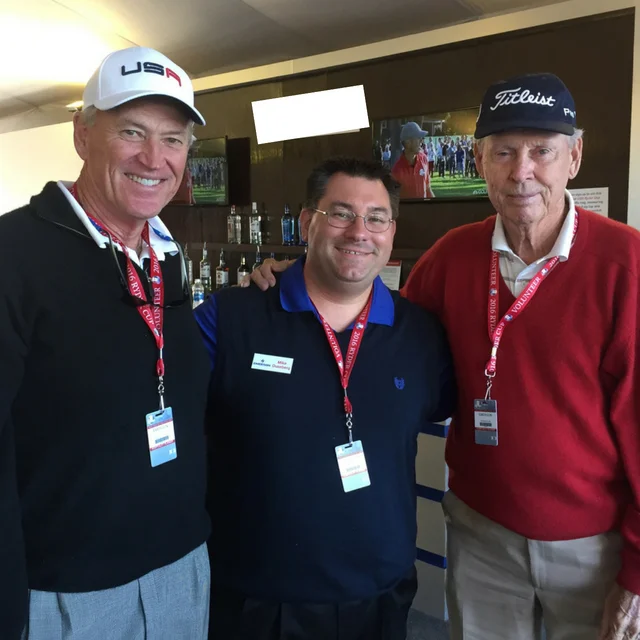
How to Give Your Guests a "Dream Experience" At Your Celebrity Golf Event
The people who sign up for these events want to feel like they’ve “met” the celebrity. They want to feel like they’ve exchanged some conversation and authentically connected with this person.
But if you’re hosting a celebrity golf tournament where the celebrities are your headline entertainment, that’s a problem.
Inviting a sports star, famous musician, or actor to your event is a powerful draw. Unquestionably, your guests will look forward to the opportunity to meet their hero in real life, and they will make plans to attend your event, play in your golf tournament, or even visit your trade show booth.
The people who sign up for these events want to feel like they’ve “met” the celebrity. They want to feel like they’ve exchanged some conversation and authentically connected with this person.
But if you’re hosting a celebrity golf tournament where the celebrities are your headline entertainment, that’s a problem.
There’s only one Derek Jeter. You only have three spots in his foursome. If you rotate celebrities at the 10th hole, you’ve got six spots. That leaves at least 48 disappointed people who will not connect with Derek Jeter.

With Masters Champion Bob Golby in St. Louis
That’s what makes the evening events - welcome receptions, VIP parties, pairing parties, awards dinners, and the cocktail time that surrounds them - so incredibly important. This is everyone else’s best chance to meet the celebrity of their choice. Good event celebrities are excellent minglers, and they can glad-hand anyone, tell a quick quip about their career, and patiently sit through hundreds of “you’re my hero” and “I saw you at…” stories.
Everyone’s free to roam the room and, if you’ve got the guts, you can talk to anybody.
Which creates two more problems: one, a lot of people just don’t have the guts, and two, the people that do tend to mob the most famous person in the room. Either way, a lot of people are not going to connect with the celebrity of their choice.
Both the celebrities and the guests need a little help.
As a magician, I have a unique ability to insinuate myself into almost any group at the party, attract a small crowd of laughing and applauding guests, and do some mind-blowing magic and mentalism for the group.
This is important: The magic is a “shared experience” that connects each member of the group to everyone else.
They were all blown away by the magic. Whether they’re celebrities or guests, they’re equally amazed.
And in that moment, they’re all functional equals. The traditional interpersonal barriers drop. They’re not celebrity and golf guest, they’re two guys who just witnessed something impossible.
That means Bob, the soybean farmer from Iowa, can easily turn to Donald Trump, President of the United States, and say “jeez, I can’t believe it, where the hell did those oranges come from?” And Donald Trump will say, “I have no idea… they were HUGE…”
And that’s all it takes to create that moment of connection. Bob’s happy because he can say he really “met” Donald Trump, and Donald had fun not being the center of attention for a minute (this might be a bad example, but you get the idea).

Entertaining VIP guests including PGA Tour Player Jay Delsing and US Open Champion Hale Irwin
In fact, the moment of connection doesn’t have to be one-to-one. I’ve entertained crowds of ten to forty people during a charity golf tournament cocktail parties and after parties, integrating both the celebrities and the guests into the magic. Guests love reading the celebrity’s mind, or having the celebrity read theirs. They love watching the celebs react to the magic, too. Even if they’re one of fifty people in the crowd, they go home saying “I watched some incredible magic with Billy Andrade and Hale Irwin.”
The sense of connection is actually more important than who the celebrity is and what they’re famous for. I know several people who authentically have no idea who our Champions Tour guest at The Masters was, but they enjoyed meeting him so much they enthusiastically looked forward to talking with him again a year later.
By now, you can see the implications. By engaging your guests to your celebrities in a fun and unique way, you connecting people to each other. Interpersonal barriers come down, and people feel comfortable at your event and with each other. They look forward to seeing each other again, and they look forward to participating in your event.
That means repeat players who are ready to commit to your tournament early, the ability to raise your tournament price each year, and a group of celebrities who look forward to supporting your event each year as well.
And, if you’re raising money for charity, there’s nothing as powerful as a group of wealthy donors who feel committed to each other and united in their support for your cause.
That’s a pretty good trick, isn’t it?
Interested in having Mike entertain at your golf event? Check out our golf events page here.
Just released: Mike Duseberg reveals all the “how to” steps to creating events that create sales referrals, and repeat business in his third booklet The Event ROI Revolution: A Planners Guide to Hospitality Events that Create Connections, Build Rapport, and Schedule Sales Appointments. Download your complimentary copy here.
How to Keep The Budget Knife Away from Your Hospitality Event
If you can show that you’re driving revenue and making sales, no one will cut your budget. Accountability is immunity.
Sooner or later, the budget knives are going to come out in any industry. The economy hits a speed bump, industry consolidation happens, or a new CFO comes in thinking he can cut his way to profitability. Unfortunately, events can be a ripe target for cuts.
And there’s only one way to fight off the budget knife: show that your event directly contributes to client attraction, lead and opportunity generation, client engagement, brand recognition, and - ultimately - real sales that generate revenue.
If you can show that you’re driving revenue and making sales, no one will cut your budget. Accountability is immunity.
So first, follow through: if you promise to send a follow up email or direct mail piece, make sure it goes out. Make sure the follow up calls get made. Make sure you deliver on the “next step.”
Then, track the results.
How many people attended the event?
Keep track at the door, of course.
Did they enjoy it? What do they have to say about it?
Ask your sales team and survey the guests.
How many people took home the gift?
Not only will this tell you how much your gift appeals, it will help you make ordering decisions in the future. Keep any eye out for extra gifts on tables after the event, gifts discarded in the hallways, and tossed in garbage cans outside the event. It happens.
How many people obeyed your call to action?
Did they schedule appointments?
Did they open your follow up emails?
Did they click through on the links?
How many people visited your trade show booth and mentioned the event the night before?
Get a counter, or better yet, ring a little bell every time someone mentions the event. Makes it fun.
How many people answered the follow up call after the event?
Did any of them schedule an appointment?
How many people answered the follow up email?
Did any of them schedule an appointment?
Do your sales people feel more comfortable making their follow up calls?
Do they feel like they opened more business? Do the numbers reflect that?
Use your CRM to track how many deals were created at the event, and keep track of how many of them close over time.
All this might seem like a lot of work (though most of it can be automated), but the time you’ll spend following up after the event will pay dividends in two ways. First, it will ensure you make more connections with your clients, start more opportunities, and close more sales. Second, it will give you the data you need to show the budget committee exactly how valuable your event investment really is.
Just released: Mike Duseberg reveals all the “how to” steps to creating events that create sales referrals, and repeat business in his third booklet The Event ROI Revolution: A Planners Guide to Hospitality Events that Create Connections, Build Rapport, and Schedule Sales Appointments. Download your complimentary copy here.
Should Your Event Have a Call to Action?
Imagine if your "thank you" event did more than just say thank you to your customers and clients...
Could it drive traffic to your trade show booth?
Could it encourage more people to attend your speech or convention session?
Could it encourage your guests to answer follow up calls and emails?
Could it help you schedule appointments?
It can. It should. Here’s how…
Imagine if your "thank you" event did more than just say thank you to your customers and clients...
Could it drive traffic to your trade show booth?
Could it encourage more people to attend your speech or convention session?
Could it encourage your guests to answer follow up calls and emails?
Could it help you schedule appointments?
It can. It should. Events are the intersection of sales and marketing. They are the direct connection between your message and your sales people.
In previous chapters, we’ve talked about how events can create a powerful connection between your customer and your brand and build lasting rapport between your customer and your sales representatives. Our clients are feeling some fantastic emotions about our business, and they really like us.
But we can’t stop there. If we simply say, “thanks for coming” and stop there, we don’t get much value out of the event.
It’s too good an opportunity to waste, really. We have focused the client’s attention on our company and our people, we have created a powerful relationship with them, and we’ve really got them in a place where they like us and they like being around us. To some degree, they’re even slightly indebted to us for the experience.
We need to continue those good feelings, and we need to bring the business part of the relationship back into the play.
We need to show them that we’re not simply the most fun company to be around with the more unique and interesting people, we need to remind them that we’re also the company that saves them money, saves them time, and helps protect their family.
So make an offer and a call to action. That sounds scary to a lot of event planners and marketers. After all, an “offer” means someone’s going to buy something, and if someone’s going to buy something somebody’s going to try and sell something.
Not necessarily. An offer simply means that you’re going to “offer” something to the guest. Yes, they might want special pricing for being a valued customer. You could offer a “valued customer special” at the event.
But it might be more productive to offer information, complimentary software or a smartphone app, access to a live demonstration or access to an on-site inspection and evaluation at their home facility.
The whole purpose of the offer is to make a call to action. We want the client to do something that commits them to the next step in our sales process. Maybe we want them to visit the trade show booth the next day. Maybe we want them to commit to taking a follow up call or email. Maybe we want them to review our research and see how our product will save them money.
We need to get them to agree to that next step.
So how do you do that? A simple call to action, as part of the event, invites your client to take the next step in working with your company. Your call to action will be unique to your event and your company, but here are five ways you can make sure your event engages your customers on a business level:
The company president’s speech. During the event, have an executive welcome the guests, thank them for their business, and briefly mention the product you’re featuring at the trade show booth. This should be very, very brief - two sentences that describe the valuable outcome your guests receive by using the product is perfect. Then, he should say he looks forward to seeing everyone at the booth the next day.
Product Display at the Event: Actually having the product in the room at the event is a good way to convert connection into a business conversation. Signage and good lighting will highlight the installation, and clients may ask about the product while talking with their representative. They can walk over and look at it, or even schedule an appointment in the trade show booth the next day.
Integrated Entertainment Message: A strolling magician might mention the name of the company a few times during his table-to-table magic, as well as invite everyone to see the new product at the trade show booth the next day. Again, one sentence with a clear, important benefit is all the product messaging that’s required. This simple call to action drives remarkable results: clients will come into the booth talking about the magic they saw the night before and looking for the products mentioned.
Invitation from the Sales Representative: As your sales reps move through the room, greeting and connecting with your clients, they should be sure to include some call to action in the conversation. If a follow-up call or email seems necessary, they should absolutely say when and how they will contact the client after the event.
Giveaway - Everyone gets a water bottle, a Yeti cup, a gift bag, or some other item (that’s usually distributed in a bag) at the end of the night. Put something in the gift that connects the guest to an online white paper, a discount code, a free consultation, needs evaluation, or app download. Online downloads should require an identifying code or a squeeze page in each gift so you know who downloaded it, when they looked at it, and - if possible - if they read the whole thing. Use this information to inform your follow up after the event.
Each business is unique, and your sales process may require a slightly different approach. Regardless of what you do, you must do something that ensures your sales representatives can easily continue the conversation after your hospitality event.
Just released: Mike Duseberg reveals all the “how to” steps to creating events that create sales referrals, and repeat business in his third booklet The Event ROI Revolution: A Planners Guide to Hospitality Events that Create Connections, Build Rapport, and Schedule Sales Appointments. Download your complimentary copy here.
There’s one critical step left. Can you guess what it is?

How To Help Your Sales Reps And Execs Build Rapport with Your Customers At Your Hospitality Event
To successfully connect your sales person to your customers, the buyer/seller barriers must come down. If they don’t, your clients won’t feel the connection that compels them to answer a follow up call or open an email, much less schedule an appointment.
Even at the hospitality event, prospects know that there’s a sales purpose behind the free drinks and fun.
After all they have one connection with the sales reps at the event - they buy what the sales rep sells. And that means that every interaction they have with the sales rep is governed by the buyer/seller relationship. Subconscious barriers to connection are up. “I’ll take your drink but you won’t take my money…”
To successfully connect your sales person to your customers, these barriers must come down. If they don’t, your clients won’t feel the connection that compels them to answer a follow up call or open an email, much less schedule an appointment.
The good news is there’s an easy, repeatable, and sure-fire way to take those barriers down every time at every event you host.
I call it a “shared experience.”
A “shared experience” changes the relationship by providing a new, non-business point of contact. After participating in a magic trick, for instance, Bob and Fred might react with laughs and applause. They’ll naturally ask “did you see that?” and “can you believe that?” After an incredible card trick, they might talk about other magic tricks they’ve seen or tell a story about gambling in Las Vegas.
Rather than buyer and seller, Bob and Fred are now functional equals. They’re just two guys discussing what they saw and felt. The relationship is no longer governed by business but rather by their shared magic experience. The buyer/seller barriers are down, so they can connect on a friendly, person-to-person level.
Note that group of five or even twenty, surrounding the magician at a hospitality event, are all sharing the same magic experience. A sales person in that group could logically and easily approach any other member if the group and start a conversation based on that shared experience.
There are lots of other ways to facilitate this connection at a hospitality event. Games like darts, billiards, and casino tables; live sporting events on television; and any other activity can be common points of connection. Venues like TopGolf and BowlMor provide great opportunities for shared experiences as well.
When planning your event, pay attention to how each shared experience will begin. A strolling close-up magician approaches each group during a cocktail or buffet event, facilitating connection wherever he goes. He simply walks up and says, “Emerson asked me to do some magic for you tonight” and the experience begins.
Similarly, a sales rep can watch a sporting event with his prospects, bonding and building rapport over the shared interest. He can even join an existing group based on their common interest in the game.
Casino games, backyard games like corn hole and horse shoes, and other activities can help build rapport, too. It’s a little more difficult to approach a group of people who are already playing a game. A sales rep might have to wait for the prospect to suggest they play darts or pool together.
As corporate event planners, we have a responsibility to create events that achieve business connection, and at the hospitality our job is to facilitate connection. As you're planning your event, keep “shared experiences” in mind.
Just released: Mike Duseberg reveals all the “how to” steps to creating events that create sales referrals, and repeat business in his third booklet The Event ROI Revolution: A Planners Guide to Hospitality Events that Create Connections, Build Rapport, and Schedule Sales Appointments. Download your complimentary copy here.
How To Make Sure Your Clients Remember Meeting Their Sales Rep at Your Hospitality Event
If you want customers to answer your rep's calls after the event, they need to remember meeting your rep at the event... Event planners can help sales reps (and even top executives) by making them memorable people.
How to make sure your clients remember meeting their sales rep at your hospitality event
If the ultimate goal at a hospitality event is to build relationships with our clients, we need to make sure our clients remember their company contact after the event.
A client is much more likely to answer a phone call, open an email, and set an appointment with someone they already know, like, and trust. If they’ve had a meaningful conversation with a sales person during your event, the client is much more likely to answer the call, open the email, or even schedule an appointment.
In fact, a sales representative is also more likely to call, email, or visit a client they feel like they already know, like, and trust themselves. They know that a person who recognizes their name and knows what value they bring is much more likely to answer the phone, answer their questions, and have a productive sales conversation. Events are a great way to prevent “call reluctance.”
So how do you connect your sales representative with the client in a memorable way?
A hospitality event is much different from a trade show booth, and it’s important that both your sales team and your clients understand that this is not a time for selling. There should be no tension between the client and the sales people - it’s a time to have a drink, dinner, and some fun.
Before the Event
Assign each client or prospect at your event to one of your sales reps. The rep should do some quick online searching to find out what he can about their business and their interests. This is good for conversation starters at the event.
During the Event
During the event, your sales team should introduce themselves to their assigned prospects and visit with their current clients. Name badges will help a lot, and listing both the client’s name and his company will make sure your sales team recognizes their key people (not everybody looks like their picture on social media).
Connecting a new client with a sales person can be awkward. The last thing a client wants is to hear a pitch. If your sales representative feels uncomfortable or nervous, the client will feel cornered at your event and want to leave.
The best thing a sales representative can do is simply ask if the client is having fun, and if there’s anything the client needs. The sales relationship is built on service and the hospitality event is framed as a “thank you” to your clients. This kind of question is a logical way to open the conversation, and it drives home the “we want to make you happy” message.
One successful vice president of sales has built multimillion dollar relationships by simply refreshing drinks and introducing his prospects to people at the party. He would ask, “have you seen Mike, our magician, tonight?” If they said no, he would escort me to the table and introduce me to “our valued clients” and ask me to do something special for them. Personalized service goes a long way to making a powerful impression.
The number of tactics and techniques that your salespeople can use to connect with your clients is enough to fill a short book. I know. I wrote one. For more ideas and examples, message me, and I’ll send you a copy.
At the End of the Event
At the end of the evening, parting gifts and “thank you” are an important part of making the connection memorable. Remember, we give gifts to our guests because people feel connected to people who give them things, and that makes the people who gave them those things very memorable.
How we give the gift is critical. Rather than simply having each guest take a gift bag or water bottle from a table on their way out, have the sales representatives present their client with the gift as part of the event. When the guest simply “takes one,” the gift is meaningless. It’s just stuff they take. When someone says, “We wanted you to have this as a token of our appreciation,” the gift has meaning.
If possible, put a “bonus” gift (like a white paper, a free sample of your product, a percentage off on their next order, etc) inside the gift. Have the sales representative say, “there’s something special in there for you, too.” The bonus is a second surprise, which makes the gift even more memorable.
After the Event
Each sales rep should make notes about the time they spent with the client, anything interesting that happened, and anything they learned about the client during the event. Then, do some quick follow up - email is fine, handwritten may be appropriate - to carry the conversation forward. Tell them how and when you plan to call to discuss their business challenges.
Conclusion
You can plan a great memory for your guest. As you're planning your hospitality event, focus on what you want your guests to remember from the event, and what you want them to talk about after the event. Building these things into your event plan will help your sales representatives create the rapport they need to close more sales.
PS: Don’t forget to download a copy of the booklet on hospitality tactics here.
Just released: Mike Duseberg reveals all the “how to” steps to creating events that create sales referrals, and repeat business in his third booklet The Event ROI Revolution: A Planners Guide to Hospitality Events that Create Connections, Build Rapport, and Schedule Sales Appointments. Download your complimentary copy here.
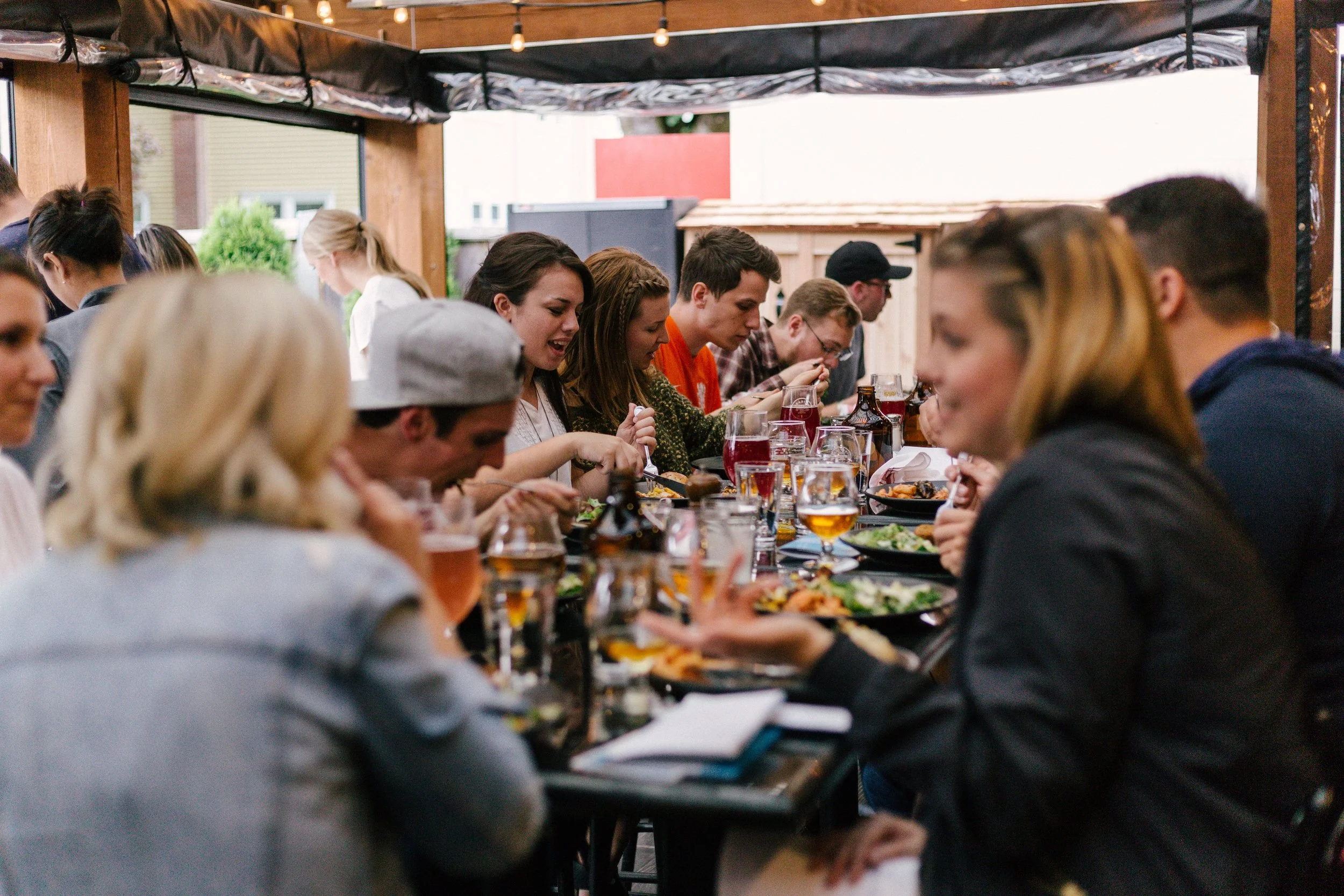
Creating the Emotions That Make Your Event Unforgettable
If you’re going to create a memorable hospitality event, it’s important first to understand how the human memory works.
If you’re going to create a memorable hospitality event, it’s important first to understand how the human memory works.
We remember things in images: a picture is worth 1000 words. When you think about your memories, they’re often a single image of something as it happened or a short “mental video clip” of the moment. They aren’t long, but your strongest memories are very clear and have remarkable detail. You can see the action and the key players, and you know exactly what was happening.
Our memories include our other senses, too: what we smelled at the event (the food, the flowers, the hotel’s cleaning fluids, perfumes and fragrances of the people around us) what we heard at the event (the music, the voices of the people around us, the volume of background chatter, and the sounds of clinking silverware), what we felt in a tactile way with our hands and our whole body (like temperature, humidity, wind, the proximity of other people, etc).
We also have an intellectual memory of the event. When you go to that memory, you know where you were, who was with you, what you were doing at the time, what was happening in your life at that time. If the memory is powerfully crafted, you remember who threw the party, too.
Underlying these two memories is a third type - the emotional memory of the event. This is how all of these experiences made you feel. A luxury hotel venue made you feel important and a valued guest of your host. You were seated next to a major company executive, who listened intently to your business problems and challenges during a break, which made you feel important and successful.
When people remember those key components, they’re able to talk about your event for days and months later. They can look forward to attending your next event. They will remember the people they met, so they’re more willing to answer their phone calls and open follow up messages. They can even remember important product information; particularly “what they get” messages like “saving money,” “spending more time with family,” and “doing what I want to do with my time.” (We’ll talk about connecting these memories to your brand and sales team in a later post).
So how do you make these memories so powerful and clear?
There are two important steps to making this happen. You must do both steps in order, and both steps are required. This is important - if you do this wrong, the result will be look weak and downright schmaltzy (but thankfully it won’t be particularly memorable).
Step Number One: You Must Create These Two Emotions
Emotion and memory go hand in hand. If your mind doesn’t attach an emotion to an experience, it doesn’t get remembered. If you think about your best memories, they’re full of emotions - happy, sad, angry, victory, defeat, safety, danger, fear, frustration, teamwork, connection, etc.
Emotion Number One: Connection
We have to feel connected to an event and the people at the event for our minds to decide to remember the event.
At the most memorable and persuasive events, people are actively engaged in the experience and emotionally connected to what is happening around them. Political rallies are a great example. In a divisive political climate, people often fear that sharing their political beliefs would be offensive to others. At rallies, people feel comfortable expressing themselves because all the other cheering, applauding people apparently hold the same political beliefs they do. The sense of connection lets the other emotions flow.
Event planners can do the same thing. Conferences, trade shows, and meetings can be lonely experiences. People are on the road, away from their families and friends, and they’re in a new environment surrounded by many people who are mostly strangers. People feel disconnected. There’s nothing worse than being at a party with no one to talk to.
Creating a “shared experience” like participating in a close-up magic performance or getting involved in a game can help open up your guests. Getting people involved and engaged in an event helps connect them to the other people at the event, starting conversations and building relationships.
People love cocktail parties where they feel like they know a lot of people - those parties go on for hours because everyone can comfortably float from conversation to conversation. They actually look forward to events that create connection at the conference because they know they’ll see people they know (even if that person is their sales representative or corporate host).
Emotion Number Two: Surprise
Surprise is the most powerful emotion for creating a memory. Psychologists agree that we remember things that we don’t expect more than anything else. If you’ve ever been so sure that you knew the answer on Jeopardy but Alex said you were wrong, you know exactly what I mean. In fact, you definitely know what you thought the answer was AND the correct answer. The surprise makes it stick in your head.
Surprising your guests with a celebrity speaker, large gift, large charitable donation, or major product announcement is a good way to sear the experience on their memory. Whatever you do has to be unexpected, emotionally interesting, and “one sentence simple.” The guest should be able to explain what happened in just one sentence. “They brought in Joe Montana to speak to us about focus” or “We donated $2 million to Alzheimer’s research at the event.”
The “surprise” emotion supercharges the memory. The moment is frozen in their minds through all five senses, as well as the emotions they were feeling at the time. They remember who they were with, what was happening, where they were, etc.
Step Number Two: Create a Memorable Story
People remember stories very well because we talk in stories. When we talk about something that happened, we tell the story in chronological order. We give background and context, and we tell the story of the experience “first this happened, and then…”
The most powerful stories are “first person” stories. These are things that happened to us, so we are emotionally involved in every moment of the story. We are engaged in the memory and we feel important when we tell people about what happened because we are the “star” of the memory.
When you’re choosing entertainment, try to see how your guests will generate first person stories: “I turned the card over - it was in my hand the whole time - and it changed!”
Be very careful of any entertainment that expects the audience to “sit there and watch me.” It’s much less memorable, there’s very little emotion tied to the experience, and the stories your guests will tell are much less compelling: “The aerialist did gymnastic moves on a trapeze.” At the very least, good speakers and entertainers should bond the audience together as a group, so everyone feels like they are engaged and participating in the event.
You can create a first person story about anything at your event. In a previous post, I listed some examples of first person stories about the venue, food and beverage, and entertainment. (Link)
Bonus: What Triggers the Memory?
When you’re creating the story guests will tell about your event, think about what will trigger that memory after the event, so guests have a reason to start talking about the experience they had with you. Just as the things we see and do are most memorable, when we see something that connects to the previous experience, the whole memory comes rushing back to us - the sensory impressions, the emotions we experienced, and the memory of the people who were with us at the time.
That’s one reason that seemingly “common” items make such a powerful impression on us when they are presented in a unique and different way. We see these things all the time, so our memories get triggered over and over again, which makes a deeper and stronger memory each time. Andy Warhol’s Cambell’s Soup can paintings are a great example. We think, “why would someone paint a picture of a can of soup?” When we see soup in our pantry, however, we find ourselves thinking of Warhol.
An Example
Magicians have a strong advantage because they use common - or even borrowed - items to do surprising things in their performances. I use oranges, a cup, markers, borrowed money, playing cards, and even dental floss in my performances.
The magic I do is emotionally compelling stuff. For instance, I change a $1 bill to a $100 bill, tapping into emotions that connect to hope, wealth, security, and prosperity. While I do this, I might talk about how investing with my client helped someone pay for their daughter’s college tuition (a common problem that many investors face).
Every time someone sees a dollar bill later, it triggers a memory of the magic, my client’s event, and their brand message. They find themselves talking about the trick, reinforcing the brand experience in the minds.
Key Points to Remember
We’ve covered a lot of ground. So let’s quickly review.
The Critical Parts to A Successful Event
Create Important Emotions at Your Event
A). Create a sense of connection to the event, the things happening at the event, and the people at the event.
B). Inject the emotion of surprise into your event to make that emotion memorable.
2). Create a Story Your Guests Can Tell About Your Event
A). Make sure it’s a “first person” story your guests can tell about their experience.
B). Give them concrete details they can retell.
C). Create a trigger that will bring the memory back later.
These five simple ideas will make sure that people remember your event for years to come, and - more importantly - they tell other people about it.
Just released: Mike Duseberg reveals all the “how to” steps to creating events that create sales referrals, and repeat business in his third booklet The Event ROI Revolution: A Planners Guide to Hospitality Events that Create Connections, Build Rapport, and Schedule Sales Appointments. Download your complimentary copy here.

The Blueprint for Client Events That Create Sales, Referrals, and Repeat Business
We host events to connect our sales people to our customers, so our sales people can build rapport, create trust, and eventually close sales. Here's how.
Probably the smartest copywriting rule I’ve ever heard is “begin with the end in mind.” As a writer, marketer, magician, father, husband, and golfer, these six words are the secret to getting the important things done.
In the event planning world, it all comes down to “what do you want your guests to do/say/think/feel after the event?”
And if you’re hosting events for your clients and customers, what you want them to “do” is probably the most important. Ultimately, you want them to do something that will advance the sale.
That might look like this:
Answering a phone call from a sales person
Opening an email from a sales person and replying
Reading a white paper or info-product, which triggers an automated email or phone call
Visiting a trade show booth the next day to see a new product
Imagine having a simple, repeatable system for making sure more of your clients actually took those actions after the event. This is real strategic event planning, and it’s absolutely within the capability of any event planner at any event.
You can encourage a lot more of your clients to continue the conversation through some simple - but critical - components that your business event must have to succeed. We’ll dive into each step as we continue this series of blog posts, but here is an overview of the process:
First, the event must be memorable. During a conference or trade show, your clients will attend dozens of events and sessions, and your event must stand out in their mind. The event must be appropriately branded, too, so they not only remember your event but also that your company presented the event for them.
Second, your client must remember meeting their assigned sales representative. As humans, we are much more likely to respond to people we already know. If the client recognizes the sales representative’s name, they’re much more likely to accept the follow up call or email.
Third, your sales representative must build some rapport with the client. Again, as humans, we’re more likely to respond to people we know, like, and trust. Your event should help the sales representative move his relationship with the client past “salesman/customer” and closer to a “business friend” or - ideally - “trusted advisor” position. Rather than simply recognizing their name, the client feels like they “know” the sales representative. At an event, you can even connect the client to your company’s executives (a very real “we listen to you” message) or product development engineers (imagine your clients knowing “the people who design and build our equipment listen to you”).
Fourth, there should be an offer and call to action at the event. Generally, this should not be a request for a sale, but rather an offer to give something to the client or do something for the client if they agree to a follow up step. It should be something very easy to agree to because the client will get a lot of value (information, personalized service, bonuses, etc) for very little action. Ultimately, people don’t take action without a strong reason, and the offer is the reason that they will answer your phone calls, open your emails, agree to a follow up appointment, or visit your trade show booth.
[Don’t be put off by the idea of making an offer and securing a quick commitment. We are hosting this event for a purpose, and the call to action is a critical component of the event strategy. In a later blog post, I’ll explain how this process should happen very quickly and smoothly and take less than a minute or two.]
Fifth, all this should lead to a “next action” after the event. If you’re starting a new business relationship or opening a new opportunity in an existing relationship, the salesperson should tell the client that he will send something in the mail, email, or make a phone call to follow up after the event. At a convention, the client should agree to meet with the salesperson at the trade show booth the next day.
There’s no need for heavy-handed pressure to obtain commitments written in stone - simply ending a conversation by saying “I’ll give you a call on Tuesday at 11am” or “I’ll see you at the booth tomorrow” is enough to commit the client to a plan. If you want to send a calendar request to confirm the time and date, fine. Exchanging business cards or contact information helps solidify the agreement. What’s important is the client can anticipate the phone call or expect to see the salesperson at the show the next day.
These five components are a series of progressive steps, and the event should take the client through each step in order. At first we’re just having fun and enjoying the event, then we spend some time having fun and enjoying the event with our sales representative, maybe meet with an executive or product developer, and finally we agree to follow up with these people after the event.
Ready for more? We’ll publish a deep dive into the first step - creating a memorable event - next . See you there!
Just released: Mike Duseberg reveals all the “how to” steps to creating events that create sales referrals, and repeat business in his third booklet The Event ROI Revolution: A Planners Guide to Hospitality Events that Create Connections, Build Rapport, and Schedule Sales Appointments. Download your complimentary copy here.
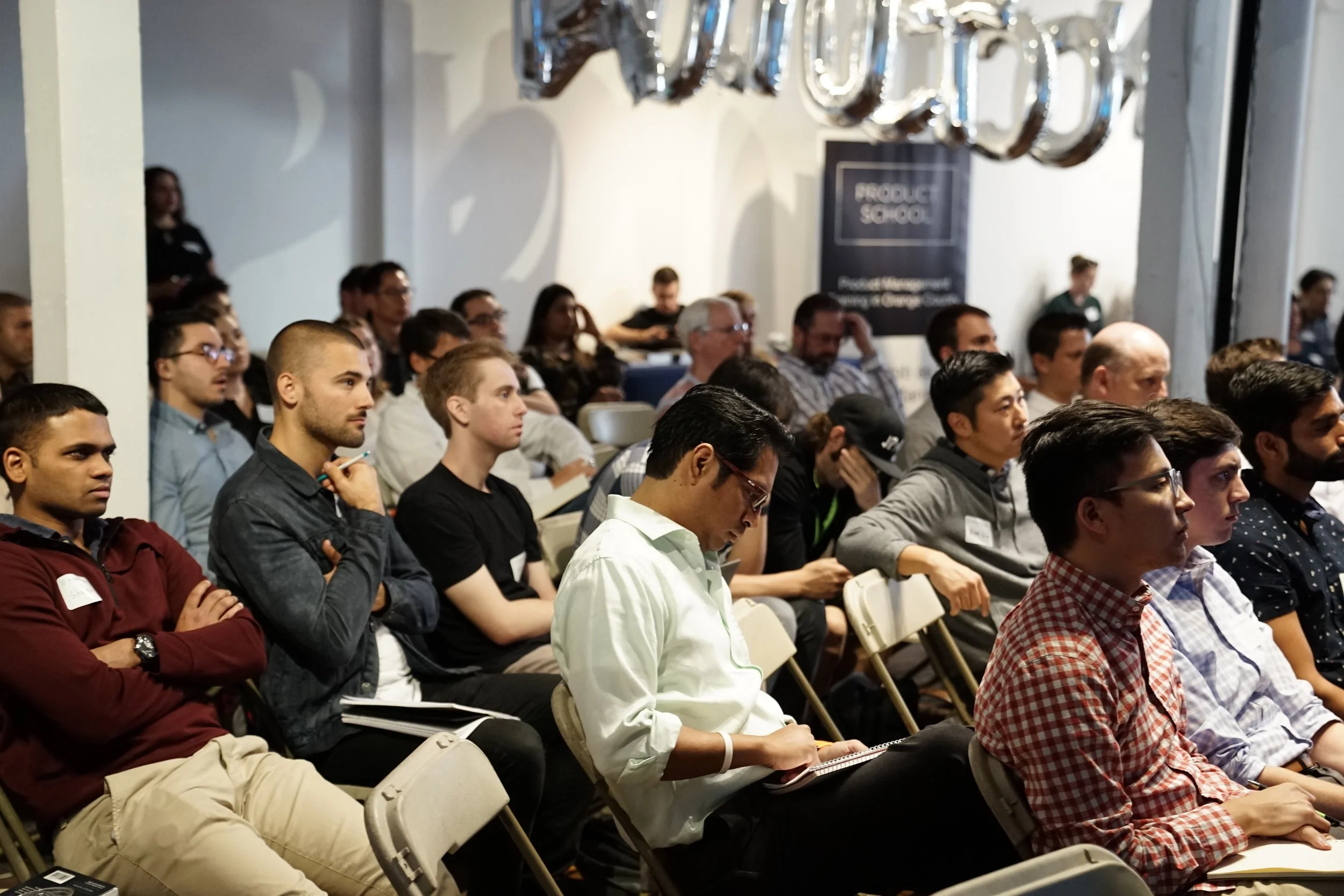
Ancient Secrets to Capturing Your competitor’s Most Loyal Client’s Attention.
Every event planner should read The Art of Seduction by Robert Greene. But, event planners are very busy people and the Audible version is twenty-two hours long, so let me save you some time. Just read Appendix A “Seductive Environments.”
But then maybe you shouldn’t.
Every event planner should read The Art of Seduction by Robert Greene. But, event planners are very busy people and the Audible version is twenty-two hours long, so let me save you some time. Just read Appendix A “Seductive Environments.”
But then maybe you shouldn’t. Maybe what I’m about to explain is a little too powerful for you. Maybe it feels wrong or unnatural.
Or, maybe, it’s so natural and so psychologically perfect that it will help you develop extremely deep connection with your ideal prospects, get them to escape their usual limitations, convince them to embrace something new, and literally begin to fall in love with the idea of doing business with your company.
I’m not going to hide it. This is psychological warfare, and it works.
Sound interesting? Here we go.
If you persevered through the other twenty hours of The Art of Seduction, you’d notice that all the great seducers and con artists that Greene describes continually took their targets to unique destinations. They would escape to private chalets away from the city and travel to exotic events like Carnival. They would visit luxuriant casinos, thoughtful salons, and first class hotels.
And they did it for a very specific reason: they wanted to help their targets escape their usual, hum-drum lives and experience something new. In the new environment, they were trying new things and doing new things. They became open-minded. All the “rules” and social mores of home were gone in this new place. Maybe this Casanova guy isn’t so bad, right?
In business events, we’re doing the same thing. Naturally, we’re inviting our top existing clients to spend some time at our hospitality event as a “thank you” for their business. We’re refreshing the relationship with them and reminding them of how great it is to do business with us.
But we’re also inviting our top prospects. We’re inviting our clients to bring their friends, too. Both are people who are unfamiliar with our company, and they might not want to buy from us because they have an existing supplier they’re already happy with.
We’re going to change that.
At a hospitality event, we bring our clients into an “Invitation Only” space. We take them to a private dining room in a luxury restaurant. We offer them excellent food and the best wine and liquor, and we show them a great time. They see surprising and impossible things performed by the magician. We give them a nice gift as part of the evening. The night is full of unexpected moments and surprises.
These experiences are what opens the client’s mind to new ideas. To skeptical engineers and jaded executives who feel like they already know everything, magic is a big shock. Suddenly there’s something they cannot explain. They don’t know everything. There are new ideas they should be open to. Surprise gifts, new event venues, and new kinds of food and drink do the same thing.
You’re showing them a new experience and teaching them about something new. This makes you and your company fascinating.
This opens their minds to new opportunities and new ways of thinking about their business, too. Back home, they have a dedicated supplier they work with every time. They don’t need to change.
But in this new environment, the prospect sees that you’re doing some pretty exciting things, too. They don’t have this experience with their current supplier, and they’re having a great time. They feel like you value them, and they feel important. Maybe your company isn’t so bad, right?
And, part of that event might be some signage featuring your latest innovation, or a large installation with your featured product. No one forces your prospect to take a look at it, but it’s there. The same product will be on display at your trade show booth the next day, too.
There’s a short speech from one of your company executives, and the magician mentions the product on display as part of his magic. No one demands that anyone visit the booth, but as the company host you invite them to come over and see how might save them money, give them more free time, or allow them to protect their family better.
And if they’d like to know more, they’re welcome to visit the booth the next day. And you hope to see them there. You’re going to be busy, but you’d be happy to set an appointment.
And, yes, they’d like to see more. And 10:30am would work fine.
Does it work every time? No. Nothing works every time.
Does it work some of the time? Does it work more often than calling up someone and hoping they answer the phone, visit your trade show booth, or open your email?
You bet.
Just released: Mike Duseberg reveals all the “how to” steps to creating events that create sales referrals, and repeat business in his third booklet The Event ROI Revolution: A Planners Guide to Hospitality Events that Create Connections, Build Rapport, and Schedule Sales Appointments. Download your complimentary copy here.
Five Things to See At the 2019 Masters Tournament
Watch Mike Duseberg perform the famous “Masters Money Clip” effect around the table at home in Palm Beach, Florida.
This year will be my tenth consecutive year entertaining corporate guests at The Masters in Augusta, Georgia.
You never forget the first time you visit the Augusta National Golf Club. For me, it was April 4, 2009 at 3:30 in the afternoon. My client drove to the club, took me in the back gate (when there was a back gate) and gave me a personal tour. We had Member’s Guest badges, so we actually went right into the clubhouse and did our souvenir shopping in the Member’s Pro Shop.
You could spend days just taking in the scenery. As much as I love to play golf, I know that simply walking the eighteen hole course and par 3 course would be a beautiful way to spend the day. Even on a clear day, there’s a slight haze of history that surrounds the Hogan Bridge, the Sarazen Bridge, and other historic markers throughout the property. It’s a hallowed ground.
If you’ve never been, here are five things to see on your first visit to The Masters. If you’re a Masters Veteran, here are five things you might look forward to reconnecting with…

1). The Clubhouse - without a doubt, the clubhouse at the Augusta National Golf Club is the most famous building in golf. The huge building, with its wide wrap-around porch and iconic “Crow’s Nest” cupola on top, is the symbol of The Masters. My favorite room is the Trophy Room, where the clubs and winning golf balls from many historic Masters moments are housed - including the club that Gene Sarazen hit the legendary “shot heard round the world” with in 1935. Even if your badge doesn’t allow you access, you can still get your picture taken at the flagpole (if you’re willing to wait in line).
2) The Concession Stands - No visit to The Masters is complete without one of their famous $1 pimento cheese sandwiches, wrapped in green paper (supposedly so any loose wrappers would blend into the grass on TV). Because Mr. Jones said the tournament should be an affordable event to attend, the concession prices are shockingly low for everything - including beer.
My friends in the golf club industry are more impressed by speed that people move through the concession areas. No one ever feels like they’re stuck in line, and even the longest lines quickly stream through the concession buildings. One club manager told me he spent about twenty minutes just watching the efficient operations.
You’ll notice that everywhere at Augusta National Golf Club - someone did some hard thinking about how things ought to look and feel, developed a detailed plan for doing it, and is now executing that plan perfectly. There are no “ad hoc” solutions. There is only careful planning.

The Sarazen Bridge beside the pond at #15.
3) The Sixteenth - One of the fun traditions of Masters practice is watching players skip balls through the water and onto the green at 16. The fans get into the excitement and expect each player to hit at least one trick shot. They applaud successful attempts, politely razz the unsuccessful, and “encourage” less enthusiastic players to remember the skipping tradition.
If you choose your viewing area carefully, you can see the approach shots and putting at 15 as well as the action on 16.
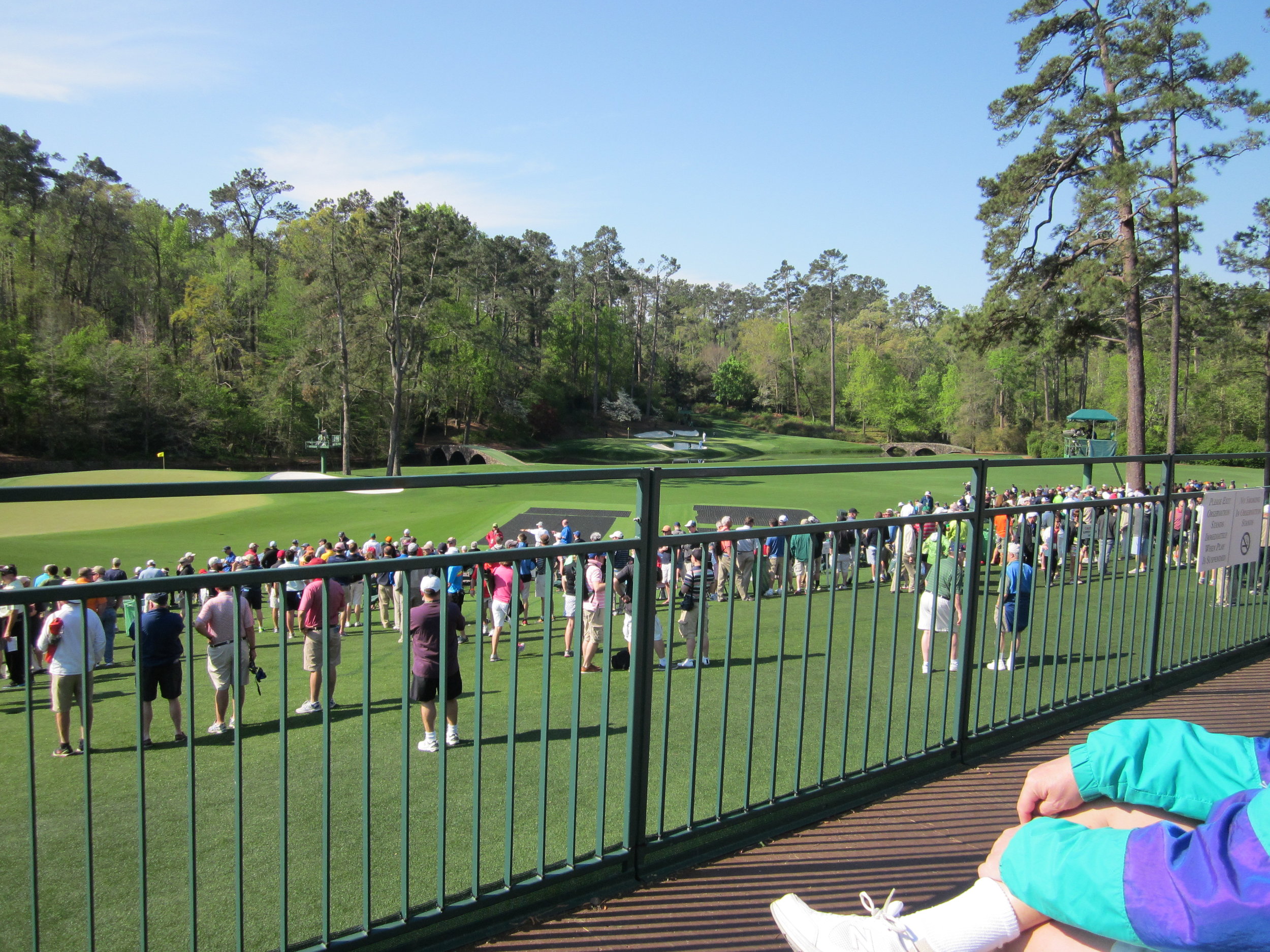
View from the stands at Amen Corner.
4). Amen Corner - If there are three legendary holes at Augusta National, they are 11, 12, and 13. Golf history has been made by the difficult approach shot to the 11th green, which has water on two sides and a large mound guarding the right side. The swirling winds have stopped dozens of tee shots (and many second shots) to the shallow green at 12, where a long shot gets lost in the azaleas and a short shot is lost forever in Rae’s Creek. The teeing ground at 13 continues to be moved further and further back, making players drive the ball further and further to get a good second shot to the famous triple bunkered green.
Amen Corner is one of the perfect places to watch practice or tournament play, too. Patrons can see the approach shots and putts to the 11th green, all the action on the 12th hole, and the drive from the 13th tee.
5) The Fifth - Probably the most anticipated change at The Masters for 2019 will be the new tee box at number 5. The hole has been lengthened significantly, moving the tee box back even further. The club purchased all the property on both sides of Berkman’s Road several years ago, and the new tee is now on other side of where the road used to be. This is not the first time the club has expanded the course outside of the original property lines - they purchased land from the Augusta Country Club to move the 13th tee back and make that hole longer as well.
The fifth hole will be more difficult. Current technology and well-trained professional players could easily carry the large bunkers on the left with their tee shots. Moving the tee back brings these bunkers into play again. No player wants to be stranded there, either - the tall, steep face makes it impossible for a bunkered player to see the green, which many players describe as one of the most difficult on the course.
That’s my list of five things to watch for at The Masters in 2019 - at least until the tournament starts. With it’s fast greens, difficult approach shots, and a ton of history and legacy lumped on each player’s shoulders, The Masters is one of the most exciting and unpredictable tournaments of the year. That’s why many players agree that the real tournament doesn’t start “until the back nine on Sunday…”
For more:
Forbes offers “Three Masters Sleeper Picks to Take a Chance On”
Golf Magazine profiles Fred Couples: Age-defying Fred Couples breaks down his five favorite spots at Augusta National
Golf Magazine tells it like it is (?): Here’s what the pros think are the best (and worst) holes at Augusta.