Why Most Networking Receptions Feel Terrible (And How to Fix Them)
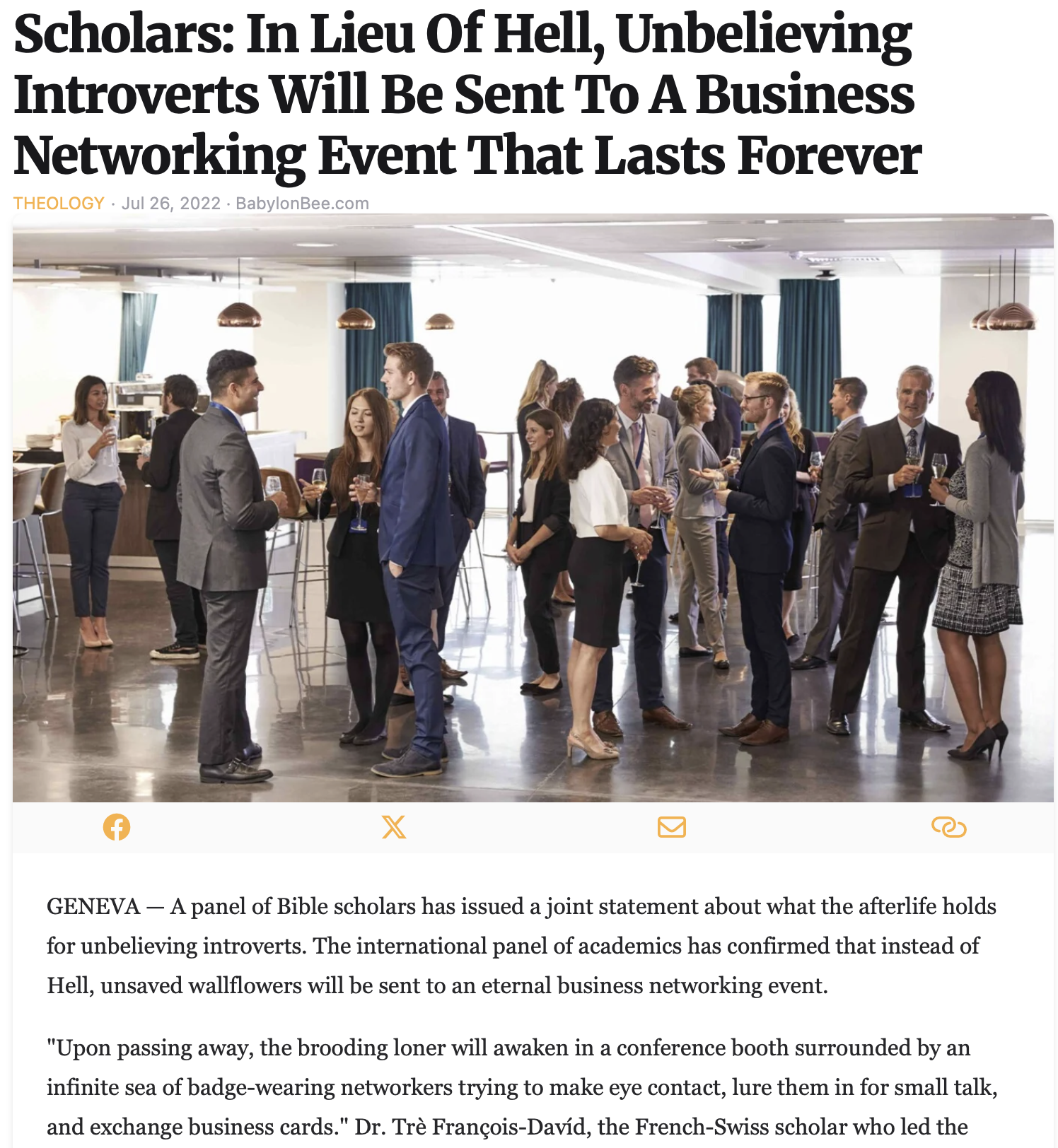
Most networking receptions are terrible experiences. They don’t have to be.
The real problem is that most people have never been taught what to do in the room. So they fall into one of three predictable (and uncomfortable) patterns.
The Pitcher They treat the event like prospecting. They introduce themselves with a mini-pitch, scan for interest, and when they don’t find it, they move on. It feels transactional and cold to everyone involved.
The Interrogator These are the “go-givers” who fire personal and business questions at strangers: What do you buy? What do you sell? What do you need? Who can I introduce you to? The questions are well-intentioned, but they feel invasive when there’s no existing relationship or trust.
The Arranged Ambush Someone is matched with a “perfect” prospect and expected to deliver their best pitch on the spot. In theory it sounds efficient. In practice it often feels like a high-pressure sales call neither person asked for.
The result is easy to see. People crowd the walls. Quality networkers start avoiding the room. And the host is left wondering why the energy never quite takes off.
It doesn’t have to work this way.
You can deliberately engineer a networking environment where conversations start more easily, last longer, and feel natural instead of forced. The goal isn’t just “breaking the ice.” It’s temporarily dissolving the corporate hierarchy and self-consciousness that keep people guarded.
I first learned how to do this in a hotel magic bar more than twenty years ago.
Large crowds, sudden applause, shared moments of surprise — these things pull people out of “business mode” and into “regular person mode.” Once that shift happens, they stay longer, talk more freely, and actually look for each other the next day in the hallway, at breakfast, or in the airport.
The magic itself was never the main point. The principles underneath it were.
When those same principles are applied inside a corporate reception, hospitality suite, or networking event, something noticeable happens: people stop performing and start connecting. The room feels different. Conversations cascade. And clients often sum it up the same way — “It’s just better when you’re there.”
This is the core idea behind the approach I call Connection Catalyst. It’s a deliberate system for creating the conditions where rapport and business relationships form more naturally throughout an event.
If you’d like to see how the system works in more detail, I put the key principles and the practical sequence into a short booklet called Connection Catalyst.
Just fill out the form below, and I’ll send you a copy.
And if you already have an upcoming reception, hospitality event, or networking component that you suspect could be stronger, I’m happy to look at what you’re planning and tell you where the biggest leverage points usually sit. Click here to schedule a call.
These rooms don’t have to feel like a junior-high dance.
They can feel like the place people actually want to be.
— Mike