
Getting Results

MindShift: Understanding Events From The Guests Perspective Improves Event Metrics
Any sales and negotiation trainer will tell you it's essential to know your counterpart. Engaging and influencing another person is much easier when you understand their perspective.
That's a key component to successful events, too.
Any sales and negotiation trainer will tell you it's essential to know your counterpart. Engaging and influencing another person is much easier when you understand their perspective.
That's a key component to successful events, too. When I'm getting ready to perform at an event, I want to understand what it's like to be a guest or participant.
I know that walking into the clubhouse at Augusta National Golf Club was intimidating.
Attending "business social events" can be uncomfortable. Will we talk "business" or "social" during cocktails? Will someone be offended if I discuss business?
Even though I'm in a sea of people at a customer appreciation event during a trade show or conference, I feel a little "lonely in a crowd."
I rarely raise my hand to comment during a break-out session because people might disapprove of my ideas.
I know I'm normal, too.
That's why I usually start by entertaining on the edges of a party.
I get those people laughing, forming them into a little crowd.
The fun helps them get to know each other.
Now, they're engaged in the event.
I do that in all four corners of the room.
Then I start working to the middle of the event where the extroverted people are.
They naturally laugh louder. They attract people from the edges of the room.
Now, we're all having fun together.
Rinse. Wash. Repeat all night.
That's what turns a typical cocktail party into an event people look forward to attending next year.
Want to see what this looks like in action?
Here are some photos from a 2018 event, where I used the Always Something More strategy to engage the audience, get them laughing and having fun together, and eventually turned the group into one, big laughing crowd.

The first “set” was for a few people who were just arriving…
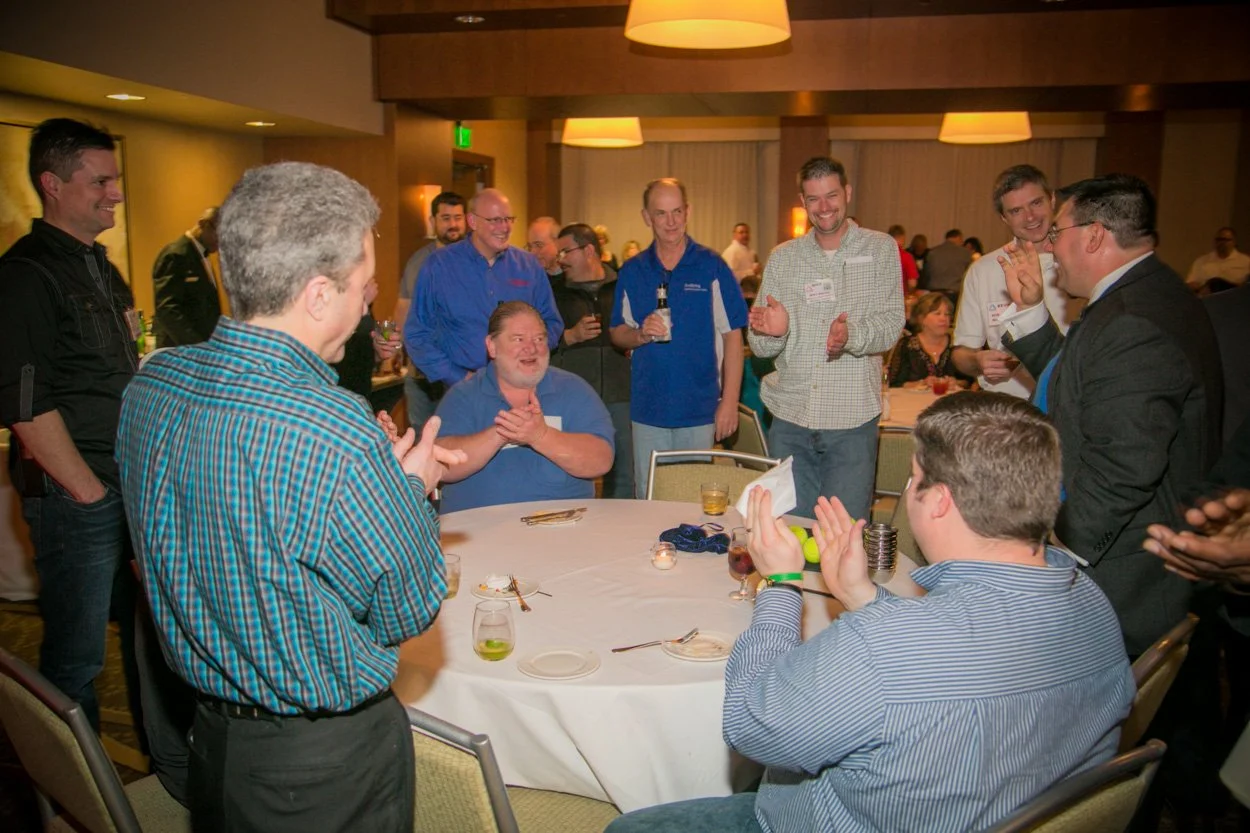
Then I entertained a group on the other side of the room…

Still another group in another corner…

Then people started to walk over to where I was performing…

Until we collected almost the entire room.
That’s how it works…
Of course, magic doesn’t solve every event challenge or work in every situation.
The best way to figure out if it can help you get the results you want from your event is to have a conversation.
I’ll ask you a lot of questions about the event you’re planning, what you’ve done in the past, and what you hope to accomplish this time.
Based on what you tell me, I can tell you exactly what other people like you have done in your particular situation.
To set an appointment, call (561) 596 3877, or click here to schedule an appointment through Calendly.

What are The Pictures Saying About Your Event?
Great images tell a story about the event - who was there, what happened, and what did people think about it.
Great images tell a story about the event - who was there, what happened, and how people felt.

More importantly, they have an impact on your next event by:
Strengthening the memory of the event for those who did attend
Developing curiosity among people who did not attend
Creating anticipation for the future event
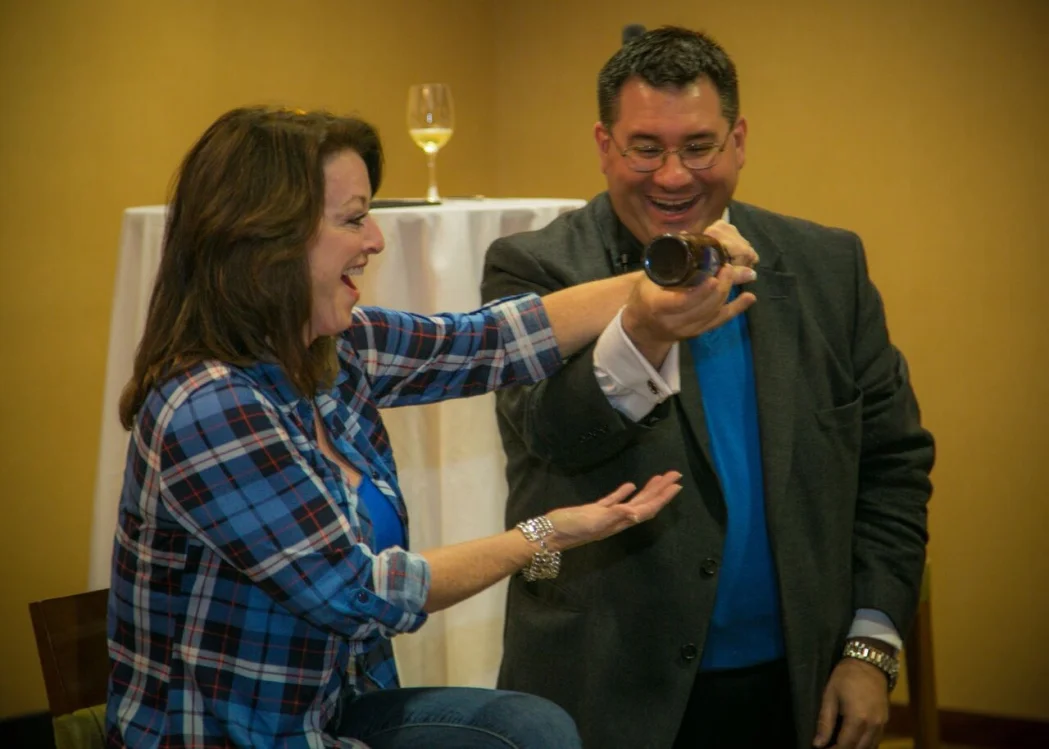
But the images I saw after New Year’s Eve 2022 missed the mark.
I saw surprisingly few pictures of performers interacting with the people at the event. Worse, the audience had their back to the entertainment in several images.
Typically, we want to see people laughing, smiling, and slapping each other on the back. Some of the people in the pictures looked a little bored.
These were probably fantastic events, but the images did not tell that story.
Here are three ideas that might help you get better images from your next event:
Work with the photographer. A great photographer knows how to capture “the moment.”
Talk to Your Entertainers. Experienced performers know how to work with the photographer to create those images “on the fly.”
Record a video on your phone. A video is like thousands of still images, so you can select the image you want using the screenshot function.
Of course, events are more than laughs and smiles. Pictures should capture and convey conflict and drama, feelings of frustration and anguish, insightful breakthroughs, and moments of ultimate triumph.
Having all those moments requires experiences that bring people together in an emotionally compelling way. Something has to trigger the laughs, facilitate the connection, and create an experience your guests are talking about for months to come.
Maybe I can help.
If you are open to a conversation about an upcoming event, what you have done in the past, how you evaluate the success of your event, and what you hope to achieve this year, call (561) 596-3877 or click here to schedule an appointment.

How To Use The "Pepsi Challenge" to Capture Market Share At Your Next Trade Show Or Conference Event
Pepsi’s biggest problem was that everyone already knew what Coca Cola tasted like. Believe it or not, your best conference and trade show prospects are ignoring you for the same reason…
The new season of “The Food that Built America” is a fantastic show: there’s drama, conflict, emotion, and lots of fascinating stories about the brands we see almost every day. It’s both inspiring and entertaining.
And there’s some mind-blowing lessons on business strategy too - real stuff you can use right now.
We just finished the episode on the “cola wars.” We all know the story of the “Pepsi Challenge,” where Pepsi sent people into shopping malls and street corners, asking people if they could tell which cup had Pepsi and which had Coca Cola by taste alone.
At the time, Pepsi had about 7% market share compared to Coca Cola (which had 92 of the other 93%).
Why? Because Coke was the original cola drink, and it never occurred to people to change. They never tried Pepsi. They didn’t even know how it tasted, and they didn’t care because they knew they liked Coke.
And that's why the Pepsi Challenge was so powerful. It grabbed people's attention, and it said, "hey, try this." And when they did, about 52% decided they liked Pepsi better - which immediately cut into Coke's market share.
So how does this apply to your presence at trade shows and conferences?
From an earlier post, you’ll remember the three most valuable prospects you can meet at a trade show or conference:
People who currently work with you and are happy.
People who work with your competitor.
People who used to work with you.
These are the people who can buy stuff that will move the needle in your business.
But there’s a problem.
Just like the Coca Cola drinkers, those three groups of people have no reason to talk to you. Your current clients don't know that you can sell them other things they also need, so they think they're "happy." Your competitor's clients are "happy," too, so they don't need you. And your prior clients think they're "happier" without you.
They aren’t going to come to your trade show booth. They aren’t going to attend your customer hospitality event, and they definitely aren’t coming to your webinar or virtual conference.
It’s not that they don’t need what you sell or want the outcomes you offer - the problem is that they’ve already decided that they don’t need to talk to you about it.
And if you can’t have a conversation, you’ll never have a sale.
So you need a "Pepsi Challenge.”
You need something that grabs your prospects attention, focuses attention on your brand in a memorable way, delivers a simple message that opens your prospects' eyes to a specific problem they probably didn’t know that you solve, and offers a clear call to action that explains how your prospect can get the outcome they want.
Our clients do that with magic and mind-reading, but there are probably dozens of other ways you can capture attention, engage your prospect, and deliver a message that makes them want to start a conversation with you.
Is this a bold statement? Does this break the rules of sales or marketing?
Not at all, really. It’s what I’ve been doing with my clients for decades, and it’s what my mentors and coaches taught their clients to do for decades before that. It’s a simple, proven, repeatable formula.
You know who really hates this? You know who calls it “unsportsmanlike” and “rude” and other negative labels?
Companies like Coca Cola. The big, established players who are successfully dominating the market by keeping their valuable clients focused on them, so they never even think of changing.
Go get ‘em.
If you’re open to a conversation about what you’re doing at trade shows and the hospitality events you’re sponsoring, the results you’re getting, and how you know you’re successful, I can share what other companies in your particular position have done and the results they’ve achieved. You can schedule a short phone call here.

Integrating Sponsors into Your Virtual Event
Here’s a “quick and dirty” example of how to smoothly integrate sponsors into your event. We took the idea from the Jerry Lewis Labor Day Telethon, where Jerry used celebrities and corporate donors to support MDA. Jerry would do a quick segment with the the sponsor, tell a few jokes, and accept their donation.
Everybody wants sponsors in their event. Whether you want someone to help pay for the expenses during the event or if you want someone to help raise a lot of money for your cause, sponsorships bring the significant revenue your event needs.
We created a “quick and dirty” example of how to smoothly integrate sponsors into your event. We took the idea from the Jerry Lewis Labor Day Telethon, where Jerry used celebrities and corporate donors to support MDA. Jerry would do a quick segment with the the sponsor, tell a few jokes, and accept their donation.
Ultimately, sponsorships are advertising, so the sponsor should talk a little bit about their company while they make a donation to the cause. This format does a great job of integrating the sponsor and their message without making everything look like a slimy sales message.
If your event isn’t a charity or fundraiser event - such as a conference or meeting - we can do something similar with out the “big check” component. I would simply bring on the sponsor’s representative, have a brief exchange about something relevant to their business (maybe something at a virtual trade show booth or a new innovation they’re releasing), do some magic with them, and move on.
Here’s a video that shows how it works and explains three key components to making this work.

Three things are important here:
The person on screen is the "face" of the company or the person your clients will interact with next.
The person participates in a magic trick, enjoys the show, and supports the cause or event with the rest of the audience.
There is a simple call to action: "Talk to Amanda to learn more" or "Thank Amanda for supporting this event" or "See Amanda for their seasonal specials."
Follow these simple steps, and you'll sell the sponsorships you need AND your sponsors will get the results they expect from their investment.
Just released: Mike Duseberg reveals all the “how to” steps to creating events that create sales referrals, and repeat business in his third booklet The Event ROI Revolution: A Planners Guide to Hospitality Events that Create Connections, Build Rapport, and Schedule Sales Appointments. Download your complimentary copy here.

Seven Reasons to Host a Hospitality Event During a Trade Show
Every trade show attendee is going to eat dinner, go out for drinks, and probably seek some kind of entertainment - why shouldn’t your best clients and prospects do that with your sales team?
Trade shows are the best face-to-face sales and marketing venues in the world. Thousands of current clients and future prospects are gathered in one place, and they’re all focused on industry-wide problems that your company solves. The sales and marketing activity doesn’t have to stop when the show floor closes, however.
Hospitality suites and customer events represent a largely untapped opportunity. Everyone is going to eat dinner, go out for drinks, and probably seek some kind of entertainment - why shouldn’t your best clients and prospects do that with your sales team?
Whether you’re hosting a huge party for a thousand guests or a simple, off-site dinner for your closest clients, here are seven reasons you should do some kind of a hospitality event during your next trade show:
Building Rapport - People buy from people they know, like, and trust. The biggest advantage you can give your salespeople is the opportunity to build real rapport with your clients, so they can cross the threshold from “salesperson” to “friend and trusted advisor.” That’s hard to do in a sales call or on the trade show floor, where everything revolves around a “buyer/seller” mentality. At the hospitality, we’re here to have fun and relax together, which lets your sales team connect with your prospects as friends.
Convert Your Competitor’s Customers - Successful hospitality events introduce guests to new venues, new food and drink, and new experiences. Research shows these events are “mind opening” - when we try new things and enter new worlds, we see ourselves differently and open ourselves to trying even more new things. By inviting your competitor’s clients to these special events, you open their minds to new perspectives about your industry, your products, and your company. This can help your sales people “get their foot in the door” with clients who would normally be firmly committed to your competitor.
Drive Traffic to the Trade Show Booth - Clients need a good reason to stop and engage with your trade show booth staff. By displaying your equipment in the hospitality, mentioning the problems it solves in the welcome speech and on signage, and even integrating these messages into your entertainment, you can help your prospects make a plan to visit your booth and learn more.
Set Appointments - In casual conversation at a hospitality suite, your sales team can ask a few casual questions about your customer’s business, identify some pain points, and then schedule an on-site meeting, a phone call, or other “next step.”
Referrals - There is no greater referral tool than a hospitality suite. When your best clients bring their friends and colleagues to your hospitality, they are literally introducing these people to your company, your products, and your sales people. It doesn’t get any smoother than that.
Make Offers - You could offer a special deal for guests attending the hospitality or trade show, but you can also use your event to offer free white papers and research, complimentary test-drives of software and portal websites, and complimentary need analyses. This could be done as part of a speech or explained on a card or one-sheet in a gift bag. Using opt-in forms, you can tell which of your prospects took advantage of the offer, so you know who your sales team should follow up with and what they should talk about.
Show Appreciation - Of course, people do like to feel appreciated. Don’t forget to thank your current customers for their business (while you commit them to a next step).
Hospitality events are a tremendous opportunity to connect with your ideal clients. Creating a memorable event that connects your sales team to your prospects, positions your sales team for effective follow up, and really drives bottom line results takes strategy and forethought.
Just released: Mike Duseberg reveals all the “how to” steps to creating events that create sales referrals, and repeat business in his third booklet The Event ROI Revolution: A Planners Guide to Hospitality Events that Create Connections, Build Rapport, and Schedule Sales Appointments. Download your complimentary copy here.