
Getting Results

What are The Pictures Saying About Your Event?
Great images tell a story about the event - who was there, what happened, and what did people think about it.
Great images tell a story about the event - who was there, what happened, and how people felt.

More importantly, they have an impact on your next event by:
Strengthening the memory of the event for those who did attend
Developing curiosity among people who did not attend
Creating anticipation for the future event
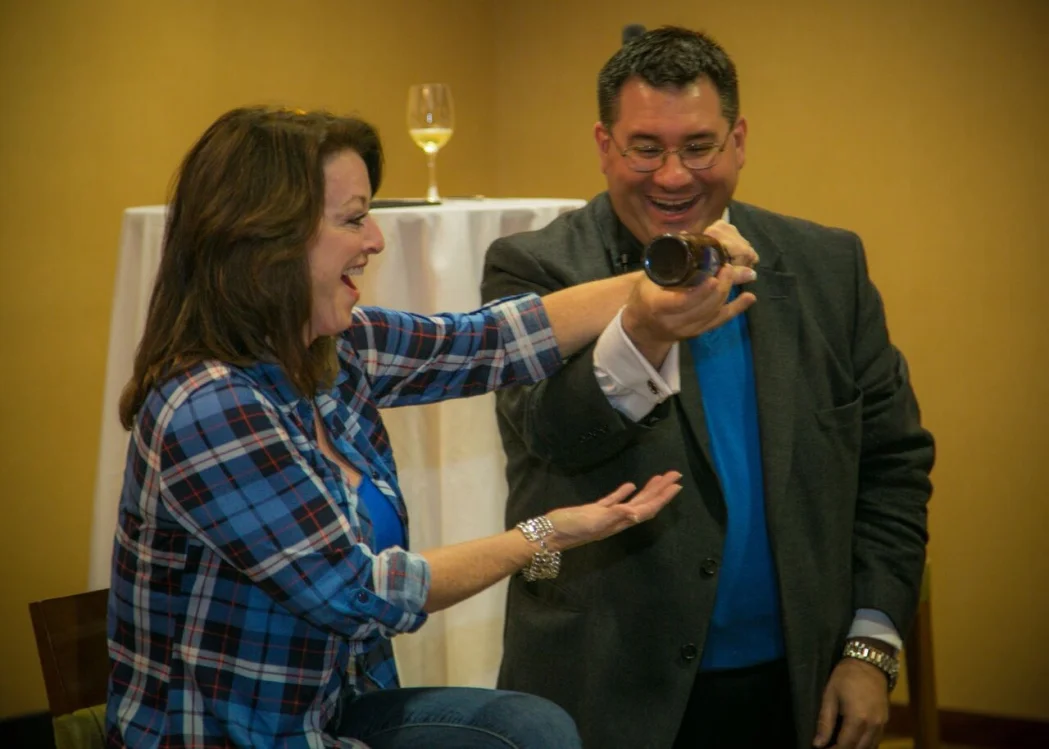
But the images I saw after New Year’s Eve 2022 missed the mark.
I saw surprisingly few pictures of performers interacting with the people at the event. Worse, the audience had their back to the entertainment in several images.
Typically, we want to see people laughing, smiling, and slapping each other on the back. Some of the people in the pictures looked a little bored.
These were probably fantastic events, but the images did not tell that story.
Here are three ideas that might help you get better images from your next event:
Work with the photographer. A great photographer knows how to capture “the moment.”
Talk to Your Entertainers. Experienced performers know how to work with the photographer to create those images “on the fly.”
Record a video on your phone. A video is like thousands of still images, so you can select the image you want using the screenshot function.
Of course, events are more than laughs and smiles. Pictures should capture and convey conflict and drama, feelings of frustration and anguish, insightful breakthroughs, and moments of ultimate triumph.
Having all those moments requires experiences that bring people together in an emotionally compelling way. Something has to trigger the laughs, facilitate the connection, and create an experience your guests are talking about for months to come.
Maybe I can help.
If you are open to a conversation about an upcoming event, what you have done in the past, how you evaluate the success of your event, and what you hope to achieve this year, call (561) 596-3877 or click here to schedule an appointment.
What Your Marketing and Events Team Needs to Know About Entertaining Executives and Engineers
For over 20 years, I’ve wondered why my magic and mentalism always seemed to land so well with engineers, heavy industry executives, doctors, lawyers, and business people. They called me to their events year after year.
Their marketing departments and event planners seemed to think they were crazy, too. “Why would magic be a good fit for this event?”
Now I know.
I finally figured it out. I feel like I have to share this with you.
For over 20 years, I’ve wondered why my magic and mentalism always seemed to land so well with engineers, heavy industry executives, doctors, lawyers, and business people.
These people bring me to events like The Masters, and they want me entertaining their clients and customers at hospitality events, executive summits, and sales meetings.
Their marketing departments and event planners seemed to think they were crazy, too. “Why would magic be a good fit for this event?”
Now I know.
It’s all about DISC.
If you’re unfamiliar with DISC, it’s a four-way classification system psychologists use to categorize communication styles.
Your communication style has a tremendous impact on how you perceive others and how they perceive you. I don’t have time to go into it here, but you can learn more here.
The DISC profiles split two ways:
“task oriented people” (Type C and D) vs. “people oriented people” (Type S and I)

Typically, event planners are very detail-oriented people who really like to talk with other people and have fun conversations.
Most of them are in the Type S and I groups: they like everyone to agree, they love to talk, and they want everyone to like them. They get energy from talking to others.
Focusing on “things” and “problems” takes energy for an I or S (not that they can’t do it, but it takes energy).
Engineers and executives, however, are typically Type C and D. They are task-oriented people, they get energy from solving problems and doing things, they like to move fast, they like to compete and face challenges. Doing stuff gives them energy.
“Chit chat” and “small talk” drains energy for a C or D (not that they can’t do it or don’t like it, but it takes energy).
The problem is that everyone thinks everyone else is just like them.
So when an event planner says,
“Our people don’t need anything to get them laughing and having fun together, they all know each other. They just go to bed at 9pm”
She is 100% correct. Her people do know each other, and they can talk and have fun together. She doesn’t think they need anything to make the cocktail party work, because networking talk and mingling gives her energy.
At the same time, the Type C and D engineers and executives at the event will spend a lot of energy doing the small talk, and they’ll get tired, disconnect, start answering emails on their phone, or even leave the event early.
When I discovered DISC, I realized why my engineering and executive clients kept requesting me back for their events year after year:
Having a problem or a challenge to deal with gives Types C and D a tremendous amount of energy. Working on a problem together actually helps them bond and build rapport with other Cs and Ds.
So having their mind-blown by a magic trick, watching other people get their minds blown, trying to figure out the secrets, and then talking about the magic afterward played right into their communication styles.
The magic and mind-reading gave them tremendous energy in a situation they would normally find draining.
That’s why they stayed later at the events, why they built stronger relationships around the magic, and why they were talking about the events months later.
What does this mean for your events?
I don’t know.
Magic and mind-reading seem to play well for executives, engineers, spreadsheet-enthusiasts, and people who work on “things” and details, but they’re probably not the only things that appeal to the Type C and D.
But you’re open to a conversation about an upcoming event, give me call.
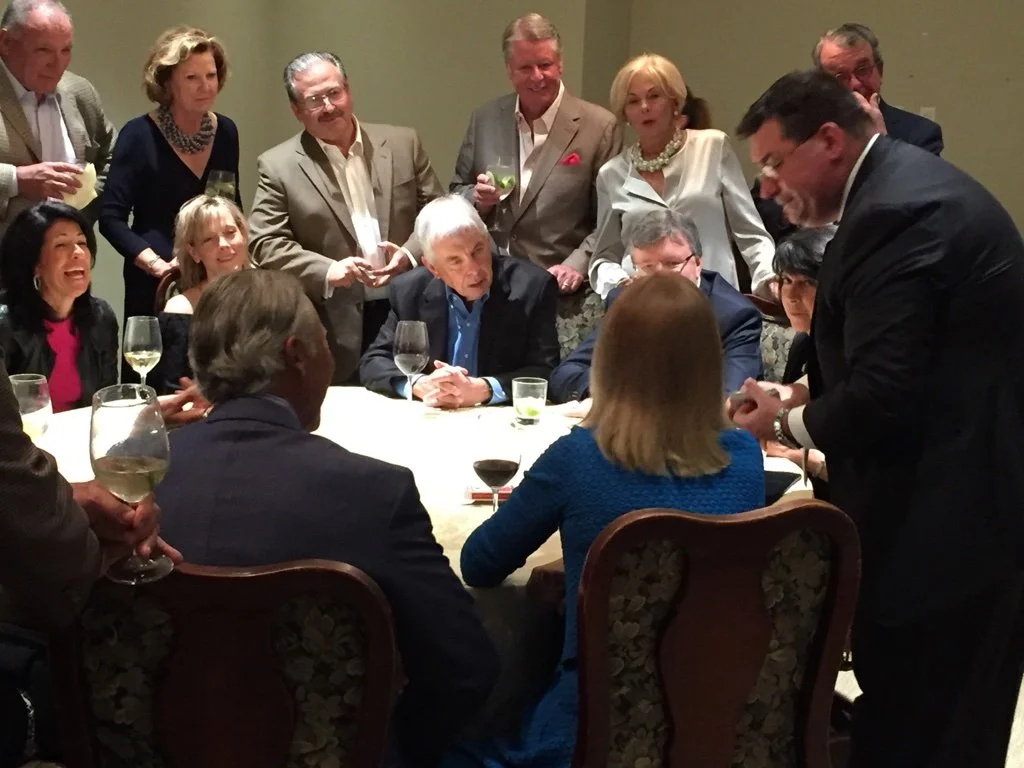
I never noticed this until I wrote this post, but in this image there’s at least one CEO, an electrical engineer, two business consultants, and a guy who manages casinos. All Type C and D personalities, and given that like-attracts-like, you can expect that their spouses are the same…

How To Use The "Pepsi Challenge" to Capture Market Share At Your Next Trade Show Or Conference Event
Pepsi’s biggest problem was that everyone already knew what Coca Cola tasted like. Believe it or not, your best conference and trade show prospects are ignoring you for the same reason…
The new season of “The Food that Built America” is a fantastic show: there’s drama, conflict, emotion, and lots of fascinating stories about the brands we see almost every day. It’s both inspiring and entertaining.
And there’s some mind-blowing lessons on business strategy too - real stuff you can use right now.
We just finished the episode on the “cola wars.” We all know the story of the “Pepsi Challenge,” where Pepsi sent people into shopping malls and street corners, asking people if they could tell which cup had Pepsi and which had Coca Cola by taste alone.
At the time, Pepsi had about 7% market share compared to Coca Cola (which had 92 of the other 93%).
Why? Because Coke was the original cola drink, and it never occurred to people to change. They never tried Pepsi. They didn’t even know how it tasted, and they didn’t care because they knew they liked Coke.
And that's why the Pepsi Challenge was so powerful. It grabbed people's attention, and it said, "hey, try this." And when they did, about 52% decided they liked Pepsi better - which immediately cut into Coke's market share.
So how does this apply to your presence at trade shows and conferences?
From an earlier post, you’ll remember the three most valuable prospects you can meet at a trade show or conference:
People who currently work with you and are happy.
People who work with your competitor.
People who used to work with you.
These are the people who can buy stuff that will move the needle in your business.
But there’s a problem.
Just like the Coca Cola drinkers, those three groups of people have no reason to talk to you. Your current clients don't know that you can sell them other things they also need, so they think they're "happy." Your competitor's clients are "happy," too, so they don't need you. And your prior clients think they're "happier" without you.
They aren’t going to come to your trade show booth. They aren’t going to attend your customer hospitality event, and they definitely aren’t coming to your webinar or virtual conference.
It’s not that they don’t need what you sell or want the outcomes you offer - the problem is that they’ve already decided that they don’t need to talk to you about it.
And if you can’t have a conversation, you’ll never have a sale.
So you need a "Pepsi Challenge.”
You need something that grabs your prospects attention, focuses attention on your brand in a memorable way, delivers a simple message that opens your prospects' eyes to a specific problem they probably didn’t know that you solve, and offers a clear call to action that explains how your prospect can get the outcome they want.
Our clients do that with magic and mind-reading, but there are probably dozens of other ways you can capture attention, engage your prospect, and deliver a message that makes them want to start a conversation with you.
Is this a bold statement? Does this break the rules of sales or marketing?
Not at all, really. It’s what I’ve been doing with my clients for decades, and it’s what my mentors and coaches taught their clients to do for decades before that. It’s a simple, proven, repeatable formula.
You know who really hates this? You know who calls it “unsportsmanlike” and “rude” and other negative labels?
Companies like Coca Cola. The big, established players who are successfully dominating the market by keeping their valuable clients focused on them, so they never even think of changing.
Go get ‘em.
If you’re open to a conversation about what you’re doing at trade shows and the hospitality events you’re sponsoring, the results you’re getting, and how you know you’re successful, I can share what other companies in your particular position have done and the results they’ve achieved. You can schedule a short phone call here.

Jeff Bezos Says This Is How We Should Think about The Next Ten Years
Bezos said that everyone asks him what will change in the future, and really dismissed the question as interesting but irrelevant.
I just read an interesting quote about Jeff Bezos. He said that everyone asks him what will change in the future, and really dismissed the question as interesting but irrelevant.
Yeah. Irrelevant.
He said what is important is what won’t change in the next decade. Bezos believes that ten years from now, people will still want a wide selection of quality products available at the lowest possible price. Hard to argue that Amazon isn’t positioned for the future.
So what won’t change in the events industry in the next 20 years? Here are five ideas that should never be dismissed.
Permanent Truth #1: People Want Experiences More Than Stuff
As always, stuff remains obtainable; in fact, Amazon is exactly why more and more stuff of higher and higher quality is available faster and faster and at a lower and lower price.
Great experiences, however, continue to increase in value. Leading Hotels of the World’s famous customer service slogan will always be true: “The last bastion of luxury is personalized service.”
Experiences that feel engaging, conversational, interactive, and participatory have inherent meaning, create lasting memories, and almost compel people to talk about them.
Don’t be fooled into thinking this is a “millennial” thing or a recent discovery. This is a fundamental part of human nature.
Permanent Truth #2: People Crave a Story They Can Tell
One of the most amusing articles I read in the Wall Street Journal this year was about how souvenir hats and shirts have become status symbols. It’s true. When I travel, I wear a windbreaker from Augusta National Golf Club and a hat from a club so private I can’t legally write its name in this article. People who recognize those logos instantly reach out to me and tell me about their experiences as these events.
They feel compelled to talk about their experience. They want to say things like:
I was there when…
Here’s what happened to me…
This is how I felt when…
This is what I saw…
And they want to ask questions like:
Did you see…
Were you there for…
Did get try the…
Who did you go with?
The Carnegie Rule is as true as ever: People want to feel important. Having an experience that they participated in - simply saying “I was there too” - makes people feel incredibly important, and they feel compelled to talk about their experience because that enhances their feeling of importance.
Permanent Truth #3: People Need a Reason to Talk to Each Other
The number of books and YouTube videos about how to network, how to meet people, and how to communicate more effectively grows every year. These topics have driven the sales and self-help industry for well over a century, and they will continue to sell forever.
People will always be a little nervous to approach strangers, and they’ll always be more willing to do it when they have a reason to reach out and say hello.
To reduce the fear of rejection - which is a big part of why people are reticent to approach strangers - we need to create more experiences where rejection isn’t possible. We need to do fun and engaging things that make people want to come together and do things with other people.
We will always need to create engaging, entertaining, and fun contexts for connecting at events. If we want to get people off their phones and out of their heads, we need to draw them into a shared experience and provide the opportunity for them to start talking to each other.
People crave experiences that give them something to talk about - during the event, after the event, and in anticipation of next year’s event.
They can use these experiences to start conversations with their friends, colleagues, and the people the want to meet - new friends, new prospective clients, and new network members.
Permanent Truth #4: Face to Face is More Persuasive Than Print, Phone, Digital, or Whatever Else…
My colleagues and I are convinced that the future of online is a conversation that starts offline. Permission marketing will be more important than ever before, and future marketers and salespeople will need to get that permission in an offline environment.
Face to Face has always been more productive - “putting a face with the voice on the phone” has been a common phrase since the at least the1950’s, and we’ve only adjusted it to saying things like “putting a face on the email address” and “nice to meet you ‘in real life.’”
Data proves this out. If I know who you are, I’m much more likely to answer your email, accept your phone call, read your social media request, or open your letter.
The past, present, and future of business has always been connection - who you know, who knows you, and who is interested in getting to know you.
Events are the fastest and most productive way to get to know people.
Permanent Truth #5: People Crave Good Cocktail Parties
Nobody wants to go to a networking event - really.
We say we do because we want leads and prospects.
But nobody wants to go to an event with 100 other people who want us to be their lead, prospect, or referral source.
From time immemorial, people know they’re supposed to be there to help other people, but their stubborn human nature makes them pitch, pitch, pitch.
We really want to go to an event where fun things happen and we get to know the other people at the conference, trade show, executive summit, dinner, awards event, or client retreat. The heart of successful networking is developing a catalog of people that we know, like, and trust and who know, like, and trust us.
“Know, like, and trust” are a progression - we “know” people first (ie: we become aware of them), and over a conversation or two we start to “like” them, and finally we “know them enough” to start to “trust” them.
And when we trust them, we can start to do business with them.
The best thing we can do is to have more events where people can start introducing each other to the people around them so they can “know, like, and trust” each other.
From the beginning of time, that event has been a cocktail party. Just about every culture in the history of time has an example of powerful people coming together and talking while eating and drinking.
It’s a very simple formula - put people in a room where they feel comfortable talking (ie: reasonable lighting, conversational music, and not a whole lot of echo), provide them something to talk about like unique entertainment, give them something they can eat and drink while talking, and let people do what they do best - talk.
Hopefully all this was review. Five things that won’t change in the next ten years and haven’t changed in the last 2000 years. If we keep these fundamental event principles in mind, we can be sure we’ll be creating productive business events well into the future.
Just released: Mike Duseberg reveals all the “how to” steps to creating events that create sales referrals, and repeat business in his third booklet The Event ROI Revolution: A Planners Guide to Hospitality Events that Create Connections, Build Rapport, and Schedule Sales Appointments. Download your complimentary copy here.

Seven Reasons to Host a Hospitality Event During a Trade Show
Every trade show attendee is going to eat dinner, go out for drinks, and probably seek some kind of entertainment - why shouldn’t your best clients and prospects do that with your sales team?
Trade shows are the best face-to-face sales and marketing venues in the world. Thousands of current clients and future prospects are gathered in one place, and they’re all focused on industry-wide problems that your company solves. The sales and marketing activity doesn’t have to stop when the show floor closes, however.
Hospitality suites and customer events represent a largely untapped opportunity. Everyone is going to eat dinner, go out for drinks, and probably seek some kind of entertainment - why shouldn’t your best clients and prospects do that with your sales team?
Whether you’re hosting a huge party for a thousand guests or a simple, off-site dinner for your closest clients, here are seven reasons you should do some kind of a hospitality event during your next trade show:
Building Rapport - People buy from people they know, like, and trust. The biggest advantage you can give your salespeople is the opportunity to build real rapport with your clients, so they can cross the threshold from “salesperson” to “friend and trusted advisor.” That’s hard to do in a sales call or on the trade show floor, where everything revolves around a “buyer/seller” mentality. At the hospitality, we’re here to have fun and relax together, which lets your sales team connect with your prospects as friends.
Convert Your Competitor’s Customers - Successful hospitality events introduce guests to new venues, new food and drink, and new experiences. Research shows these events are “mind opening” - when we try new things and enter new worlds, we see ourselves differently and open ourselves to trying even more new things. By inviting your competitor’s clients to these special events, you open their minds to new perspectives about your industry, your products, and your company. This can help your sales people “get their foot in the door” with clients who would normally be firmly committed to your competitor.
Drive Traffic to the Trade Show Booth - Clients need a good reason to stop and engage with your trade show booth staff. By displaying your equipment in the hospitality, mentioning the problems it solves in the welcome speech and on signage, and even integrating these messages into your entertainment, you can help your prospects make a plan to visit your booth and learn more.
Set Appointments - In casual conversation at a hospitality suite, your sales team can ask a few casual questions about your customer’s business, identify some pain points, and then schedule an on-site meeting, a phone call, or other “next step.”
Referrals - There is no greater referral tool than a hospitality suite. When your best clients bring their friends and colleagues to your hospitality, they are literally introducing these people to your company, your products, and your sales people. It doesn’t get any smoother than that.
Make Offers - You could offer a special deal for guests attending the hospitality or trade show, but you can also use your event to offer free white papers and research, complimentary test-drives of software and portal websites, and complimentary need analyses. This could be done as part of a speech or explained on a card or one-sheet in a gift bag. Using opt-in forms, you can tell which of your prospects took advantage of the offer, so you know who your sales team should follow up with and what they should talk about.
Show Appreciation - Of course, people do like to feel appreciated. Don’t forget to thank your current customers for their business (while you commit them to a next step).
Hospitality events are a tremendous opportunity to connect with your ideal clients. Creating a memorable event that connects your sales team to your prospects, positions your sales team for effective follow up, and really drives bottom line results takes strategy and forethought.
Just released: Mike Duseberg reveals all the “how to” steps to creating events that create sales referrals, and repeat business in his third booklet The Event ROI Revolution: A Planners Guide to Hospitality Events that Create Connections, Build Rapport, and Schedule Sales Appointments. Download your complimentary copy here.
How To Make Sure Your Clients Remember Meeting Their Sales Rep at Your Hospitality Event
If you want customers to answer your rep's calls after the event, they need to remember meeting your rep at the event... Event planners can help sales reps (and even top executives) by making them memorable people.
How to make sure your clients remember meeting their sales rep at your hospitality event
If the ultimate goal at a hospitality event is to build relationships with our clients, we need to make sure our clients remember their company contact after the event.
A client is much more likely to answer a phone call, open an email, and set an appointment with someone they already know, like, and trust. If they’ve had a meaningful conversation with a sales person during your event, the client is much more likely to answer the call, open the email, or even schedule an appointment.
In fact, a sales representative is also more likely to call, email, or visit a client they feel like they already know, like, and trust themselves. They know that a person who recognizes their name and knows what value they bring is much more likely to answer the phone, answer their questions, and have a productive sales conversation. Events are a great way to prevent “call reluctance.”
So how do you connect your sales representative with the client in a memorable way?
A hospitality event is much different from a trade show booth, and it’s important that both your sales team and your clients understand that this is not a time for selling. There should be no tension between the client and the sales people - it’s a time to have a drink, dinner, and some fun.
Before the Event
Assign each client or prospect at your event to one of your sales reps. The rep should do some quick online searching to find out what he can about their business and their interests. This is good for conversation starters at the event.
During the Event
During the event, your sales team should introduce themselves to their assigned prospects and visit with their current clients. Name badges will help a lot, and listing both the client’s name and his company will make sure your sales team recognizes their key people (not everybody looks like their picture on social media).
Connecting a new client with a sales person can be awkward. The last thing a client wants is to hear a pitch. If your sales representative feels uncomfortable or nervous, the client will feel cornered at your event and want to leave.
The best thing a sales representative can do is simply ask if the client is having fun, and if there’s anything the client needs. The sales relationship is built on service and the hospitality event is framed as a “thank you” to your clients. This kind of question is a logical way to open the conversation, and it drives home the “we want to make you happy” message.
One successful vice president of sales has built multimillion dollar relationships by simply refreshing drinks and introducing his prospects to people at the party. He would ask, “have you seen Mike, our magician, tonight?” If they said no, he would escort me to the table and introduce me to “our valued clients” and ask me to do something special for them. Personalized service goes a long way to making a powerful impression.
The number of tactics and techniques that your salespeople can use to connect with your clients is enough to fill a short book. I know. I wrote one. For more ideas and examples, message me, and I’ll send you a copy.
At the End of the Event
At the end of the evening, parting gifts and “thank you” are an important part of making the connection memorable. Remember, we give gifts to our guests because people feel connected to people who give them things, and that makes the people who gave them those things very memorable.
How we give the gift is critical. Rather than simply having each guest take a gift bag or water bottle from a table on their way out, have the sales representatives present their client with the gift as part of the event. When the guest simply “takes one,” the gift is meaningless. It’s just stuff they take. When someone says, “We wanted you to have this as a token of our appreciation,” the gift has meaning.
If possible, put a “bonus” gift (like a white paper, a free sample of your product, a percentage off on their next order, etc) inside the gift. Have the sales representative say, “there’s something special in there for you, too.” The bonus is a second surprise, which makes the gift even more memorable.
After the Event
Each sales rep should make notes about the time they spent with the client, anything interesting that happened, and anything they learned about the client during the event. Then, do some quick follow up - email is fine, handwritten may be appropriate - to carry the conversation forward. Tell them how and when you plan to call to discuss their business challenges.
Conclusion
You can plan a great memory for your guest. As you're planning your hospitality event, focus on what you want your guests to remember from the event, and what you want them to talk about after the event. Building these things into your event plan will help your sales representatives create the rapport they need to close more sales.
PS: Don’t forget to download a copy of the booklet on hospitality tactics here.
Just released: Mike Duseberg reveals all the “how to” steps to creating events that create sales referrals, and repeat business in his third booklet The Event ROI Revolution: A Planners Guide to Hospitality Events that Create Connections, Build Rapport, and Schedule Sales Appointments. Download your complimentary copy here.