Getting Results
What are The Pictures Saying About Your Event?
Great images tell a story about the event - who was there, what happened, and what did people think about it.
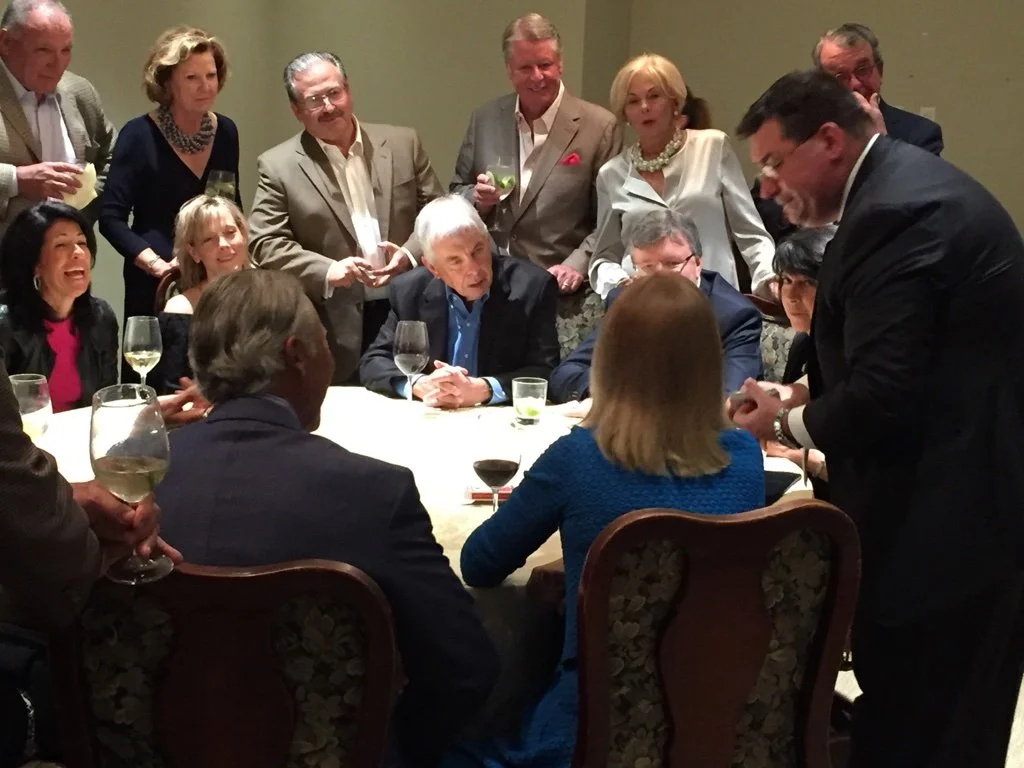
Great images tell a story about the event - who was there, what happened, and how people felt.
More importantly, they have an impact on your next event by:
Strengthening the memory of the event for those who did attend
Developing curiosity among people who did not attend
Creating anticipation for the future event
But the images I saw after New Year’s Eve 2022 missed the mark.
I saw surprisingly few pictures of performers interacting with the people at the event. Worse, the audience had their back to the entertainment in several images.
Typically, we want to see people laughing, smiling, and slapping each other on the back. Some of the people in the pictures looked a little bored.
These were probably fantastic events, but the images did not tell that story.
Here are three ideas that might help you get better images from your next event:
Work with the photographer. A great photographer knows how to capture “the moment.”
Talk to Your Entertainers. Experienced performers know how to work with the photographer to create those images “on the fly.”
Record a video on your phone. A video is like thousands of still images, so you can select the image you want using the screenshot function.
Of course, events are more than laughs and smiles. Pictures should capture and convey conflict and drama, feelings of frustration and anguish, insightful breakthroughs, and moments of ultimate triumph.
Having all those moments requires experiences that bring people together in an emotionally compelling way. Something has to trigger the laughs, facilitate the connection, and create an experience your guests are talking about for months to come.
Maybe I can help.
If you are open to a conversation about an upcoming event, what you have done in the past, how you evaluate the success of your event, and what you hope to achieve this year, call (561) 596-3877 or click here to schedule an appointment.
What Your Marketing and Events Team Needs to Know About Entertaining Executives and Engineers
For over 20 years, I’ve wondered why my magic and mentalism always seemed to land so well with engineers, heavy industry executives, doctors, lawyers, and business people. They called me to their events year after year.
Their marketing departments and event planners seemed to think they were crazy, too. “Why would magic be a good fit for this event?”
Now I know.
I finally figured it out. I feel like I have to share this with you.
For over 20 years, I’ve wondered why my magic and mentalism always seemed to land so well with engineers, heavy industry executives, doctors, lawyers, and business people.
These people bring me to events like The Masters, and they want me entertaining their clients and customers at hospitality events, executive summits, and sales meetings.
Their marketing departments and event planners seemed to think they were crazy, too. “Why would magic be a good fit for this event?”
Now I know.
It’s all about DISC.
If you’re unfamiliar with DISC, it’s a four-way classification system psychologists use to categorize communication styles.
Your communication style has a tremendous impact on how you perceive others and how they perceive you. I don’t have time to go into it here, but you can learn more here.
The DISC profiles split two ways:
“task oriented people” (Type C and D) vs. “people oriented people” (Type S and I)
Typically, event planners are very detail-oriented people who really like to talk with other people and have fun conversations.
Most of them are in the Type S and I groups: they like everyone to agree, they love to talk, and they want everyone to like them. They get energy from talking to others.
Focusing on “things” and “problems” takes energy for an I or S (not that they can’t do it, but it takes energy).
Engineers and executives, however, are typically Type C and D. They are task-oriented people, they get energy from solving problems and doing things, they like to move fast, they like to compete and face challenges. Doing stuff gives them energy.
“Chit chat” and “small talk” drains energy for a C or D (not that they can’t do it or don’t like it, but it takes energy).
The problem is that everyone thinks everyone else is just like them.
So when an event planner says,
“Our people don’t need anything to get them laughing and having fun together, they all know each other. They just go to bed at 9pm”
She is 100% correct. Her people do know each other, and they can talk and have fun together. She doesn’t think they need anything to make the cocktail party work, because networking talk and mingling gives her energy.
At the same time, the Type C and D engineers and executives at the event will spend a lot of energy doing the small talk, and they’ll get tired, disconnect, start answering emails on their phone, or even leave the event early.
When I discovered DISC, I realized why my engineering and executive clients kept requesting me back for their events year after year:
Having a problem or a challenge to deal with gives Types C and D a tremendous amount of energy. Working on a problem together actually helps them bond and build rapport with other Cs and Ds.
So having their mind-blown by a magic trick, watching other people get their minds blown, trying to figure out the secrets, and then talking about the magic afterward played right into their communication styles.
The magic and mind-reading gave them tremendous energy in a situation they would normally find draining.
That’s why they stayed later at the events, why they built stronger relationships around the magic, and why they were talking about the events months later.
What does this mean for your events?
I don’t know.
Magic and mind-reading seem to play well for executives, engineers, spreadsheet-enthusiasts, and people who work on “things” and details, but they’re probably not the only things that appeal to the Type C and D.
But you’re open to a conversation about an upcoming event, give me call.
I never noticed this until I wrote this post, but in this image there’s at least one CEO, an electrical engineer, two business consultants, and a guy who manages casinos. All Type C and D personalities, and given that like-attracts-like, you can expect that their spouses are the same…
How To Use The "Pepsi Challenge" to Capture Market Share At Your Next Trade Show Or Conference Event
Pepsi’s biggest problem was that everyone already knew what Coca Cola tasted like. Believe it or not, your best conference and trade show prospects are ignoring you for the same reason…
The new season of “The Food that Built America” is a fantastic show: there’s drama, conflict, emotion, and lots of fascinating stories about the brands we see almost every day. It’s both inspiring and entertaining.
And there’s some mind-blowing lessons on business strategy too - real stuff you can use right now.
We just finished the episode on the “cola wars.” We all know the story of the “Pepsi Challenge,” where Pepsi sent people into shopping malls and street corners, asking people if they could tell which cup had Pepsi and which had Coca Cola by taste alone.
At the time, Pepsi had about 7% market share compared to Coca Cola (which had 92 of the other 93%).
Why? Because Coke was the original cola drink, and it never occurred to people to change. They never tried Pepsi. They didn’t even know how it tasted, and they didn’t care because they knew they liked Coke.
And that's why the Pepsi Challenge was so powerful. It grabbed people's attention, and it said, "hey, try this." And when they did, about 52% decided they liked Pepsi better - which immediately cut into Coke's market share.
So how does this apply to your presence at trade shows and conferences?
From an earlier post, you’ll remember the three most valuable prospects you can meet at a trade show or conference:
People who currently work with you and are happy.
People who work with your competitor.
People who used to work with you.
These are the people who can buy stuff that will move the needle in your business.
But there’s a problem.
Just like the Coca Cola drinkers, those three groups of people have no reason to talk to you. Your current clients don't know that you can sell them other things they also need, so they think they're "happy." Your competitor's clients are "happy," too, so they don't need you. And your prior clients think they're "happier" without you.
They aren’t going to come to your trade show booth. They aren’t going to attend your customer hospitality event, and they definitely aren’t coming to your webinar or virtual conference.
It’s not that they don’t need what you sell or want the outcomes you offer - the problem is that they’ve already decided that they don’t need to talk to you about it.
And if you can’t have a conversation, you’ll never have a sale.
So you need a "Pepsi Challenge.”
You need something that grabs your prospects attention, focuses attention on your brand in a memorable way, delivers a simple message that opens your prospects' eyes to a specific problem they probably didn’t know that you solve, and offers a clear call to action that explains how your prospect can get the outcome they want.
Our clients do that with magic and mind-reading, but there are probably dozens of other ways you can capture attention, engage your prospect, and deliver a message that makes them want to start a conversation with you.
Is this a bold statement? Does this break the rules of sales or marketing?
Not at all, really. It’s what I’ve been doing with my clients for decades, and it’s what my mentors and coaches taught their clients to do for decades before that. It’s a simple, proven, repeatable formula.
You know who really hates this? You know who calls it “unsportsmanlike” and “rude” and other negative labels?
Companies like Coca Cola. The big, established players who are successfully dominating the market by keeping their valuable clients focused on them, so they never even think of changing.
Go get ‘em.
If you’re open to a conversation about what you’re doing at trade shows and the hospitality events you’re sponsoring, the results you’re getting, and how you know you’re successful, I can share what other companies in your particular position have done and the results they’ve achieved. You can schedule a short phone call here.
Controlling Uncertainty in a Crisis
I don't know about you, but every day I'm presented with a huge stack of decisions that I have to make, many of which are based on incomplete information. The quarantine has added more decisions and less information. There's more "decision fatigue" than ever before.
Wanted to share this because I wondered if it might help you as much as it helped me.
I've been calling and emailing from The Magic Bunker and Library to see if anyone in my network needs anything and how I can help them. Good news: everyone's okay.
A friend told me that he'd decided to stay in Florida until things passed. He said it gave him some "certainty."
He's a retired CEO. That was one of those "think like a leader" moments.
I don't know about you, but every day I'm presented with a huge stack of decisions that I have to make, many of which are based on incomplete information. The quarantine has added more decisions and less information. There's more "decision fatigue" than ever before.
Decision fatigue leads to bad decisions: snap judgements, frustrated choices, and "easy outs" that aren't always the best. Decision fatigue is one reason you leave the apple on the counter and take the potato chips at 9pm.
My friend's decision to stay in Florida gave him one less decision to make each day. Similarly, Steve Jobs used to eat the same salad each day for lunch, and wear the same clothes to work each day, so he didn't have to decide what to eat or what to wear.
These are things they can control, so they made decisions that helped them stay in control.
A Navy SEAL once told me that their rock climbing trainer said that people get overwhelmed because they're thinking about the things they cannot control. He was 300' up a 600' climb, and the trainer said, "You're nervous because you're thinking about things that are 300' down from here and 300' up from here. You can only control what's about 3 feet from your face - like where your hands and feet go next."
Fewer decisions, less decision fatigue, better choices.
Amanda and I decided to embrace this:
We chose our dinners for the next five days, so we don't have to decide what to eat.
We decided how we will get our groceries for the next two months.
We decided how we will exercise for the next 90 days.
We set a budget for the next six months, so we know how we will allocate our resources.
We set a business plan for the next three months, so I know what I need to do.
We set my daily schedule, so I know when I got to the office and when I close for the day.
We decided to limit our consumption of social media and cable news, too - TV is for comedy.
These things are decided, so I'm free to "just do stuff." I'll let you know how it goes.
Got any new revelations or hot tips for thriving during quarantine? I'd love to hear them and share them with the rest of the network.
Be safe and healthy,
Mike
PS: We're safe. Ben is happy and as stir crazy as anyone. He's got a long list of things to do "when the germs are gone" - the zoo, the store, a haircut, a train ride, and of course Maha, Papa, Granny, and Bud (his grandparents).
PPS: This article from Inc digs into what the Navy SEAL was teaching us.
Was this useful? Would you like to get more? Fill in the boxes and we’ll send you The World’s Most Interesting Email…