The Three Levers That Turn Event Entertainment Into a Revenue Engine
One of the most valuable lessons I ever learned about business happened in a hotel bar more than twenty years ago.
I was the magician. My job wasn’t to take orders, make drinks, or handle money. My job was to increase total revenue for the bar.
We did it by deliberately engineering three things:
getting more people into the bar,
getting them to stay longer and order more,
and getting them to come back the next night.
That’s it. Those three levers.
Jay Abraham has written for years that there are only three ways to grow any business:
get more customers,
increase the size of each sale,
and increase how often those customers buy.
When you move all three at the same time, the results compound. A 10% lift in each doesn’t give you 30%. It gives you 33%. Push each lever harder and the numbers jump much faster than most people expect.
We lived that math every night in the magic bar.
How We Got More People In
A guest would walk in around 6 p.m. on the first night of a conference. I’d do a few tricks and finish with the card-on-the-ceiling. He’d leave for the corporate dinner talking about it. After dinner, 20 or 30 of his colleagues would show up just to see the card still stuck up there. They’d stay for a drink and more magic.
The next morning at breakfast the story spread again. That evening the pre-dinner crowd was 60–80 people. By the third night the bar was full.
Same effect. Same ceiling. Just consistent application of a simple story that people couldn’t help telling.
How We Increased the Size of the Check
While I performed I watched drink levels. When most glasses dropped below one-third full, I would wrap up and tell the table I’d be back shortly with something specific they wanted to see — usually the card-on-the-ceiling or a mind-reading routine.
Almost immediately the server would arrive and ask if they wanted another round. Because they were already committed to staying for the next performance, the answer was almost always yes.
Repeat the same timing after the second performer and a third round became the natural next step. Average revenue per table rose roughly 50%.
How We Got Them to Buy More Often
Some people get so involved in the magic they simply forget to drink. That kills the next sale.
So we used a few simple psychological tools. The most reliable was mirroring. If the room was drinking slowly, I would casually pick up my own glass and take a sip. Within seconds a noticeable percentage of the room would do the same.
We also trained the servers to ask the obvious leader at each table first. Once that person said yes, the rest of the table usually followed.
None of this felt pushy. It simply created conditions where ordering another drink was the easiest and most natural thing to do.
Entertainment was never a cost center in that bar. At $9-plus for a domestic beer, it was the primary driver of revenue.
What This Looks Like Inside Corporate Events
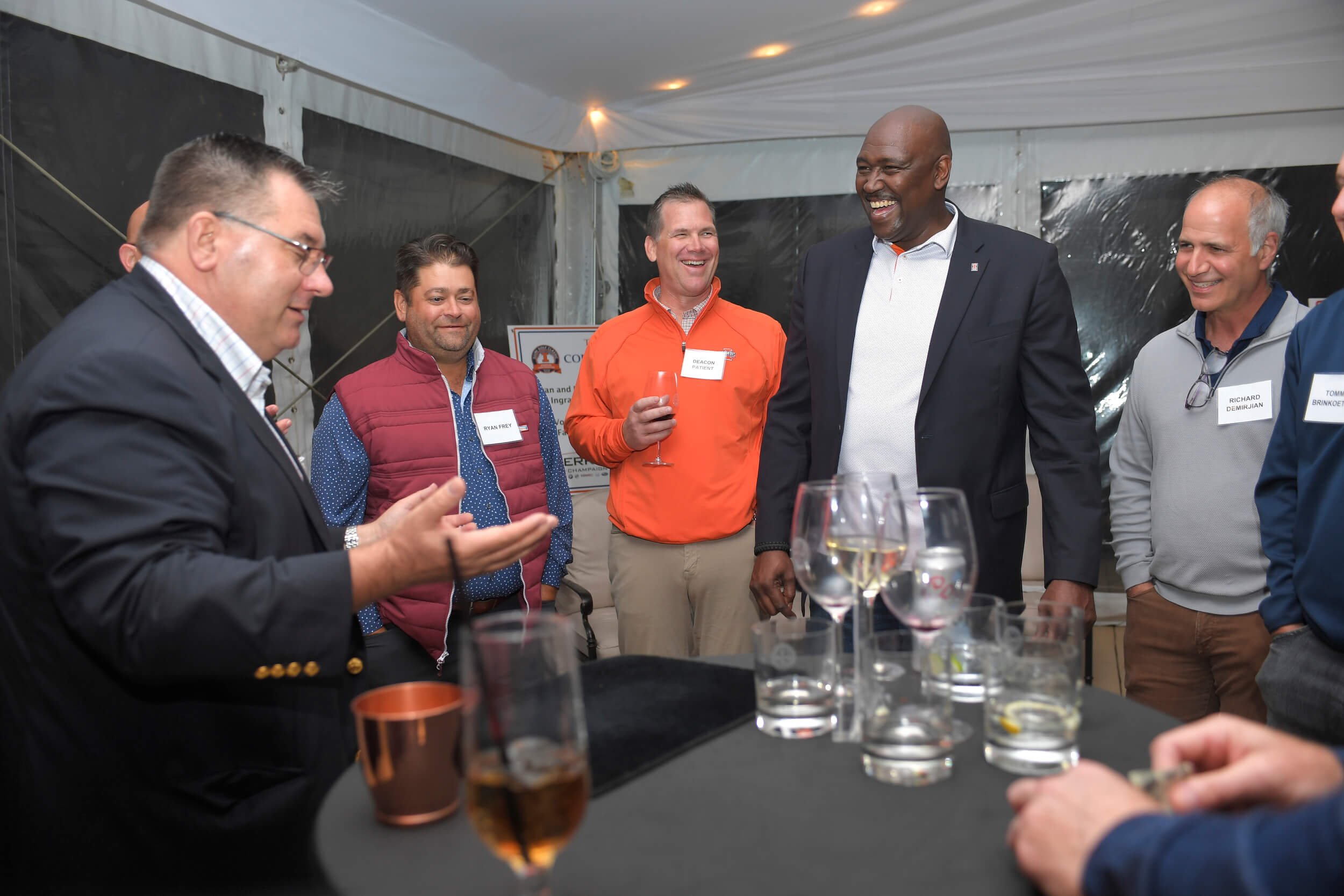
When the magic bar closed and I started doing private corporate events in 2005, I was surprised by how little deliberate sales engineering and choreography most clients built into their events. They were leaving significant commercial opportunity on the table.
It took me about thirty seconds to see how the same three levers transferred:
The same story-and-demonstration techniques that filled the bar now pull more people into hospitality suites and trade-show booths.
The same performance timing that raised average check size now keeps guests in the room longer and creates more meaningful conversations.
The same psychological tools that increased drinking frequency now increase badge scans, business-card drops, and the number of high-value introductions that happen without anyone having to force them.
In one application, we developed a simple sequence that causes VIP clients to line up and approach the executives — rather than the executives having to interrupt conversations and introduce themselves. The result is more face-to-face time with the people who matter most, and far less awkwardness.
Done correctly, the entertainment budget stops being an expense line and becomes one of the more reliable levers you have for creating measurable commercial results from the event itself.
If you’re planning an upcoming sales kickoff, trade show, hospitality suite, or executive gathering and you’d like to see how these same three levers can be engineered into your specific event, I’m happy to walk through it with you.
You can reach me directly at (561) 596-3877 or grab a time at calendly.com/mikeduseberg.