Getting Results

Mike Duseberg Mike Duseberg

Robert Sereci Shares Three Unexpected Secrets to Medinah's Member/Guest Success

Hosting over 300 players every year, The Medinah Classic is one of the largest club invitational tournaments in the US. Medinah’s General Manager Robert Sereci takes a few minutes to dig deeper into why entertainment is an essential part of the club’s member/guest success.

 
Medinah Country Club’s legendary clubhouse has been the background for a lot of golf history and some spectacular member events

Medinah Country Club’s legendary clubhouse has been the background for a lot of golf history and some spectacular member events


Background: Since its inception in 1924, Medinah Country Club has hosted many major tournaments. Notably, three U.S. Opens, a U.S. Senior Open, the Ryder Cup, and the BMW Championship, all against a historic backdrop, including their iconic clubhouse, the legendary Course #3, and two additional 18-hole golf courses. Hosting approximately 300 players every year, the club’s premier event - the annual Medinah Classic - is among the three largest member/guest events in the U.S. 

For the 2021 Medinah Classic, the club brought in Mike Duseberg to entertain the players after their practice rounds. Over cocktails and barbecue, players crowded around Mike to participate in the magic and have fun together.  

Mark Gallaudet, the Medinah’s assistant general manager, reflected, “The staff kept saying ‘Wow! That guy can work a room.’ The members just gravitated toward him.”

General Manager and Chief Operating Officer Robert Sereci took a few minutes to dig deeper into why the entertainment was an essential part of Medinah’s member/guest event:

Insight #1: Magic creates a personalized experience for each member and his guest.

Mike’s unique performing style and his “Always Something More” system ensure members and their guests see magic several times throughout the night, and everyone gets to participate in the magic themselves.  

Robert Sereci: “There are not many activities during a member/guest event where participants can sit and enjoy for even a brief time, someone entertaining them in a very intimate setting. Mike is up close, in a very intimate environment, and to me, that is a big deal; it enhances the experience.  It gives participants one more thing to talk about.”

Insight #2: Variety keeps players engaged.

After a long day of golf playing 18 to 27 holes, the players attention can wander. It’s important they stay on-site and enjoy the club’s excellent amenities and food and beverage opportunities. Magic during the evening gave the participants another reason to stick around and have fun together.  

Robert Sereci: “Trying to keep our members and guests engaged is not as easy as it sounds. When an event lasts multiple days for a long period, we’re trying to hold their attention on the event - that's why we have TVs and other entertainment. Getting them to relax and laugh after the day’s round of golf loosens them up. That is not always easy to do.”

Insight #3: Take the pressure off the members and their guests

There can be a lot of pressure during a member/guest event:  The players all feel pressure to score well on the golf course during the day.  

In the evening, a new pressure develops:  the members feel tremendous pressure to “be interesting” and keep their guests entertained and engaged. Similarly, the guests feel pressure to “be on their best behavior” at their hosts’ club.  

Robert Sereci: “Entertainment at our member/guest significant, because, across several days, members and guests are performing, and they get tired. They can get stressed out. Good entertainment takes their mind away from golf and allows attendees to sit back relax, while someone else entertains them, so that they can be participants and spectators for a while.”

This year, the tournament was a tremendous success for Medinah Country Club, and the members and guests had a great experience they look forward to repeating in 2022.

Robert Sereci: “The members said things like, ‘engaging,’ ‘entertaining,’ and ‘this guy is incredibly talented.’  It went very well, and the chairman was thrilled!”

If you’d like to create an engaging and entertaining experience for your players during your next Member/Guest, Mike Duseberg will be happy to describe what he’s done for other clubs like yours. Click here to schedule a conversation or call (561) 596-3877.  

Read More
Mike Duseberg Mike Duseberg

Integrating Sponsors into Your Virtual Event

Here’s a “quick and dirty” example of how to smoothly integrate sponsors into your event. We took the idea from the Jerry Lewis Labor Day Telethon, where Jerry used celebrities and corporate donors to support MDA. Jerry would do a quick segment with the the sponsor, tell a few jokes, and accept their donation.

Everybody wants sponsors in their event. Whether you want someone to help pay for the expenses during the event or if you want someone to help raise a lot of money for your cause, sponsorships bring the significant revenue your event needs.

We created a “quick and dirty” example of how to smoothly integrate sponsors into your event. We took the idea from the Jerry Lewis Labor Day Telethon, where Jerry used celebrities and corporate donors to support MDA. Jerry would do a quick segment with the the sponsor, tell a few jokes, and accept their donation.

Ultimately, sponsorships are advertising, so the sponsor should talk a little bit about their company while they make a donation to the cause. This format does a great job of integrating the sponsor and their message without making everything look like a slimy sales message.

If your event isn’t a charity or fundraiser event - such as a conference or meeting - we can do something similar with out the “big check” component. I would simply bring on the sponsor’s representative, have a brief exchange about something relevant to their business (maybe something at a virtual trade show booth or a new innovation they’re releasing), do some magic with them, and move on.

Here’s a video that shows how it works and explains three key components to making this work.

Three things are important here:

  1. The person on screen is the "face" of the company or the person your clients will interact with next.

  2. The person participates in a magic trick, enjoys the show, and supports the cause or event with the rest of the audience.

  3. There is a simple call to action: "Talk to Amanda to learn more" or "Thank Amanda for supporting this event" or "See Amanda for their seasonal specials."

Follow these simple steps, and you'll sell the sponsorships you need AND your sponsors will get the results they expect from their investment.

Just released: Mike Duseberg reveals all the “how to” steps to creating events that create sales referrals, and repeat business in his third booklet The Event ROI Revolution: A Planners Guide to Hospitality Events that Create Connections, Build Rapport, and Schedule Sales Appointments. Download your complimentary copy here. 

Read More
Mike Duseberg Mike Duseberg

Jeff Bezos Says This Is How We Should Think about The Next Ten Years

Bezos said that everyone asks him what will change in the future, and really dismissed the question as interesting but irrelevant.  
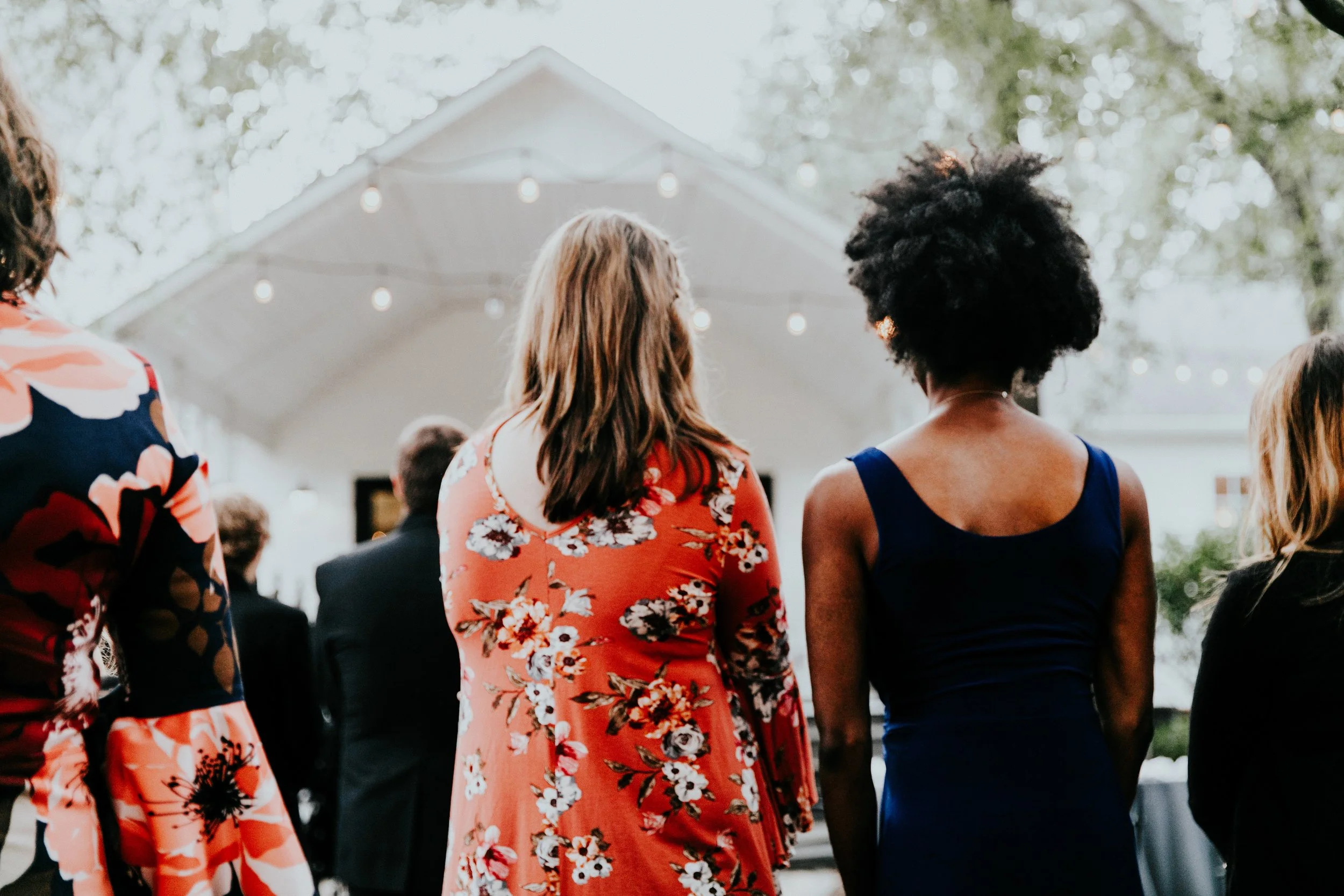
I just read an interesting quote about Jeff Bezos.  He said that everyone asks him what will change in the future, and really dismissed the question as interesting but irrelevant.  

Yeah.  Irrelevant.

He said what is important is what won’t change in the next decade.  Bezos believes that ten years from now, people will still want a wide selection of quality products available at the lowest possible price.  Hard to argue that Amazon isn’t positioned for the future.

So what won’t change in the events industry in the next 20 years?  Here are five ideas that should never be dismissed.

Permanent Truth #1: People Want Experiences More Than Stuff

As always, stuff remains obtainable; in fact, Amazon is exactly why more and more stuff of higher and higher quality is available faster and faster and at a lower and lower price.

Great experiences, however, continue to increase in value.  Leading Hotels of the World’s famous customer service slogan will always be true:  “The last bastion of luxury is personalized service.”  

Experiences that feel engaging, conversational, interactive, and participatory have inherent meaning, create lasting memories, and almost compel people to talk about them. 

Don’t be fooled into thinking this is a “millennial” thing or a recent discovery.  This is a fundamental part of human nature.  

Permanent Truth #2: People Crave a Story They Can Tell

One of the most amusing articles I read in the Wall Street Journal this year was about how souvenir hats and shirts have become status symbols.  It’s true. When I travel, I wear a windbreaker from Augusta National Golf Club and a hat from a club so private I can’t legally write its name in this article.  People who recognize those logos instantly reach out to me and tell me about their experiences as these events.

They feel compelled to talk about their experience.  They want to say things like:

  • I was there when…

  • Here’s what happened to me… 

  • This is how I felt when… 

  • This is what I saw… 

And they want to ask questions like:

  • Did you see…

  • Were you there for…

  • Did get try the…

  • Who did you go with?

The Carnegie Rule is as true as ever: People want to feel important.  Having an experience that they participated in - simply saying “I was there too” - makes people feel incredibly important, and they feel compelled to talk about their experience because that enhances their feeling of importance.

Permanent Truth #3: People Need a Reason to Talk to Each Other

The number of books and YouTube videos about how to network, how to meet people, and how to communicate more effectively grows every year.  These topics have driven the sales and self-help industry for well over a century, and they will continue to sell forever.  

People will always be a little nervous to approach strangers, and they’ll always be more willing to do it when they have a reason to reach out and say hello.  

To reduce the fear of rejection - which is a big part of why people are reticent to approach strangers - we need to create more experiences where rejection isn’t possible.  We need to do fun and engaging things that make people want to come together and do things with other people.

We will always need to create engaging, entertaining, and fun contexts for connecting at events.  If we want to get people off their phones and out of their heads, we need to draw them into a shared experience and provide the opportunity for them to start talking to each other.

People crave experiences that give them something to talk about - during the event, after the event, and in anticipation of next year’s event.  

They can use these experiences to start conversations with their friends, colleagues, and the people the want to meet - new friends, new prospective clients, and new network members.  

Permanent Truth #4: Face to Face is More Persuasive Than Print, Phone, Digital, or Whatever Else…

My colleagues and I are convinced that the future of online is a conversation that starts offline.  Permission marketing will be more important than ever before, and future marketers and salespeople will need to get that permission in an offline environment.

Face to Face has always been more productive - “putting a face with the voice on the phone” has been a common phrase since the at least the1950’s, and we’ve only adjusted it to saying things like “putting a face on the email address” and “nice to meet you ‘in real life.’”

Data proves this out.  If I know who you are, I’m much more likely to answer your email, accept your phone call, read your social media request, or open your letter.  

The past, present, and future of business has always been connection - who you know, who knows you, and who is interested in getting to know you.

Events are the fastest and most productive way to get to know people.

Permanent Truth #5: People Crave Good Cocktail Parties 

Nobody wants to go to a networking event - really.  

We say we do because we want leads and prospects.

But nobody wants to go to an event with 100 other people who want us to be their lead, prospect, or referral source.  

From time immemorial, people know they’re supposed to be there to help other people, but their stubborn human nature makes them pitch, pitch, pitch.

We really want to go to an event where fun things happen and we get to know the other people at the conference, trade show, executive summit, dinner, awards event, or client retreat.  The heart of successful networking is developing a catalog of people that we know, like, and trust and who know, like, and trust us.  

“Know, like, and trust” are a progression - we “know” people first (ie: we become aware of them), and over a conversation or two we start to “like” them, and finally we “know them enough” to start to “trust” them.

And when we trust them, we can start to do business with them.  

The best thing we can do is to have more events where people can start introducing each other to the people around them so they can “know, like, and trust” each other.  

From the beginning of time, that event has been a cocktail party.  Just about every culture in the history of time has an example of powerful people coming together and talking while eating and drinking.  

It’s a very simple formula - put people in a room where they feel comfortable talking (ie: reasonable lighting, conversational music, and not a whole lot of echo), provide them something to talk about like unique entertainment, give them something they can eat and drink while talking, and let people do what they do best - talk. 

Hopefully all this was review.  Five things that won’t change in the next ten years and haven’t changed in the last 2000 years.  If we keep these fundamental event principles in mind, we can be sure we’ll be creating productive business events well into the future.  

Just released: Mike Duseberg reveals all the “how to” steps to creating events that create sales referrals, and repeat business in his third booklet The Event ROI Revolution: A Planners Guide to Hospitality Events that Create Connections, Build Rapport, and Schedule Sales Appointments. Download your complimentary copy here. 

Read More
Mike Duseberg Mike Duseberg

How To Make Sure Your Clients Remember Meeting Their Sales Rep at Your Hospitality Event

If you want customers to answer your rep's calls after the event, they need to remember meeting your rep at the event... Event planners can help sales reps (and even top executives) by making them memorable people.

How to make sure your clients remember meeting their sales rep at your hospitality event

If the ultimate goal at a hospitality event is to build relationships with our clients, we need to make sure our clients remember their company contact after the event.  

A client is much more likely to answer a phone call, open an email, and set an appointment with someone they already know, like, and trust.  If they’ve had a meaningful conversation with a sales person during your event, the client is much more likely to answer the call, open the email, or even schedule an appointment. 

In fact, a sales representative is also more likely to call, email, or visit a client they feel like they already know, like, and trust themselves.  They know that a person who recognizes their name and knows what value they bring is much more likely to answer the phone, answer their questions, and have a productive sales conversation.  Events are a great way to prevent “call reluctance.”

So how do you connect your sales representative with the client in a memorable way?

A hospitality event is much different from a trade show booth, and it’s important that both your sales team and your clients understand that this is not a time for selling.  There should be no tension between the client and the sales people - it’s a time to have a drink, dinner, and some fun.  

Before the Event

Assign each client or prospect at your event to one of your sales reps.  The rep should do some quick online searching to find out what he can about their business and their interests.  This is good for conversation starters at the event.  

During the Event

During the event, your sales team should introduce themselves to their assigned prospects and  visit with their current clients.  Name badges will help a lot, and listing both the client’s name and his company will make sure your sales team recognizes their key people (not everybody looks like their picture on social media).

Connecting a new client with a sales person can be awkward.  The last thing a client wants is to hear a pitch.  If your sales representative feels uncomfortable or nervous, the client will feel cornered at your event and want to leave.  

The best thing a sales representative can do is simply ask if the client is having fun, and if there’s anything the client needs.  The sales relationship is built on service and the hospitality event is framed as a “thank you” to your clients.  This kind of question is a logical way to open the conversation, and it drives home the “we want to make you happy” message.  

One successful vice president of sales has built multimillion dollar relationships by simply refreshing drinks and introducing his prospects to people at the party.  He would ask, “have you seen Mike, our magician, tonight?”  If they said no, he would escort me to the table and introduce me to “our valued clients” and ask me to do something special for them.  Personalized service goes a long way to making a powerful impression.

The number of tactics and techniques that your salespeople can use to connect with your clients is enough to fill a short book.  I know.  I wrote one.  For more ideas and examples, message me, and I’ll send you a copy.

At the End of the Event

At the end of the evening, parting gifts and “thank you” are an important part of making the connection memorable.  Remember, we give gifts to our guests because people feel connected to people who give them things, and that makes the people who gave them those things very memorable.

How we give the gift is critical. Rather than simply having each guest take a gift bag or water bottle from a table on their way out, have the sales representatives present their client with the gift as part of the event.  When the guest simply “takes one,” the gift is meaningless. It’s just stuff they take.  When someone says, “We wanted you to have this as a token of our appreciation,” the gift has meaning.  

If possible, put a “bonus” gift (like a white paper, a free sample of your product, a percentage off on their next order, etc) inside the gift.  Have the sales representative say, “there’s something special in there for you, too.”  The bonus is a second surprise, which makes the gift even more memorable.

After the Event

Each sales rep should make notes about the time they spent with the client, anything interesting that happened, and anything they learned about the client during the event.  Then, do some quick follow up - email is fine, handwritten may be appropriate - to carry the conversation forward. Tell them how and when you plan to call to discuss their business challenges.

Conclusion

You can plan a great memory for your guest.  As you're planning your hospitality event, focus on what you want your guests to remember from the event, and what you want them to talk about after the event.  Building these things into your event plan will help your sales representatives create the rapport they need to close more sales.  

In the next post, we’ll explore more ways to build rapport and connection between your sales representatives and your clients during your hospitality event.  

PS:  Don’t forget to download a copy of the booklet on hospitality tactics here.  


Just released: Mike Duseberg reveals all the “how to” steps to creating events that create sales referrals, and repeat business in his third booklet The Event ROI Revolution: A Planners Guide to Hospitality Events that Create Connections, Build Rapport, and Schedule Sales Appointments. Download your complimentary copy here. 

Read More