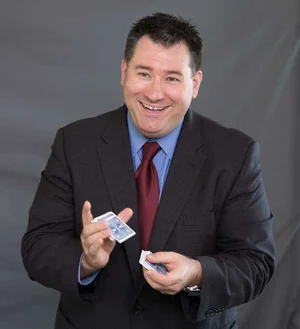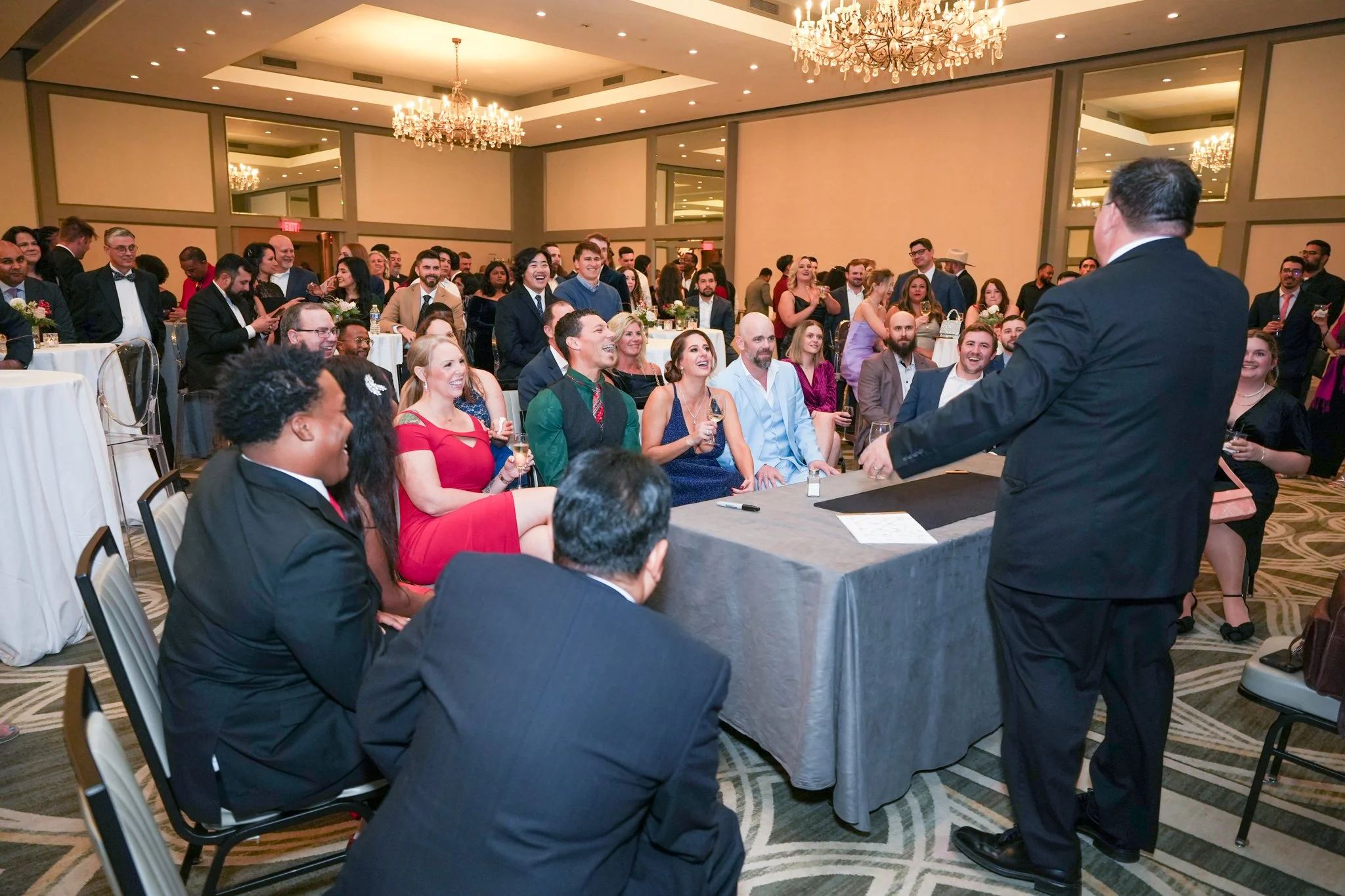
Mike Duseberg entertaining guests at a corporate event in Texas.
The Best Referral Isn’t Always a Recommendation
Your best referral strategy does not involve other people recommending you to their friends.
There are a ton of emotions wrapped up in the idea of a referral.
Your customers may be afraid to make a recommendation:
“What if it doesn’t go well?”
“Who am I to tell someone else what they need?”
And the people receiving recommendations can feel pressure, too:
“What if I don’t choose the recommendation?”
“Does this mean I have to buy something now?”
Totally real. Totally understandable.
But an introduction is not necessarily a recommendation. And identifying a prospective customer is often more valuable than an endorsement.
I realized that my most powerful referral sources generally do not say:
“You should hire Mike for your event.”
What they really do is put me in front of people who can make decisions. Then my performance and sales process do the rest.
The Introduction That Started It
One of my favorite adventures started when one of my clients said to a fellow club member:
“Aren’t you a member of a club in California? How do you think this would go over there?”
My new client—who became a good friend—decided he loved the idea, and the rest is history. We did a legendary show for the club in California that they’re still talking about eight years later, and my new client and I have done at least four other events together.
How does this apply to your event?
This directly connects to trade shows, hospitality suites, and conferences.
When your current customers attend a trade show, they usually see people they know and like who are not currently your customers—but could be.
Stop Asking Customers to Sell
The traditional referral conversation says:
“Tell Bob to come over to our booth and look at the XL2000. It will cut his costs, increase productivity, and clear up his kid’s acne.”
That puts all the pressure on Bob to sell the meeting.
On the other hand, my clients often have me entertain at their trade-show booth or hospitality suite. They know many of their customers look forward to the magic as part of the event.
During an invitation call, they mention that the magic will be there. The prospect expresses approval. Then they ask one simple question:
“Who else do you know who will be at the show?”
That unlocks their memory.
Rather than pressuring a business call, the salesperson says something like:
“Why don’t you bring them over to see the magic?”
The referral is not an endorsement.
It is an invitation to have fun.
What Happens at the Event
When they come to the event and have a great time, they are exposed to other customers who are people like them. They meet salespeople who also seem to be people like them.
They begin to think:
“Hey, I like this company. I like these people.”
The event process captures Bob’s friend’s information when he visits the booth or event. That gives the salesperson a legitimate reason to follow up:
“Hey, thanks for attending our event. How do you know our customer Bob?”
Now they have a completely different conversation—about his business, his problems, and whether there may be a reason to change suppliers.
Will that customer ask Bob about his experience with the company, the sales representative, and the performance of the products he buys?
Of course.
And Bob will hopefully tell him the truth. Hopefully, the truth is positive.
You get the conversation.
You get the endorsement.
And if it makes sense for everyone involved, you get the deal.
A Real-Life Example
In 2015, I was performing in a hospitality suite at a motor show in Houston.
There were competing hospitality suites in the same hotel, but most were the usual light-bites-and-music events.
Our guests were reacting to the magic and having so much fun that they started calling friends and saying:
“You’ve got to see this guy. Come up here!”
Some guests even went downstairs to bring their friends up to our event.
That is how you manufacture referrals.
Not by asking customers to sell for you—but by giving them something they genuinely want to invite someone into.
Is It Guaranteed?
Does it work every time?
Of course not. Nothing works every time.
But it gives you a clearer path to a meaningful conversation, where everyone involved can be open and honest about their situation.
Your customers are far less likely to have this introduction conversation about the food, band, giveaways, or decorations at your event.
Because it is interactive and engaging, entertainment is a component you can consistently leverage to create the interactions and introductions your business needs to grow.
“How Many Referrals Can We Get?”
There is one objection I hear all the time:
“How many of these referrals can we really get from an event?”
Probably one or two from everyone you invite—when you actively get them to think about it.
Not all of them will buy, but those who do are incredibly valuable.
Experience shows that referred clients often buy faster, stay longer, pay more, complain less, and are more likely to introduce you to additional prospects.
Is Opportunity Being Missed?
If you think you are leaving opportunity on the table at your conference, trade-show booth, or hospitality event, let’s talk.
We can look at what you are planning, what you believe may be left on the table, and how you will know this year was better than last year.
Then I will tell you exactly what other clients have done—and what it will take to help you get the results you want.
Set an appointment here or call (561) 596-3877.
Until next week,
Mike
Want More From Your Events?
Exponential Events is a practical 27-page guide to creating more conversations, introductions, referrals, and revenue from trade shows, conferences, hospitality events, and customer-facing events—without making your salespeople feel pushy or sleazy.
About Mike Duseberg
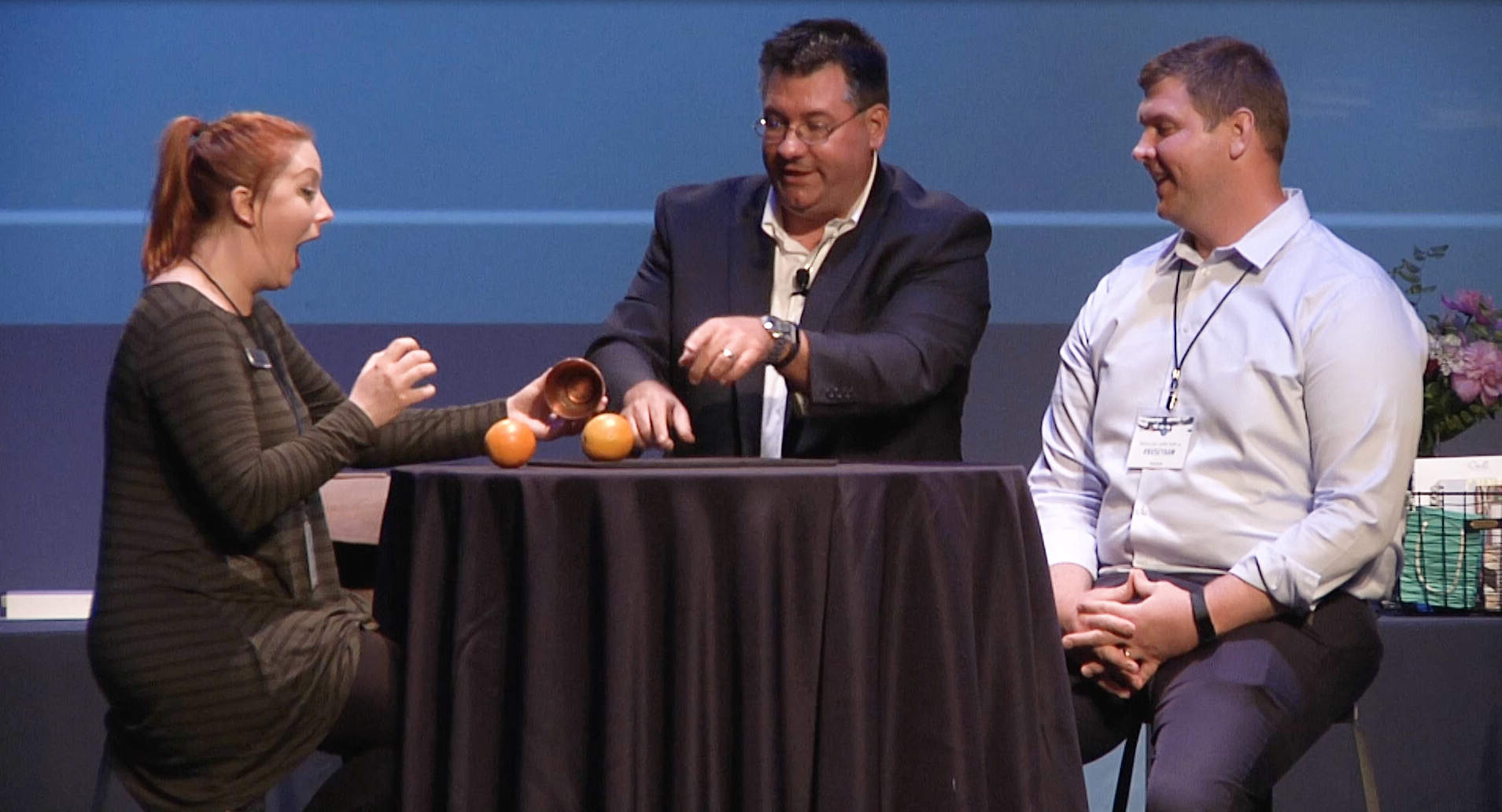
Mike Duseberg is the founder of Magic Means Business and a corporate magician, mentalist, and event-engagement strategist. He helps companies use live events to create stronger face-to-face connections with employees, clients, and prospects.