Last week, a client told me,
“I don’t think you’d be a good fit for this event… we’ve got too many people. You can’t entertain them all at once.”
I asked him,
“Are you sure that’s what you want?”
I’ve seen what happens when you try to entertain everyone all at once… and it’s not pretty.
Most people assume entertainment is a 40-60 minute show.
Big reactions. Big applause. Done.
And sometimes, that’s exactly what’s needed.
But at most corporate events—especially networking events, client entertainment, and golf outings—that approach actually limits what’s possible.
There’s a more powerful strategy:
Oscillation.
Instead of one long performance, the entertainment comes and goes.
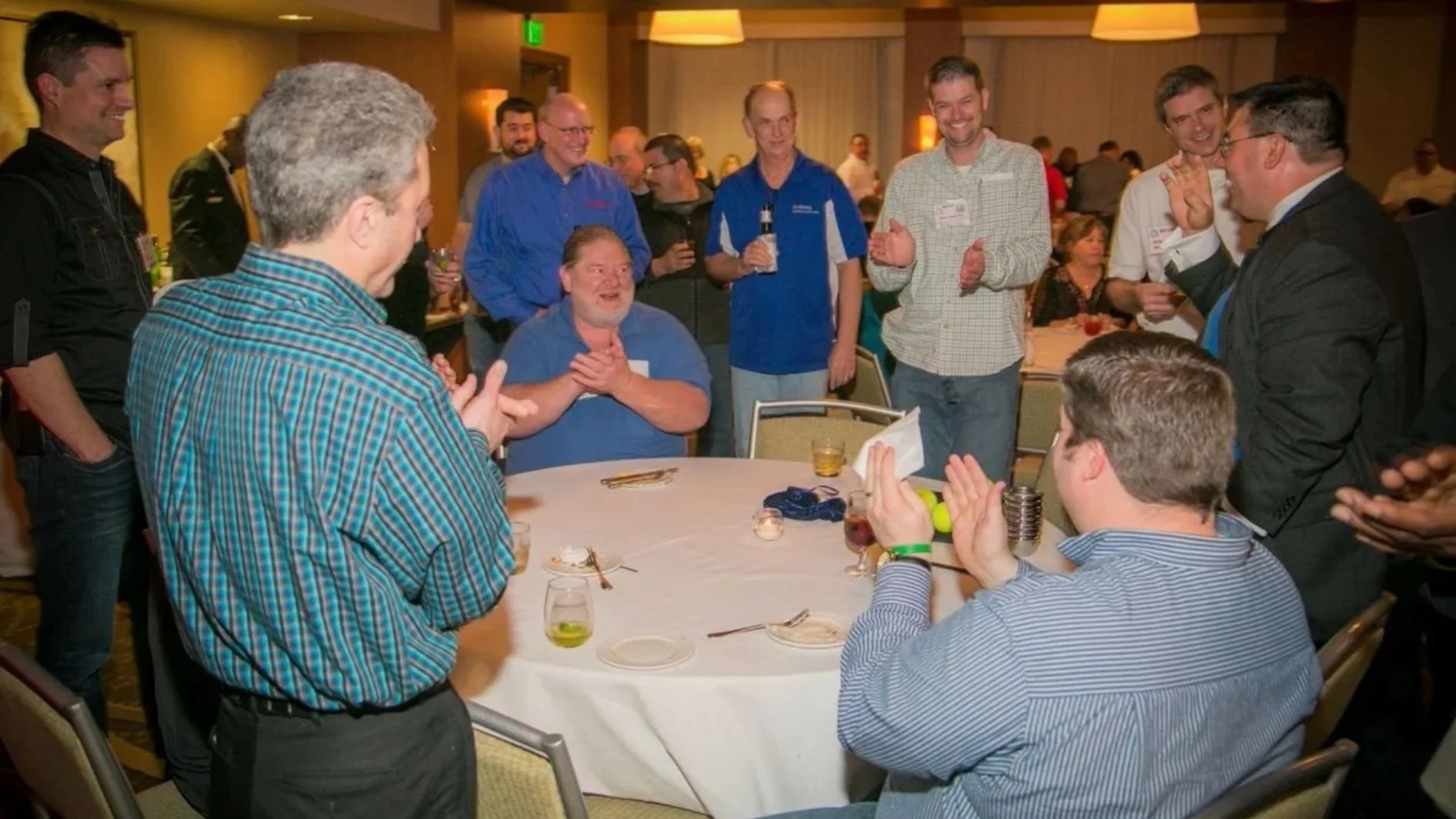
I step into a small group, create a moment, build to a strong reaction—and then step away.
A few minutes later, I step into another group and it happens again.
Then again.
And suddenly, the energy isn’t in one place…
…it’s everywhere.
That simple shift unlocks a surprising number of advantages.
First, it prevents boredom.
The human brain craves change. Novelty keeps people engaged.
Bob Hope understood this well—he engineered something new every 15 seconds.
The same principle that kept audiences glued to Hope on stage, radio, and television helps ensure your guests stay engaged—and don’t drift out early.
Second, it provides “down time.”
If you want your guests to connect and have conversations that lead to meaningful networking, you need to provide them time to talk to each other.
I once worked with a world-class performer who did amazing stunts and trick shots on a pool table. She amazed everyone with her show.
Unfortunately, her show was three hours long. She didn’t give the salespeople a chance to stop and talk to the customers, so there was no relationship building.
And, she never gave the audience a break during the show. As soon as she finished, everyone stood up and left because they’d seen three hours of her show and were “done.”
Third, it maximizes reach.
Attention is a scarce resource at any event.
By moving the entertainment, we multiply its impact—touching more groups, more conversations, more moments.
Instead of one “hot spot,” the entire room feels alive.
Fourth, it satisfies different tastes.
Not every guest connects with the same thing.
I might do the oranges with one group, the card-in-box when I return, and later a mind-reading piece.
Now each guest has their own “favorite moment.”
And more importantly—they compare those moments with each other.
That’s what drives real conversations… and makes your follow-up calls easier to start.
Fifth, it builds anticipation.
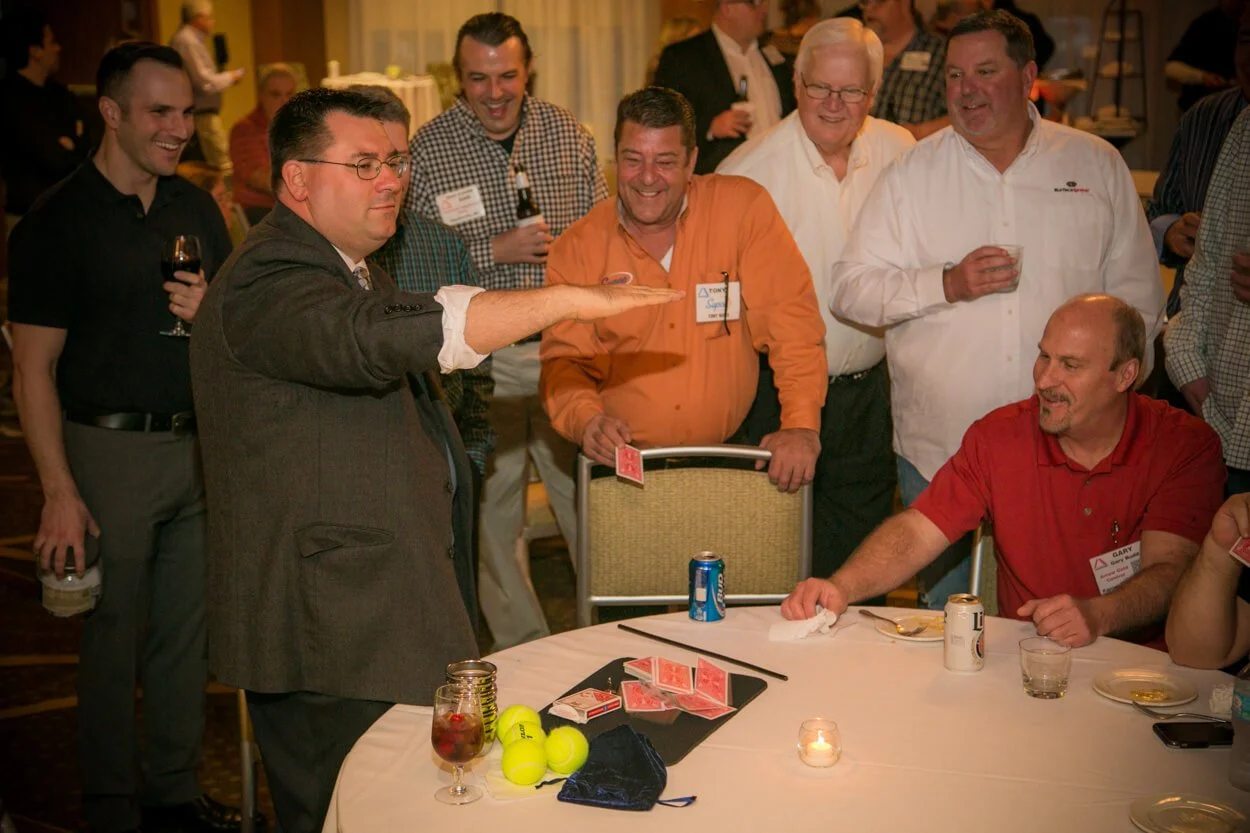
When guests know something else is coming, they stay engaged longer.
They linger.
They talk.
They connect.
And that gives your team more opportunities to build relationships.
Sixth, it allows for precision.
Instead of performing at the whole room, I can create a different experience for different groups.
We can focus attention on specific people - VIPs, top achievers, celebrities, executives - so they get to see more magic or have a special “VIP experience.”
That lets us leverage things like social proof, liking, reciprocity, and scarcity, so you can accomplish other goals like making key incentive guests feel important or making key customers feel like they got “something special.”
And it’s one of the simplest ways to turn entertainment from something people watch…
…into something that drives results.
Curious how this could work at your event?
Give me a call at (561) 596-3877 or book a time at calendly.com/mikeduseberg.
We’ll talk about what you’ve done in the past, what you’ve got planned, and what you really want to accomplish—and I’ll share what’s worked for other clients in similar situations.
Thanks,
Mike