How Your Announcements Make—Or Break—Your Next Event
When done well, an announcement gets the message across quickly, clearly, and in a way people remember. When done poorly, it can interrupt the momentum of the event, lose the audience, and—of course—fail to communicate the important information at all.
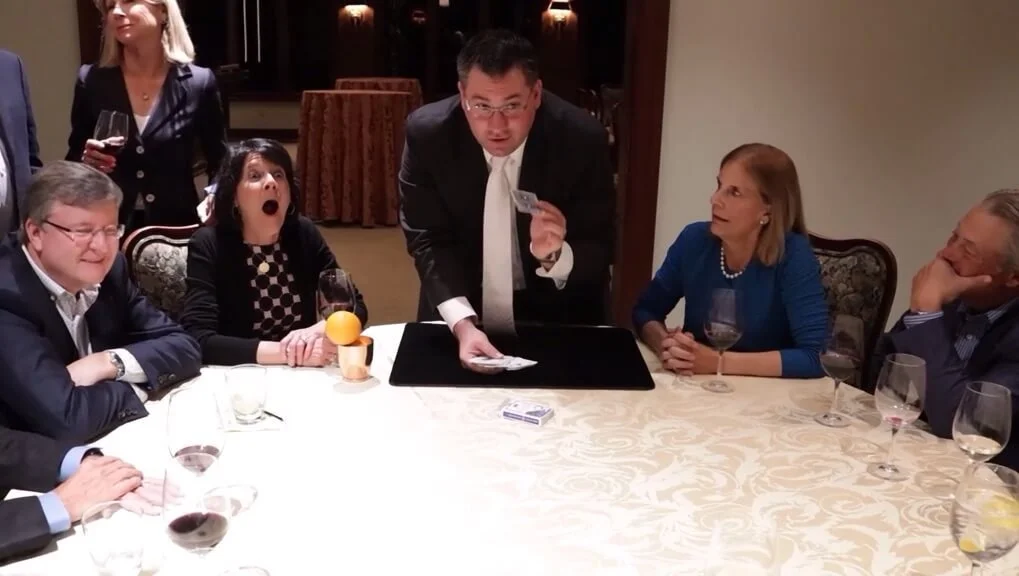
After all the time, energy, and money you’ve invested in your meeting, dinner, or hospitality event, don’t let a poorly planned set of announcements prevent you from creating the conversations, referrals, and revenue you expect from the evening.
The good news is that you don’t need to be a professional speaker to deliver announcements that land. You just need to borrow a few “Entertainer Skills” that performers use every night to grab attention, hold it, and then get off stage quickly.
Here are seven techniques that help you deliver critical information without derailing the flow of the evening.
1. Speak from a “stage” area
People need to know when you’re addressing them. Choose a spot in the room where the most guests can see you—often near the bar, by the main entrance, or in front of the stage—and mark it as the “stage area” with a podium or at least a simple microphone stand. When you stand there, people instantly recognize “Bob is going to speak,” and they’ll stop what they’re doing to listen.
2. Get elevated
Whenever possible, speak from a stage or platform that’s higher than the main floor. Even 18–32 inches makes a difference. If you don’t have a stage, stand on a chair, bench, or small stepladder. Teachers, preachers, politicians, and actors all speak from an elevated position, so our brains associate authority with elevation.
3. Use a microphone
Amplified voices get attention. Just as elevation extends authority, our brains have learned that important people speak through a microphone. Not only does the mic help you cut through the noise and distance, it also makes what you’re saying feel more important.
4. Hold notes
When guests see a card or a sheet of paper in your hand, they assume you’ve got a plan and that the information matters enough to be written down. That subtle signal tells them, “You should probably be listening right now.”
5. Drop your tone a little
Speaking in a slightly deeper, slower voice makes your words clearer and helps your voice carry across the room. You’ll notice soldiers, police, and other people who need to communicate clearly often do this on purpose. Research shows we naturally give more authority to deeper, slower voices than to higher, faster ones.
6. Stack the signals
These techniques work even better when you stack them. The more cues you give the audience that this is an important moment—elevation, amplification, notes, tone—the more attention and authority you naturally accumulate.
7. Keep it short
People will listen politely for about seven minutes; after that, the “obligation” to pay attention starts to fade. If your audience has been drinking, that window compresses to closer to three–five minutes.
Be prepared, know exactly what you need to say, and—most importantly—know who you plan to recognize and where they’re sitting or standing. That way you don’t burn goodwill with awkward pauses like, “Where’s Bob? Stand up so we can see you.”
Don’t break your event’s momentum
Remember, you’re interrupting the flow of the evening. People should stop their conversation, listen to you, and then smoothly go back to their conversation.
If your comments get long or meandering, the audience starts to feel they’ve been “at the event long enough”—and they’ll use the end of your speech as their cue to leave.
Stay on and off quickly, speak efficiently, and make it feel like a quick set of announcements, and you’ll communicate the important information without derailing your event’s objectives.
Like this? Get more tips by downloading Exponential Events here.